About 35% of American households grow some of their own food, according to the National Gardening Association. Yet one of the biggest reasons new gardeners quit in the first year is not a lack of interest. It is frustration from buying the wrong gear, getting overwhelmed, and feeling like they are failing before they even start.
This article gives you a clear, honest list of the essential garden tools for beginners. You will know exactly what to buy, what to skip for now, and why each tool earns its spot in your shed. No fluff. No $400 specialty kits you do not need.
Whether you have a small backyard plot or a few raised beds, the tools covered here will carry you through your first season and beyond. Most experienced gardeners still reach for the same basic tools they started with. That should tell you something.
This Article Is For You If…
You are a new or first-year gardener who just claimed a patch of outdoor space and is ready to actually use it. Maybe you have seeds, maybe you bought a few starts from a nursery, or maybe you are still planning. Either way, you are standing in a garden store aisle staring at 200 products and feeling lost.
This guide is not for someone building a professional market garden. It is for the person who wants to grow tomatoes, some herbs, and maybe a few flowers without spending $300 on tools before planting a single seed. If that sounds like you, keep reading.
Why the Right Tools Make a Real Difference
Gardening is physical work. The right tool makes a task take five minutes. The wrong one makes it take thirty and leaves your hands sore. That is not a small difference when you are already learning everything from scratch.
Good tools also protect your plants. Digging with the wrong shovel can damage roots. Cutting with dull blades tears stems instead of slicing cleanly, which opens plants up to disease. These are real consequences that affect whether your garden thrives or struggles.
Most beginner gardeners do not need 20 tools. They need 8 to 10 solid ones used correctly. The problem is that tool sets marketed to beginners often include items you will touch once and forget. Meanwhile, they leave out a few things that would actually save you time every single week.
Before buying anything, think about your specific setup. A raised bed garden and an in-ground garden have slightly different needs. If you are working with raised beds, soil preparation is mostly done before planting, which means you will use digging tools less often. In-ground plots often need more weeding work, so tools like a hoe become critical. Knowing your setup helps you prioritize.
The Essential Garden Tools Worth Every Dollar
A Hand Trowel
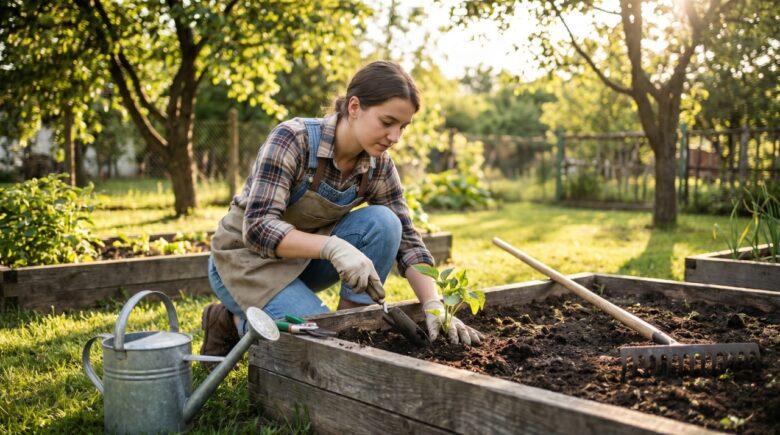
A hand trowel is the single most used tool in any beginner’s garden. It is a small, handheld shovel used for digging planting holes, transplanting seedlings, mixing in fertilizer, and scooping compost. You will reach for it almost every time you are outside.
Look for one with a stainless steel blade and a comfortable rubber grip. Cheap plastic trowels bend and break within a few uses. Spending $12 to $20 on a quality hand trowel is one of the best investments you will make. Brands like Fiskars and Radius Garden make reliable options that last years.
Pruning Shears (Bypass Style)
Pruning shears let you cut stems, harvest vegetables, deadhead flowers, and trim back plants that are getting out of control. Bypass pruners work like scissors. They give a clean cut instead of crushing the stem, which keeps your plants healthier and more productive.
Do not skip this tool. Trying to harvest tomatoes or zucchini with kitchen scissors or your hands damages the plant. A quality pair of bypass pruners costs $20 to $35 and will last a long time if you clean and dry them after each use. Learning how to care for pruning tools properly extends their life significantly.
A Garden Hoe
If you are planting in the ground, weeds will come. They always do. A garden hoe lets you knock out weeds quickly without bending over and pulling each one by hand. It also helps break up the soil surface between rows after rain compacts it.
A standard flat hoe or a stirrup hoe (also called a hula hoe) both work well for beginners. The stirrup hoe cuts on both the push and pull stroke, which makes weeding faster. Expect to spend $25 to $45 for a good one. It pays for itself after the first weed-heavy week.
A Long-Handled Garden Fork or Spade
If you are starting a new in-ground bed, you need something to break up and turn your soil. A garden fork (with tines) works well in most soil types. A spade works better if you need to edge beds or move large amounts of soil or compost.
You probably do not need both as a beginner. Pick based on your soil. Rocky or clay-heavy soil benefits from a fork. Looser soil is fine with a spade. Either way, a long handle saves your back. Quality matters here. A cheap spade will bend or snap under real pressure.
A Garden Rake
A leaf rake and a garden rake are two different things. For gardening, you want a bow rake with rigid metal tines. It is used to level soil, smooth out a bed before planting, break up clumps, and work in compost. Leaf rakes are too flexible for this kind of work.
A bow rake costs $25 to $40 and is one of those tools that seems optional until you actually try to plant without leveling your bed first. Seeds sown in uneven soil lead to uneven germination and drainage problems.
A Quality Watering Can or Garden Hose with a Wand Attachment
Plants need water. How you deliver it matters more than most beginners realize. A watering can with a long spout and a rose head (the sprinkler attachment) lets you water gently at the base of plants without washing away soil or disturbing seedlings.
If your garden is larger, a garden hose with a wand attachment gives you the same control from a distance. Look for a wand with an adjustable spray setting. Overhead watering can encourage fungal disease on many plants, so watering at the base is a habit worth building early.
Garden Gloves
Bare hands get blisters, splinters, and cuts. Good gloves protect your hands while still giving you enough feel to work carefully. Look for a pair with a nitrile or latex coating on the fingers and palm. Thick leather gloves are great for pruning roses but too clunky for detail work.
A pair of well-fitted garden gloves costs $10 to $20. Buy a size that fits snugly. Gloves that are too big bunch up and reduce your grip, which makes every task harder than it needs to be.
A Kneeler or Knee Pads
This one gets left off most tool lists, but it should not be. Spending 30 minutes kneeling on hard or rocky soil is painful. A garden kneeler (some fold up into a step stool too) or simple foam knee pads make weeding and planting far more comfortable.
When you are comfortable, you stay outside longer and do better work. That is a real benefit. A decent foam kneeler costs under $15. It is not glamorous, but experienced gardeners swear by them.
What Most Garden Tool Articles Get Wrong
Almost every “essential tools” list you find online is really just a product roundup designed to earn affiliate commissions. They include 20 to 30 items and call all of them essential. That is not honest advice. That is a shopping cart.
Here is what most articles skip: the condition of the tool matters more than the brand. A $15 hand trowel that you clean, dry, and store properly will outlast a $40 trowel left in the rain. Beginners often spend on fancy tools and then neglect basic maintenance. Wipe your metal tools down after use. Sharpen your hoe and pruner blades once or twice a season. Store tools inside or under cover. These habits add years to every tool you own. No amount of spending replaces good care.
How to Start Without Getting Overwhelmed
Start with just three tools: a hand trowel, pruning shears, and a watering can or hose wand. These three cover the most common tasks in any new garden. Get your hands dirty with them for a few weeks. You will quickly discover which other tools you actually need based on real experience, not guesswork.
Once you feel confident with those basics, add a hoe if you are battling weeds, or a rake if you are prepping a new bed. Buy one tool at a time as a specific need comes up. Before spending anything, check local Facebook Marketplace or buy nothing groups. Quality garden tools show up secondhand regularly for a few dollars. Many gardeners downsize their tool collections and sell good gear cheap.
Your first investment should be quality hand tools, not quantity. Three solid tools beat ten cheap ones every time.
The Simplest Way to Set Yourself Up for a Good First Season
The most important takeaway here is this: you do not need much to garden well. You need a few reliable tools, a basic routine, and a willingness to learn as you go. The essential garden tools for beginners fit in a small bucket you can carry from bed to bed.
Start with your hand trowel, pruning shears, and a good pair of gloves. Build from there as real needs come up. If you want a structured place to begin, look at gardening tool recommendations from trusted organizations like the RHS to cross-check your list before you buy.
Grow something this season. Then grow something better next season. That is how gardening actually works.