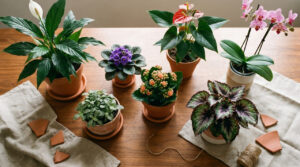
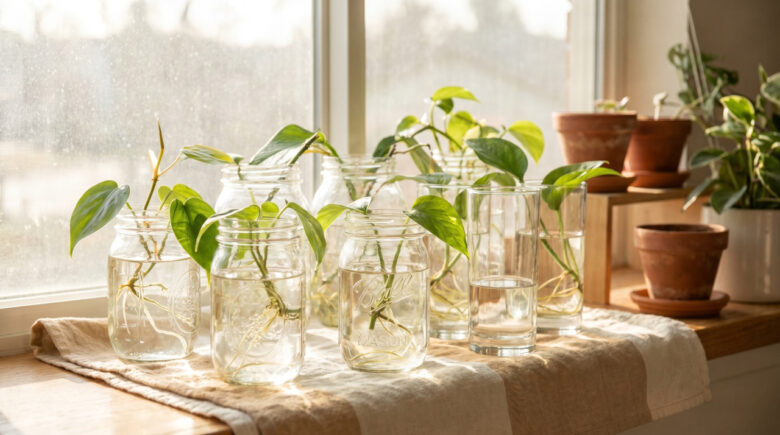
More than 50 common houseplants can grow roots in a plain glass of water. No soil. No fertilizer and no special equipment. You probably have a plant on your windowsill right now that can do it. Water propagation is one of the easiest ways to get free plants from cuttings you already own. This guide covers which plants that root in water work best, exactly how to do it, what goes wrong, and how to keep your water plants healthy for months.
Why Plants That Root in Water Grow So Well Without Soil
Plants grow roots in water because of a basic biological process. When you cut a stem just below a node, the plant senses the damage. It responds by sending out new cells that develop into roots. Water provides the moisture those new cells need to grow. It also keeps oxygen moving around the stem, which speeds things up.
Soil is not required for this process. In fact, soil can slow things down at first. It introduces bacteria, competes for moisture, and hides what is happening underground. Water lets you watch the roots form in real time. That visibility is one reason so many gardeners prefer water propagation for the early stages of new plants. For a deeper look at the science behind this process, Gardening Know How has a solid breakdown worth reading.
Not every plant does this equally well. Soft stemmed plants like pothos, coleus, and basil root quickly and reliably. Woody plants like roses or fruit trees can root in water too, but it takes longer and success rates are lower. This guide focuses on the easy wins: soft stemmed plants that root in water fast and with very little effort.
The Best Plants That Root in Water
Pothos
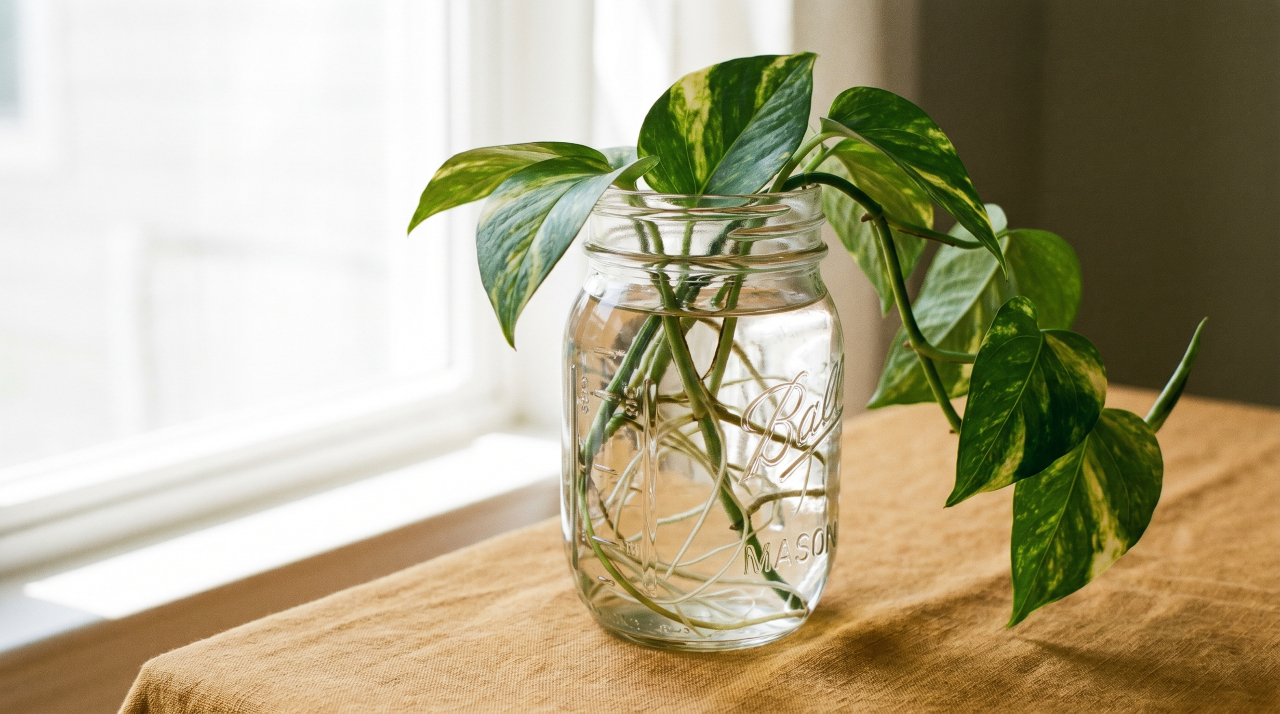
It is the most forgiving plant you can root in water. Cut a stem with two or three leaves, strip the bottom leaf, and drop it in a jar. Roots appear in as little as seven days. Pothos can actually live in water permanently without ever needing soil.
Philodendron
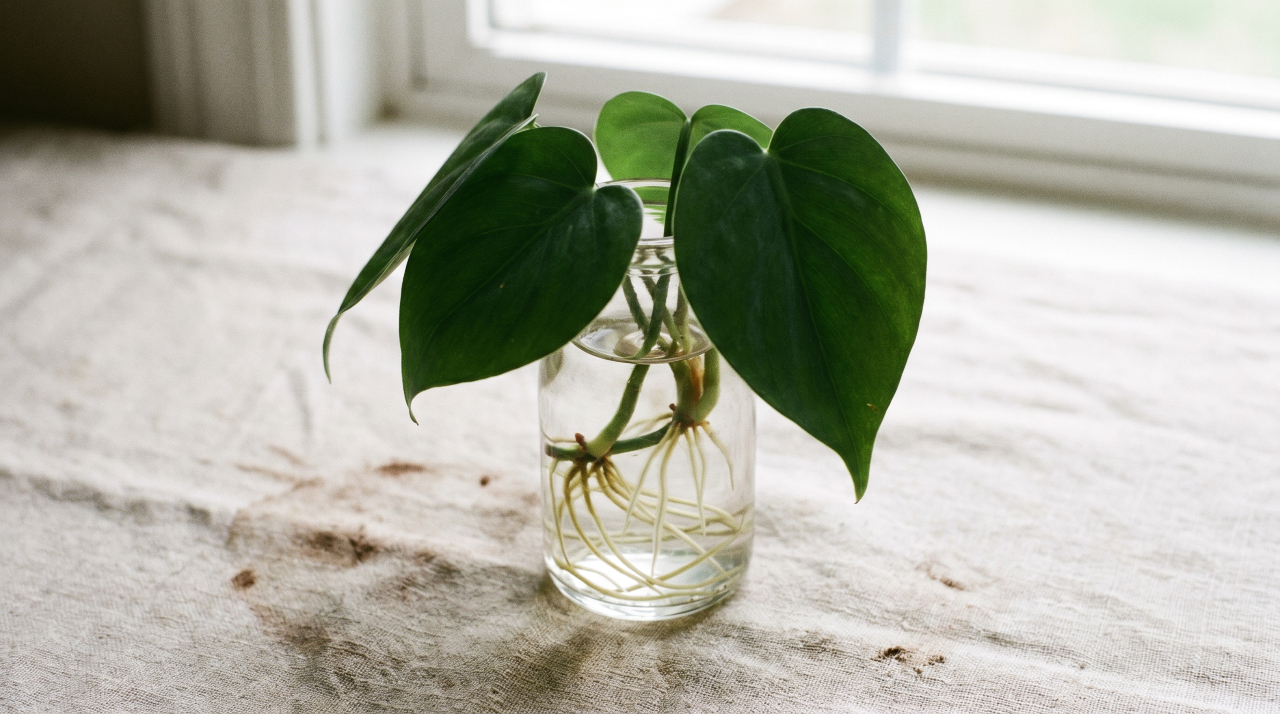
It works almost the same way. Both heartleaf and Brasil varieties root fast from a single node cutting. Place the node underwater and the leaves above the waterline. Give it two to four weeks and you will have a rooted cutting ready to pot or keep in water.
Coleus
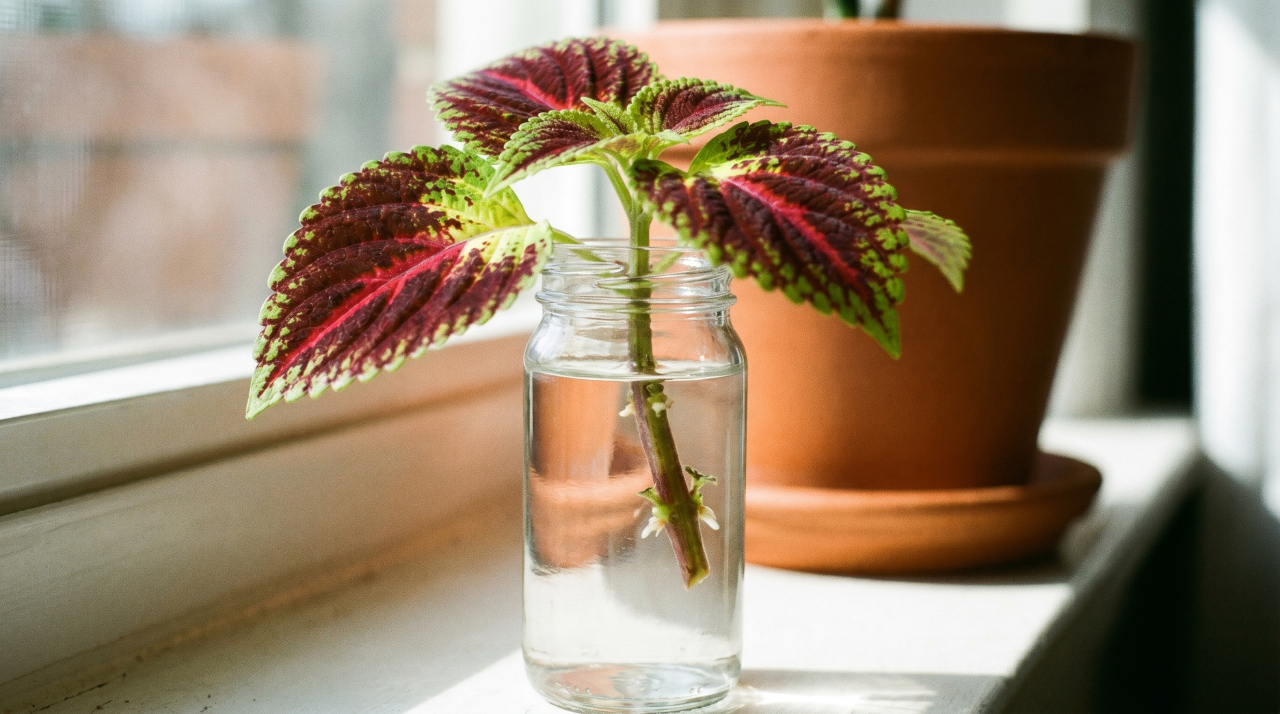
It is one of the fastest plants that root in water. A four inch cutting will show roots within a week in warm weather. These plants are cheap to buy and incredibly easy to multiply. Take cuttings at the end of summer to keep your favorite colors going through winter.
Impatiens
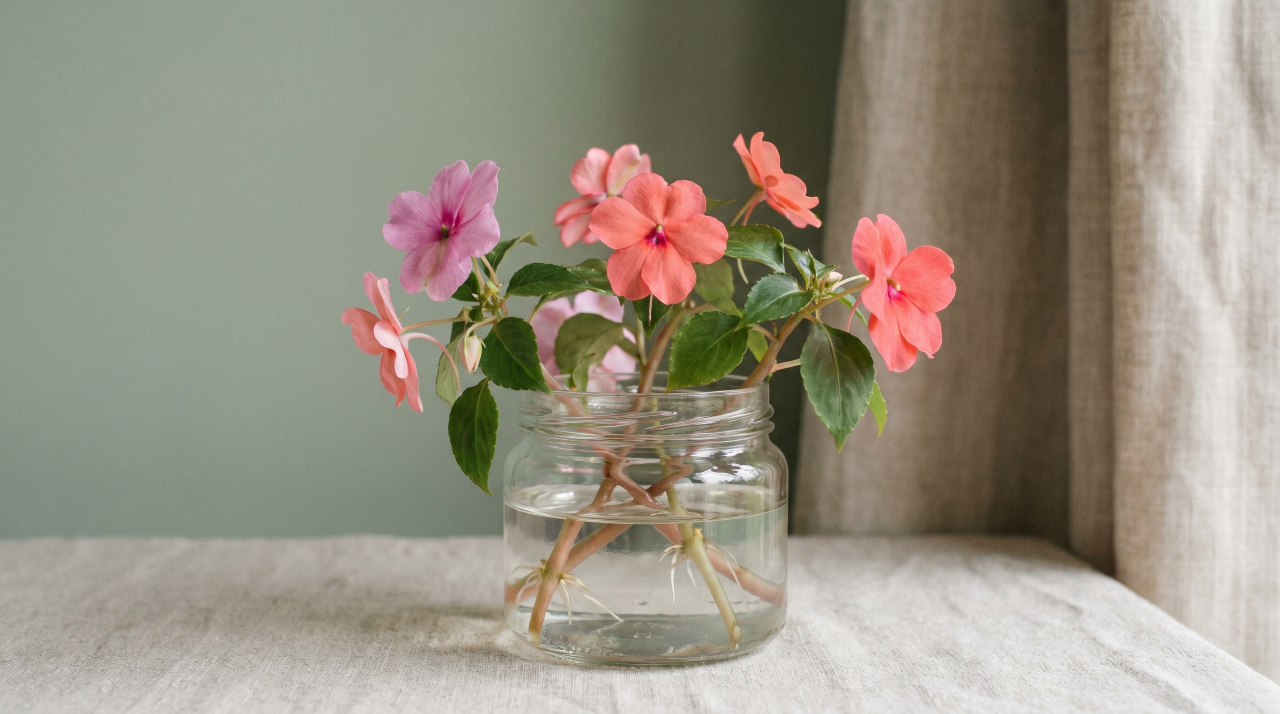
It roots so easily it almost feels like cheating. Drop a few stems in a glass of water and put it on a bright windowsill. You will see small white roots within ten days. These make excellent indoor plants during cold months when you cannot grow them outside.
Basil
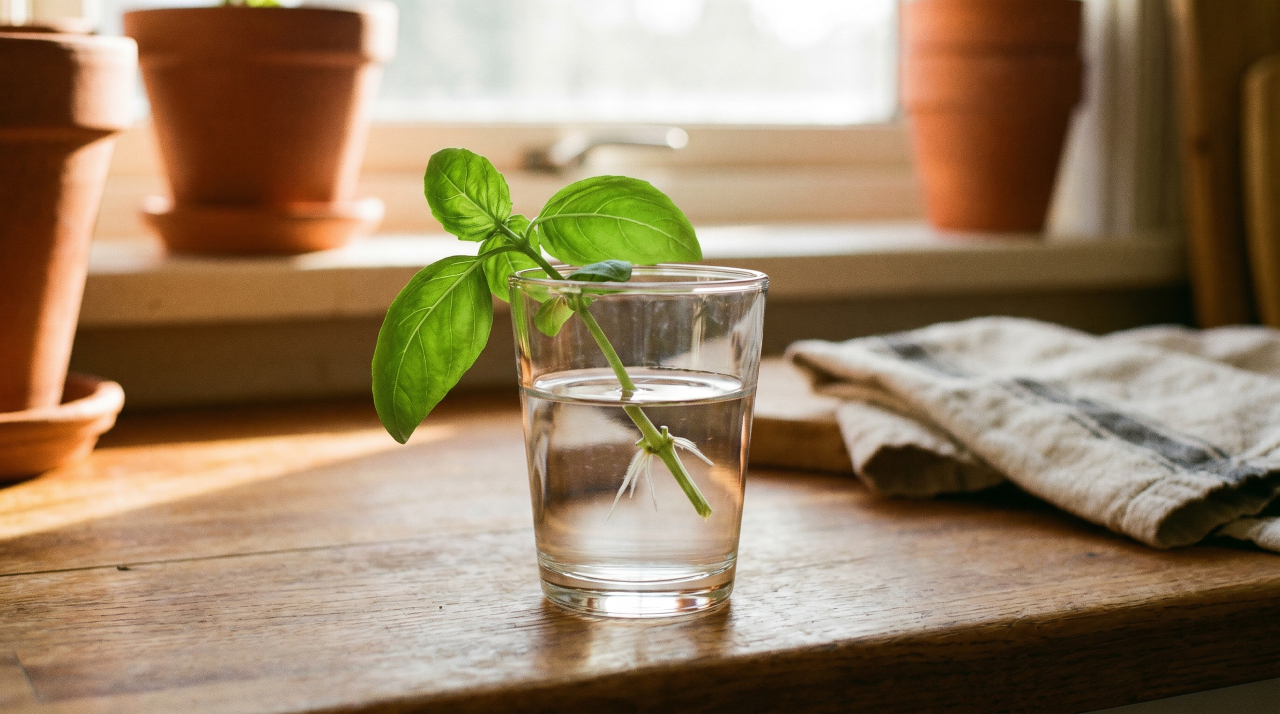
It is the herb most people try first. Snip a stem just below a leaf node, remove the bottom leaves, and place it in a glass of water on your kitchen counter. Change the water every two days. Roots appear in one to two weeks. Transplant it to soil once roots reach an inch long for better long term growth.
Mint
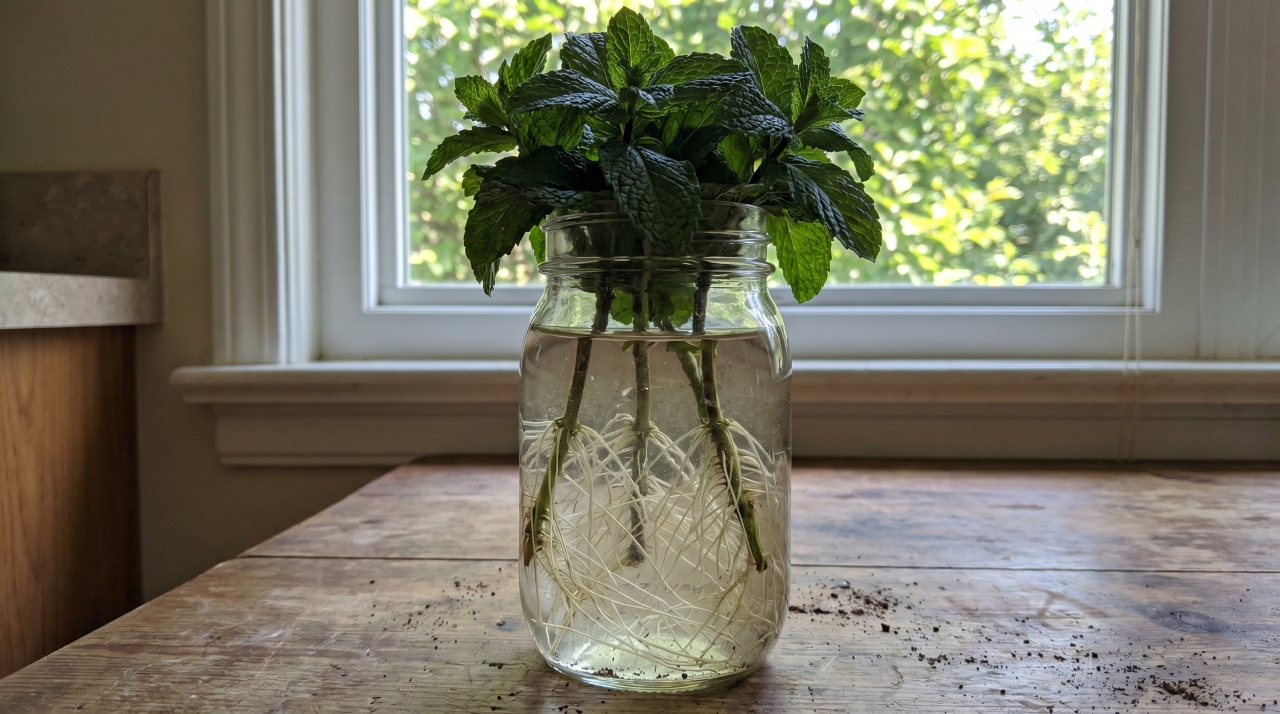
It is even easier than basil. It roots aggressively in water and grows fast. One cutting can turn into several plants in a month. Keep mint in a dedicated jar because it will take over a shared container quickly.
Begonia
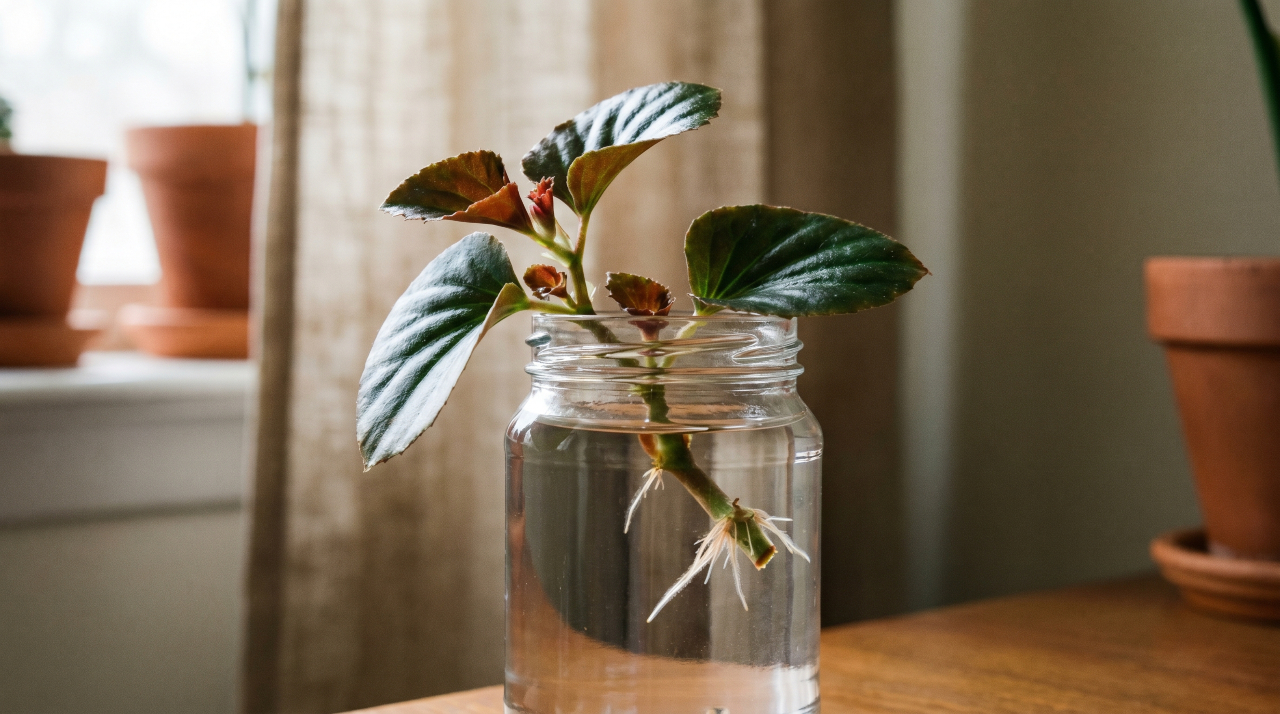
Roots well from stem cuttings in water. Wax begonias, tuberous types, and rex begonias all work. Place a stem with at least one leaf in water and change the water every few days. Roots can take up to six weeks with begonias, so be patient.
Spider plants
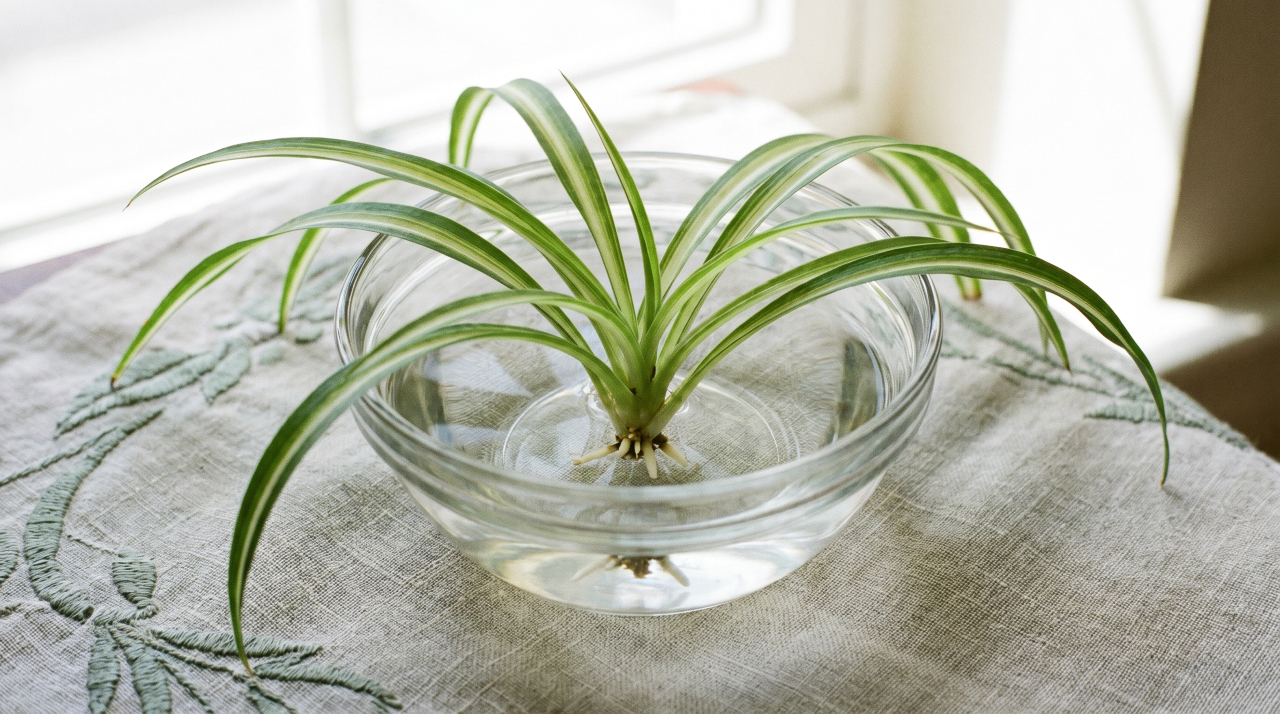
It produces small offshoots called spiderettes. These babies already have tiny root stubs before you even cut them. Place them in water and those stubs grow into full roots within two weeks. Spider plants are excellent for beginners because they root almost on their own.
Tradescantia (also called Wandering Jew or spiderwort)
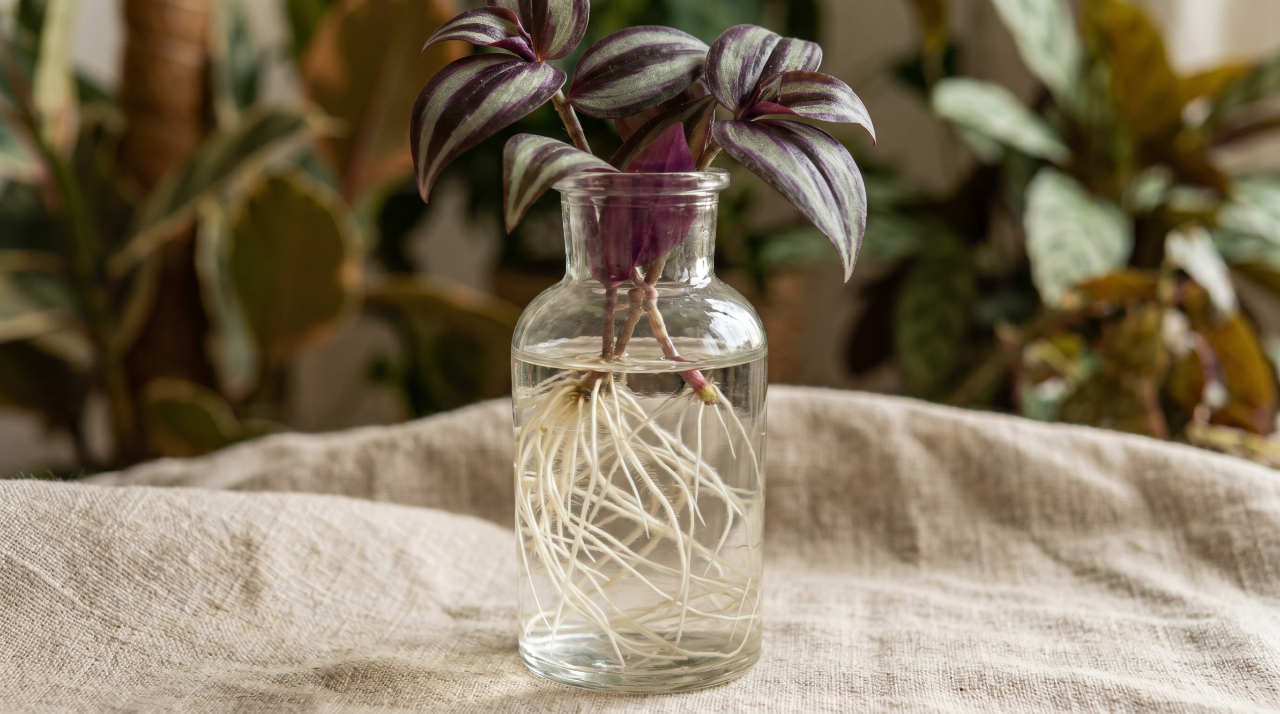
It is one of the toughest plants that root in water. Cuttings root in as little as five days. The purple and green leaves look striking in clear glass jars. This plant can live in water indefinitely with regular water changes. Epic Gardening covers even more plant options if you want to expand your list beyond these ten.
Sweet potato vine
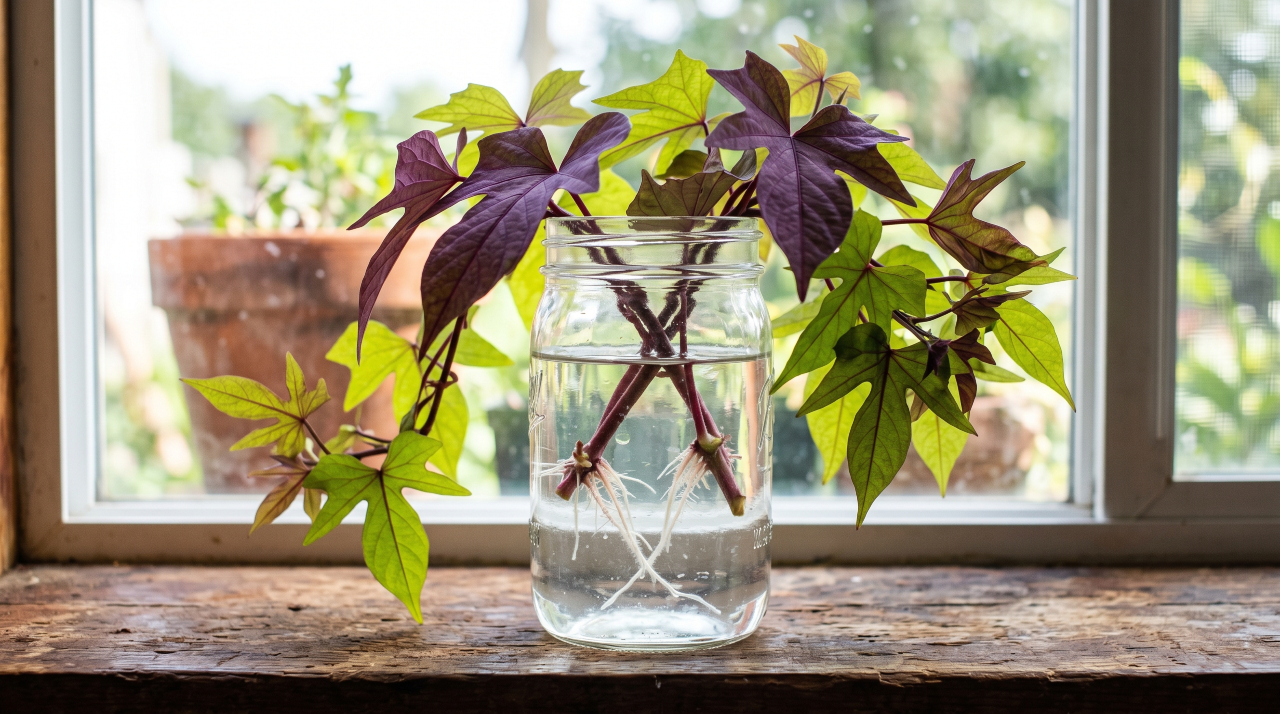
It roots aggressively from stem cuttings. Cut a four to six inch section, remove lower leaves, and place it in a jar of water in a bright spot. It roots within one to two weeks. Sweet potato vine grows quickly, so it is great when you want to fill space fast.
What You Need Before You Start Growing Plants That Root in Water
The good news is that you need almost nothing to get started. Most people have everything already.
- Clear glass jars or vases (mason jars, old pasta sauce jars, and small vases all work)
- Clean room temperature water (let tap water sit for 24 hours if you want to release chlorine)
- Sharp scissors or pruning shears (clean them with rubbing alcohol before use)
- A bright spot with indirect light (a north or east facing windowsill is ideal)
- A little patience (most cuttings take one to four weeks to show roots)
That is genuinely the full list. You do not need rooting hormone, special glass, or filtered water. A clean jar and a healthy cutting are enough to get started today.
How to Root Plants in Water: A Step by Step Process That Actually Works
1: Choose a healthy stem
Pick a stem that looks strong and green. Avoid stems with yellow leaves, brown tips, or signs of pests. The cutting should be four to six inches long. Longer cuttings can work but tend to rot faster before roots form.
2: Cut just below a node
A node is the small bump or joint where a leaf connects to the stem. Cut about a quarter inch below that point using clean scissors. The node is where roots will grow from. Without a node in the water, the cutting will not root at all.
3: Remove all leaves below the waterline
This step is critical. Any leaf sitting in water will rot within days. Rotting leaves cloud the water, introduce bacteria, and kill the cutting. Leave only the top one or two leaves on the stem above the water surface.
4: Place the cutting in a clean glass jar
Fill your jar with room temperature water and place the cutting so that the node is submerged. The leaves should sit above the rim of the jar. If the jar is too tall, fold a small piece of paper around the stem to prop it at the right height.
5: Find the right spot
Bright indirect light works best for most plants that root in water. A windowsill that gets morning sun is a good choice. Avoid placing the jar in direct afternoon sun. Hot direct sun raises the water temperature and encourages algae growth, which slows rooting.
6: Change the water every three to five days
Fresh water keeps oxygen levels high around the stem and stops bacteria from building up. When you change the water, rinse the jar too. Do not skip this step. Stagnant water is the number one reason cuttings fail.
7: Watch for roots and know when to act
Most soft stemmed plants show roots within one to four weeks. Once roots reach one to two inches long, the cutting is ready to transplant to soil. Some plants, like pothos and tradescantia, can stay in water long term without any issues.
8: Transplant carefully if you choose soil
Fill a small pot with fresh potting mix. Make a hole in the center and lower the rooted cutting in gently. Water it right away and keep the soil moist for the first two weeks. Water grown roots are soft and fragile compared to soil grown roots, so handle them carefully during the move.
Common Mistakes People Make When Rooting Plants in Water
Most failed cuttings come down to a small number of avoidable errors. These are the ones that trip people up most often.
Leaving leaves underwater is the top mistake. Even one submerged leaf will rot within a few days and contaminate the water. Remove every leaf that touches the waterline before you start.
Using cold tap water without letting it settle can stress the cutting before it even starts. Let tap water sit in an open container for 24 hours before use. Room temperature water is easier on the stem and allows the plant to begin rooting faster.
Placing the jar in direct hot sun overheats the water. Warm water holds less oxygen and speeds up bacterial growth. Both of those things work against root formation. Bright but indirect light is always the better choice for plants that root in water.
Never changing the water is another common error. Water goes stale quickly. The oxygen level drops, algae starts to form, and bacteria take hold. Change it every three to five days without fail.
Taking cuttings from a stressed plant sets you up for failure from the start. A cutting taken from a plant that is already struggling with pests, disease, or drought is far less likely to root. Always cut from a healthy, well watered parent plant.
Giving up too early is surprisingly common. Begonias and some woody herbs can take five to six weeks to show roots. If the stem is still green and firm, the cutting is alive and working. Keep changing the water and give it more time.
Cramming too many cuttings in one jar creates competition and crowds the stems. Each cutting needs space for roots to grow outward. Use separate jars for different plants, or space cuttings at least two inches apart in a wide mouthed container.
How Long Can Plants That Root in Water Stay in Water?
This depends on the plant. Some can stay in water for years. Others do better once they move to soil.
Pothos, tradescantia, philodendron, and lucky bamboo are examples of plants that live well in water long term. They adapt to pulling nutrients from water instead of soil. Add a few drops of liquid fertilizer every three to four weeks once roots are established and these plants thrive indefinitely in a jar. Garden Betty has a practical guide on which varieties handle long term water growing best.
Herbs like basil and mint do better in soil after the initial rooting stage. Water grown basil stays small and can turn leggy without the nutrients soil provides. Root it in water to get the process started, then move it to a pot once roots are one to two inches long for stronger long term growth.
Most flowering plants like impatiens and begonias also do better long term in soil. Water sustains them for weeks but they need more nutrients to bloom well. Use the water stage to root the cutting, then pot it up once you have a good root system.
The rule of thumb is simple. If a plant is growing new leaves in water and the roots look healthy, it is doing fine. If growth stalls and the roots start turning brown, it is time to move it to soil.
Simple Tips for Keeping Your Water Rooted Plants Healthy Long Term
Once your plants are rooted and settled in water, a small amount of regular maintenance keeps them looking great.
| Task | How Often |
|---|---|
| Change the water | Every 3 to 5 days |
| Clean the jar | Every 2 to 3 weeks |
| Add liquid fertilizer | Every 3 to 4 weeks after roots form |
| Check roots for browning | Weekly |
| Top up evaporated water | As needed |
Use clear glass containers so you can monitor root health without disturbing the plant. Brown or black roots signal bacterial buildup and mean the jar needs cleaning right away. Healthy roots are white or pale yellow.
Keep jars away from heating vents and air conditioners. Extreme temperature swings stress water grown plants more than soil grown ones because there is no insulating medium around the roots. A steady room temperature between 65 and 80 degrees works well for most plants that root in water.
Frequently Asked Questions About Plants That Root in Water
Can all plants root in water? No. Soft stemmed plants like pothos, coleus, basil, and philodendron root easily in water. Woody plants like trees and shrubs can sometimes root in water but the process is slower and less reliable. Succulents and cacti almost never root in water because they are adapted to dry conditions and the moisture causes rot before roots can form.
How often should I change the water for cuttings? Every three to five days is the right frequency. Fresh water keeps oxygen levels high and stops bacteria from building up around the stem. If the water smells bad or turns cloudy before the three day mark, change it right away.
Why are my cuttings not growing roots? The most common causes are no node in the water, rotting leaves left on the stem, stagnant water, or too much direct sun. Check each of those things first. If the stem is still firm and green after three weeks with no roots, try taking a fresh cutting from a healthier section of the parent plant.
Do water rooted plants need fertilizer? Not at first. Cuttings draw on stored energy in the stem during the rooting phase. Once roots are established and you see new leaf growth, add a few drops of balanced liquid fertilizer every three to four weeks. Too much fertilizer in the early stages promotes algae and can burn fragile new roots.
Can I root succulents in water? Succulents store water in their leaves and stems, which makes them prone to rot when submerged. Most succulent varieties do not root reliably in water. Propagate succulents in dry or barely moist soil instead for much better results.
Start Growing Plants That Root in Water Today
Water propagation is one of the most satisfying things you can do as a home gardener. It costs nothing, requires almost no space, and turns one plant into many. The plants that root in water best are probably sitting in your home right now. Take a cutting from your pothos, strip the lower leaves, drop it in a clean jar, and put it on your windowsill. Come back in ten days. The white roots you find will be proof that you do not need soil, special tools, or experience to grow new plants from scratch. Start with one cutting and see what happens.