Whether you’re a weekend warrior with a small balcony garden or a seasoned grower with raised beds and row crops, one thing remains universally true: the best gardening hacks save you time, money, and frustration. The good news? You don’t need expensive tools or complicated techniques to grow a healthier, more productive garden.
In this article, we’re diving deep into 10 genius gardening hacks that actually work — all tested, practical, and backed by real-world results. From natural fertilizers hiding in your kitchen to clever DIY watering systems, these tips will completely transform the way you garden. Ready to grow smarter? Let’s dig in.
Why Smart Gardening Hacks Matter
Before we jump into the list, let’s talk about why these hacks work so well. Modern gardening has become overcomplicated. Garden centers are filled with expensive chemicals, synthetic fertilizers, and gadgets most people never use. The truth is, nature provides everything your plants need — sometimes right in your kitchen bin.
These organic gardening tricks focus on:
- Improving soil health naturally
- Boosting plant growth without harsh chemicals
- Preventing pests using safe, everyday ingredients
- Saving water and money with DIY solutions
- Recycling kitchen waste into powerful plant nutrients
Now, let’s get into the good stuff.
1: Use Cinnamon as a Natural Antifungal for Seedlings
One of the most surprising — and effective — gardening hacks involves a spice you probably already have in your cupboard: cinnamon.
Damping off is a fungal disease that kills seedlings at the soil line, and it’s every gardener’s nightmare. The solution? Sprinkle ground cinnamon lightly over your seed-starting mix. Cinnamon contains natural antifungal compounds that inhibit mold and fungal growth without harming your delicate seedlings.
How to use it:
- Dust cinnamon directly onto the soil surface after planting seeds
- Apply again after watering if you notice white mold forming
- Use it on cuttings to prevent rot at the cut end
This is one of those DIY garden ideas that costs almost nothing and delivers impressive results. Many experienced growers swear by it as a first line of defense in organic gardening.
2: Build a DIY Self-Watering Bottle System
Forget expensive drip irrigation systems. A plastic bottle and a small nail are all you need to keep your plants consistently hydrated — even when you’re away from home.
Here’s how to do it:
- Take a clean 1–2 liter plastic bottle
- Poke 4–6 small holes in the cap using a nail or pin
- Fill the bottle with water
- Flip it upside down and push it into the soil near the base of your plant
The water slowly seeps into the soil, delivering consistent moisture directly to the roots. It’s perfect for container plants, raised beds, and vegetable gardens during hot summer months. This simple hack can reduce your watering frequency dramatically while keeping plants healthier — a real win for sustainable gardening.
3: Eggshells for Pest Control and Calcium Boost
Don’t throw away those breakfast eggshells! Crushed eggshells are one of the most versatile and underrated gardening tools available.
Two powerful uses:
- Pest control: Scatter crushed eggshells around the base of plants. The sharp edges deter slugs, snails, and soft-bodied insects that hate crawling over the jagged surface.
- Calcium supplement: Eggshells are rich in calcium carbonate, an essential mineral that strengthens plant cell walls and prevents issues like blossom end rot in tomatoes and peppers.
Simply dry your eggshells, crush them into small pieces, and work them into the soil or sprinkle them on top as a mulch. It’s natural fertilizer at its finest — completely free and endlessly renewable.
4: Hydrogen Peroxide for Stronger Root Health
Here’s a gardening hack that sounds almost too scientific to be true — but it genuinely works. Diluted hydrogen peroxide (3%) can dramatically improve root health by oxygenating the soil and eliminating harmful pathogens.
How to use it:
- Mix 1 tablespoon of 3% hydrogen peroxide with 1 cup of water
- Use it to water seedlings or struggling plants once a week
- Apply to soil that appears waterlogged or compacted
Hydrogen peroxide breaks down into water and oxygen, which feeds beneficial soil microbes and encourages stronger, more vigorous root development. It’s also effective at treating root rot in its early stages — one of the most common reasons houseplants and garden plants fail.
5: Coffee Grounds as Natural Fertilizer and Pest Repellent
If you’re a coffee drinker, you’re sitting on gardening gold every single morning. Used coffee grounds are nitrogen-rich, improve soil structure, and repel common garden pests like slugs, ants, and even cats.
Best ways to use coffee grounds in the garden:
- Mix into compost to boost nitrogen content
- Work directly into soil around acid-loving plants like blueberries, azaleas, and roses
- Sprinkle around vulnerable plants as a pest barrier
- Use as a thin mulch layer to retain moisture
Coffee grounds also attract earthworms, which are nature’s best soil aerators. This is organic gardening at its most practical — turning everyday waste into plant growth gold.
6: The Plastic Fork Trick to Protect Plants from Animals
This is the simplest hack on the list — and one of the cleverest. Stick plastic forks into the soil around your plants with the tines facing upward. The uncomfortable surface deters cats, squirrels, birds, and other curious animals from digging up your seedlings or disturbing freshly planted beds.
It’s completely harmless to animals and 100% reusable season after season. Space forks about 4–6 inches apart around the perimeter of your plant bed for best results. A cheap multi-pack of plastic forks becomes your garden’s most affordable security system.
7: Epsom Salt for Bigger Blooms and Sweeter Fruit
Epsom salt (magnesium sulfate) has been used by experienced gardeners for generations — and for good reason. Magnesium is a critical nutrient that helps plants absorb other essential minerals, produce chlorophyll, and support flowering and fruiting.
How to use Epsom salt in your garden:
- Dissolve 1 tablespoon in 1 gallon of water and use as a foliar spray or soil drench
- Add directly to planting holes for tomatoes, peppers, and roses
- Apply monthly during the growing season for best results
Gardeners who use Epsom salt consistently report lusher foliage, more abundant blooms, and noticeably sweeter fruit. It’s inexpensive, widely available, and one of the most effective plant growth tips you can use right now.
8: Regrow Food from Kitchen Scraps
Why buy new plants when your kitchen scraps can do the work for you? Regrowing food from scraps is one of the most satisfying and sustainable gardening practices available.
Try these easy regrowth wins:
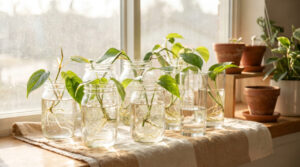
- Green onions: Place roots in a glass of water on a sunny windowsill
- Lettuce and celery: Submerge the base in water until new growth appears, then transplant
- Garlic: Plant individual cloves directly into soil for a new bulb
- Basil and mint: Root cuttings in water before planting out
This hack costs absolutely nothing and is a fantastic introduction to sustainable gardening for beginners. Within weeks, you can have fresh produce growing from what would have otherwise been thrown away.
9: Diaper Gel for Moisture Retention in Soil
This clever hack is especially useful for container gardening and hanging baskets that dry out quickly in warm weather. The water-absorbing crystals found inside disposable diapers — sodium polyacrylate — can hold up to 300 times their weight in water.
How to use it:
- Cut open an unused diaper and extract the gel crystals
- Mix a small amount into your potting soil before planting
- The crystals absorb water and release it slowly back into the soil as it dries
This dramatically reduces how often you need to water, making it a brilliant water-saving gardening tip for hot climates or busy gardeners. Use sparingly — a little goes a very long way.
10: Banana Peel Tea for Powerful Natural Fertilizing
Our final trick is one of the most nutrient-packed Gardening Hacks on this list. Banana peels are loaded with potassium, phosphorus, and calcium — three of the most important nutrients for flowering plants and fruiting vegetables.
How to make banana peel fertilizer tea:
- Soak 2–3 banana peels in a jar of water for 48–72 hours
- Remove the peels and dilute the liquid with equal parts water
- Use it to water your plants at the base once every two weeks
The results? More vibrant blooms, stronger stems, and improved fruit development. You can also bury banana peels directly in the soil near rose bushes and tomatoes for a slow-release nutrient boost throughout the season.
Grow Smarter, Not Harder
These 10 genius gardening hacks prove that the best solutions are often the simplest ones. By using what’s already in your home — coffee grounds, eggshells, banana peels, cinnamon, and more — you can create a thriving, productive garden without spending a fortune or relying on harsh chemicals.
Whether you’re focused on organic gardening, vegetable garden tips, natural pest control, or simply growing more with less, these tested tricks deliver real results for real gardeners.
Ready to Transform Your Garden?
Try one of these hacks this week and share your results in the comments below! Which gardening trick surprised you the most? Have a favorite hack that’s not on this list? We’d love to hear about it.
Don’t forget to bookmark this article, share it with a fellow gardening enthusiast, and subscribe for more practical plant care guides, DIY garden ideas, and organic gardening tips delivered straight to you every week. Your best garden season yet starts right now.