Most monstera plants don’t die from neglect. They die from too much love — specifically, too much water.
If you’ve brought home one of these gorgeous Swiss Cheese Plants and aren’t sure where to start, you’re in the right place. Monstera plant care sounds complicated, but the reality is simpler than most guides let on. You just need to get a few fundamentals right, and your plant will reward you with dramatic, hole-covered leaves that stop people in their tracks.
By the end of this guide, you’ll know exactly how to water, light, feed, and repot your monstera — plus why those iconic holes form (and what to do if yours aren’t showing up).
What Is a Monstera, Exactly?
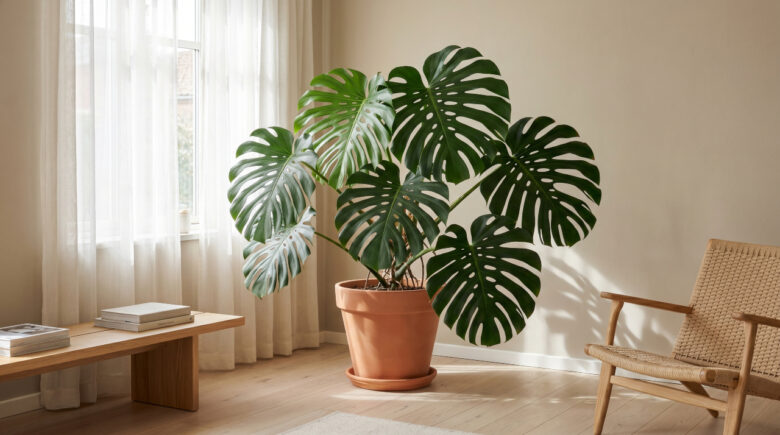
The monstera — full name Monstera deliciosa — is a tropical climbing vine native to the rainforests of southern Mexico and Central America. In the wild, it scales trees under a thick forest canopy, using aerial roots to anchor itself to bark while growing toward patches of filtered light above.
That origin story explains almost every care rule you’ll read below. The monstera evolved to thrive in:
- Dappled, filtered light — not harsh, direct sun
- Warm, humid air — like a tropical rainforest
- Well-draining soil — rainforest floors don’t hold standing water
Indoors, your monstera will stay between 6 and 8 feet tall, grow fairly fast during spring and summer, and slow down significantly in winter. It won’t fruit indoors (the edible fruit it produces in the wild is a mix of pineapple, banana, and mango flavors — a fun fact to share at your next dinner party), but it will produce those stunning split and holed leaves it’s famous for.
The most common variety you’ll find at a nursery or garden center is Monstera deliciosa. You may also come across Monstera adansonii, a smaller variety with more holes per leaf, better suited to shelves or hanging baskets. The care for both is nearly identical.
How Much Light Does a Monstera Need?
Bright, indirect light is your target. Think of the kind of light you’d find a few feet back from a sunny window — bright enough to read a book, but not so intense it would make you squint.
A north or east-facing window is ideal for most US homes. A south or west-facing window works too, but place your monstera a couple of feet away from the glass, or hang a sheer curtain to diffuse the intensity. Direct afternoon sun through unfiltered glass will scorch the leaves, leaving brown crispy patches that won’t heal.
Here’s where beginners go wrong: they put their monstera in a dim corner because the big leafy plant “looks like a jungle plant that likes shade.” It doesn’t. Low light causes your monstera to produce smaller, solid leaves — without those beautiful holes. The plant is essentially conserving energy to survive, not thrive.
A practical test: Hold your hand 12 inches above a white piece of paper on the spot where you want to place your plant. If your hand casts a distinct, crisp shadow, you’ve got enough light.
For best results, rotate your plant a quarter turn each week so every side gets even exposure and it grows upright rather than leaning toward the window.
How Often Should You Water a Monstera?
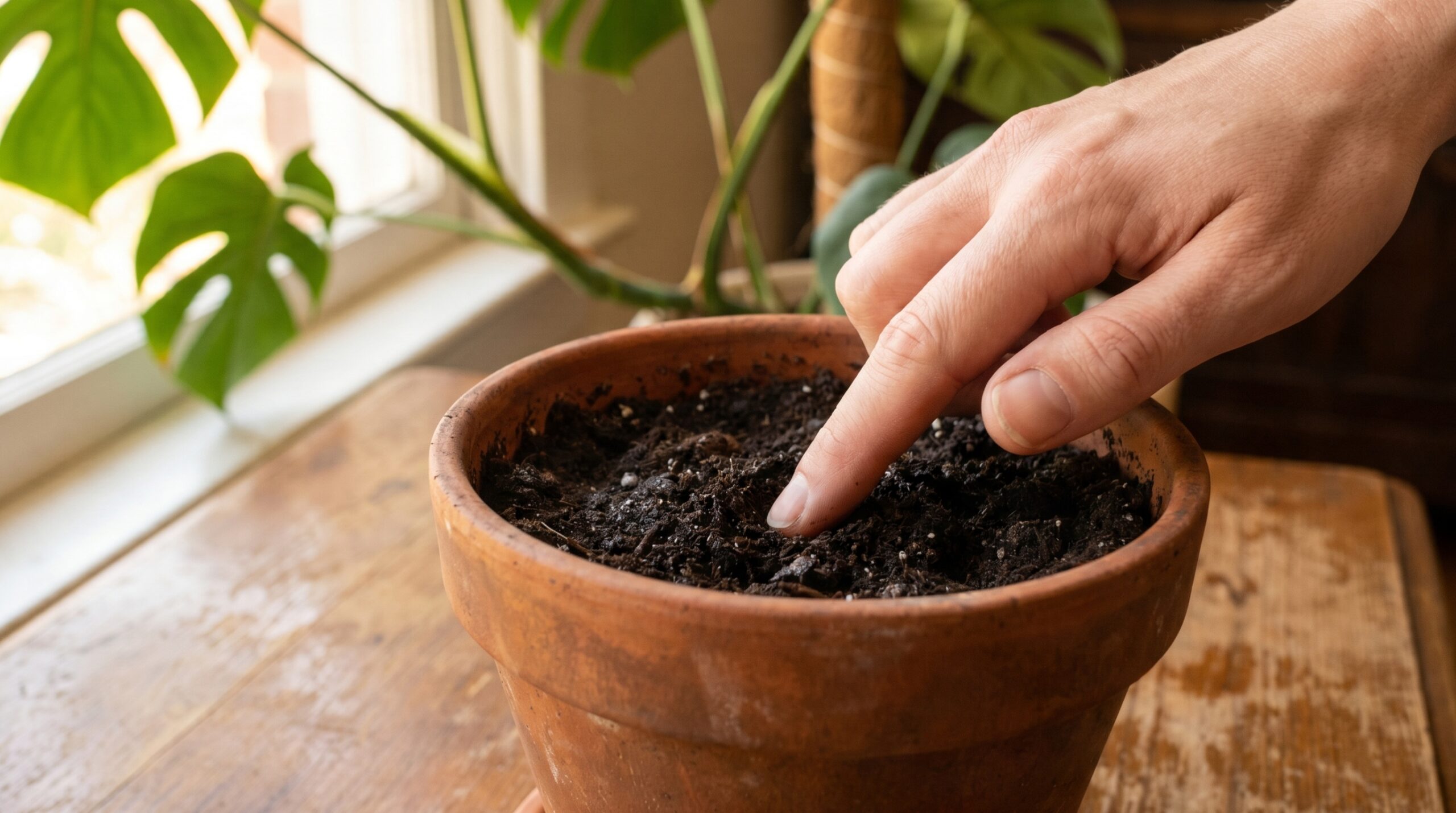
Wait until the top 1–2 inches of soil feel dry before you water. Poke your finger into the soil up to the second knuckle. If it feels dry, water thoroughly. If it still feels damp, check again in 2–3 days.
That’s it. That’s the watering rule.
Overwatering is the single biggest killer of monstera plants — responsible for the majority of failures new plant owners experience. Watering on a fixed weekly schedule without checking the soil first is the fastest way to end up with root rot.
When you do water, do it properly:
- Water slowly and evenly until it runs out of the drainage holes at the bottom
- Let the pot drain completely — never let it sit in standing water
- Empty the saucer underneath after 30 minutes
Your monstera will need more water in spring and summer when it’s actively growing, and less in fall and winter when growth slows. During winter, you might water every 2–3 weeks instead of weekly. Let the plant tell you what it needs — and it will, through its leaves (more on that in the troubleshooting section below).
Watering signs to watch for:
| Symptom | Likely Cause | What to Do |
|---|---|---|
| Yellow leaves | Overwatering or soggy soil | Check drainage; let soil dry before next watering |
| Curling or wilting leaves | Underwatering or low humidity | Water thoroughly; check moisture levels |
| Brown leaf tips | Low humidity or inconsistent watering | Boost humidity; adjust watering schedule |
| Black or mushy stems | Root rot from overwatering | Unpot, cut dead roots, repot in fresh dry mix |
| Leaves “sweating” | Overwatering — plant expelling excess moisture | Reduce watering frequency immediately |
What Soil Does a Monstera Need?
Monsteras need soil that drains well and lets roots breathe. Standard all-purpose potting mix works in a pinch, but the best setup is a mix that includes some perlite or orchid bark to improve airflow around the roots.
A good beginner-friendly mix ratio: 3 parts potting soil, 1 part perlite. This keeps things simple and affordable while preventing the dense, soggy conditions that cause root rot.
Avoid potting mixes with a lot of bark or compost — they hold excess moisture and can suffocate roots. And always, always use a pot with drainage holes. If you fall in love with a decorative pot without holes, use it as a cover pot and keep your plant in a plain plastic nursery pot inside it.
Terra-cotta pots are a great choice for beginners. They’re porous, which means excess moisture evaporates through the sides — giving your roots extra protection against overwatering.
Temperature and Humidity: What Your Monstera Likes
Your monstera is happiest in temperatures between 65°F and 85°F — which happens to be the comfort range for most US homes. It can tolerate a low of around 60°F but will struggle below that, so keep it away from drafty windows, air conditioning vents, and cold exterior walls in winter.
Humidity is where most indoor environments fall short. Monsteras thrive at 50–70% relative humidity, which is much higher than the typical US home (usually 30–50%). You don’t need perfect humidity — your monstera won’t immediately suffer in a drier home — but chronically dry air leads to brown leaf edges and slower growth.
To boost humidity without buying anything, try placing the pot on a tray filled with pebbles and a little water. As the water evaporates, it increases the moisture around the plant. A small humidifier near your plants is the most effective long-term solution, especially in winter when central heating dries the air significantly.
You can also use a hygrometer (an inexpensive humidity meter) to keep an eye on levels — a worthwhile investment if you have multiple tropical houseplants.
Fertilizing Your Monstera
Feed your monstera during the growing season, spring through early fall, with a balanced liquid fertilizer. A 10-10-10 or 20-20-20 NPK ratio works well. Apply it at half the recommended strength every 4–6 weeks.
Don’t fertilize in winter. Your monstera enters a semi-dormant phase when temperatures drop and day length shortens. It’s not actively growing, so it can’t use the nutrients — and excess fertilizer salts will build up in the soil and burn the roots.
Two things beginners often get wrong with fertilizing: they either skip it entirely (slowing growth and reducing leaf size) or over-apply it thinking more is better (causing leaf burn and salt buildup). Half strength, once a month during the growing season, is the sweet spot.
How to Get Those Iconic Leaf Holes (Fenestration)
This is the question most monstera guides don’t answer properly, and it’s one of the most-searched topics among new plant owners: why doesn’t my monstera have holes in its leaves?
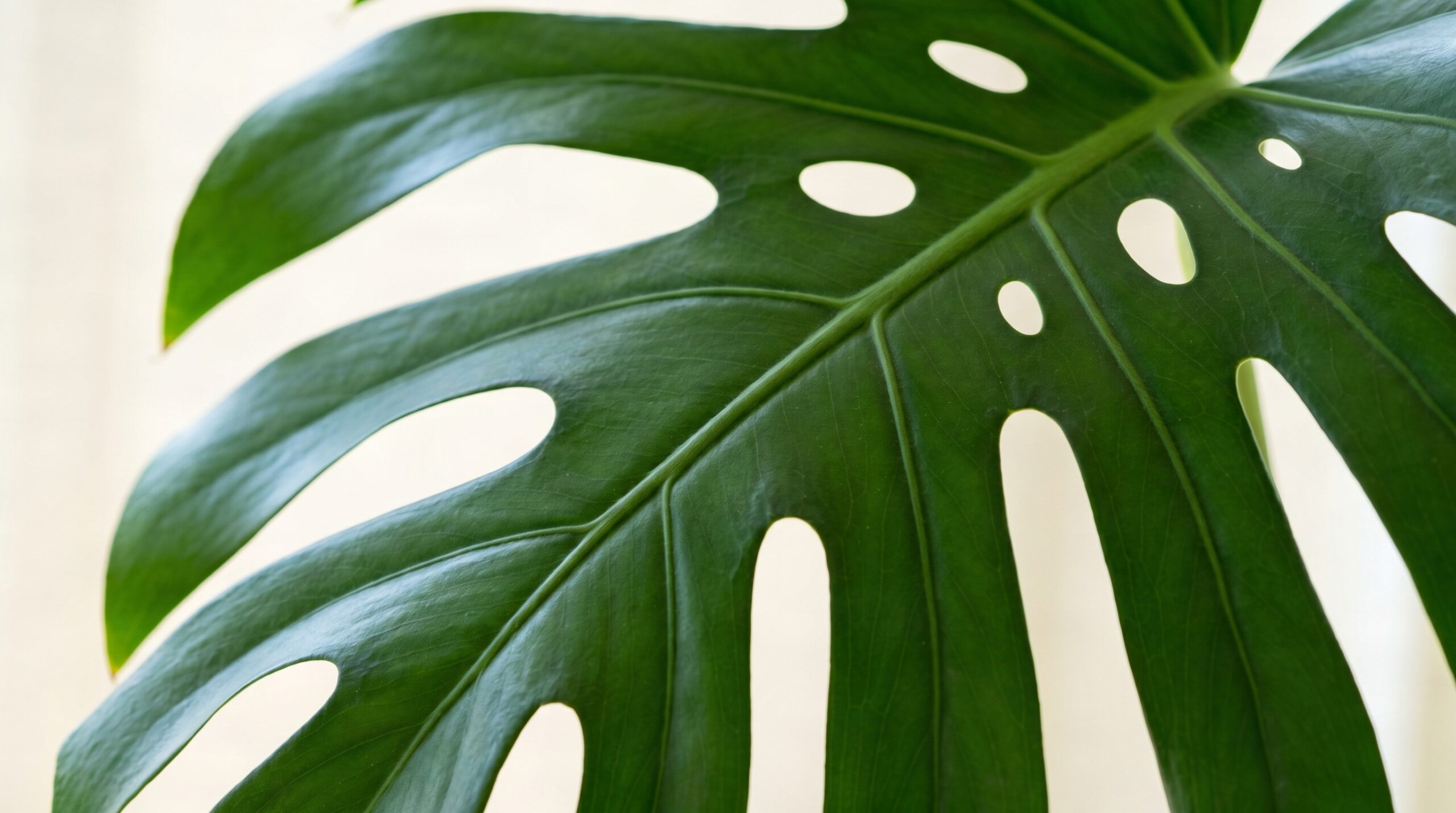
The holes — called fenestrations — aren’t a guarantee when you first bring your monstera home. They develop naturally as the plant matures, and they require a few specific conditions to form properly.
Your monstera needs all three of these to fenestrate:
1. Enough light. Fenestration requires sustained bright indirect light — at least 200 foot-candles for 8 or more hours per day. A plant sitting in low light will produce smaller, solid leaves without splits. It’s prioritizing survival over aesthetics.
2. Age and maturity. Young plants under 2–3 years old rarely produce heavily fenestrated leaves, no matter what you do. If your monstera is still small, be patient — it’s not doing anything wrong.
3. Vertical support. In the wild, monsteras climb upward and produce bigger, more fenestrated leaves as they go. Giving your indoor plant a moss pole or coir pole to climb encourages the same response. Once it starts climbing, leaf size and fenestration both increase noticeably.
If your mature monstera still isn’t producing holes, check these in order: light first, then watering consistency, then humidity.
Seasonal Monstera Care: What Changes Throughout the Year
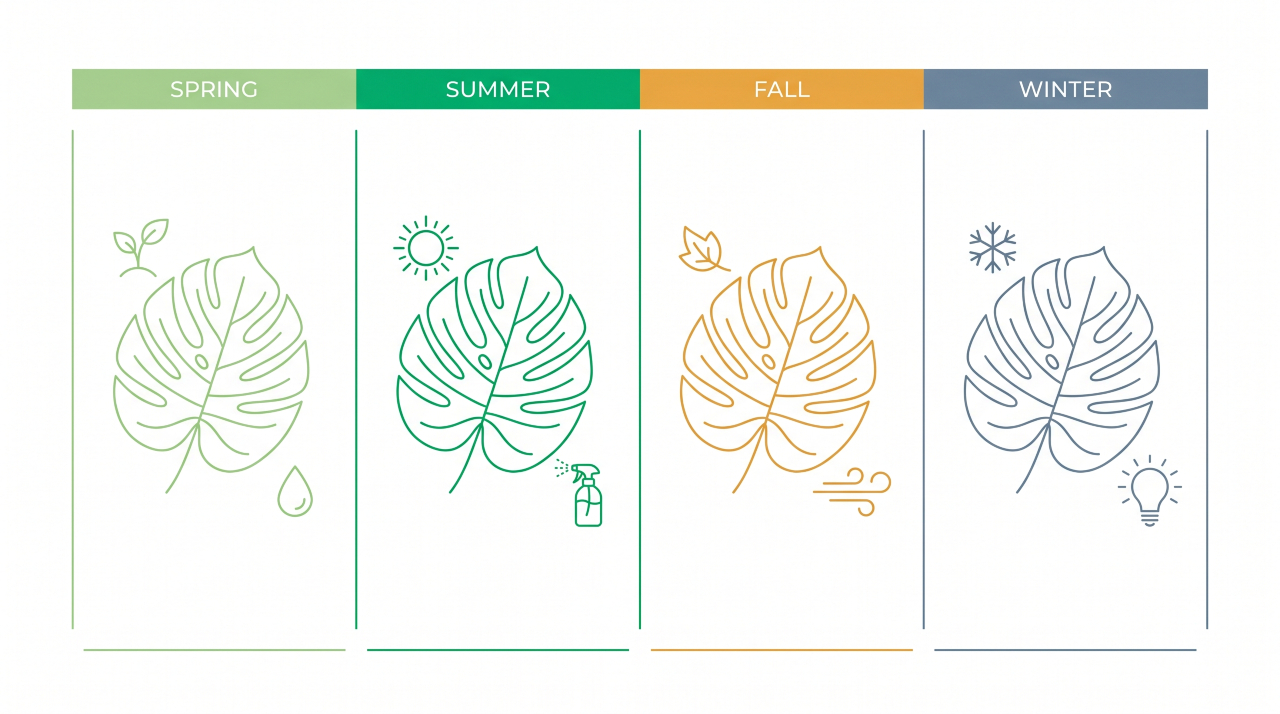
Most beginner guides treat monstera care as one-size-fits-all. But your plant’s needs shift significantly with the seasons, and adjusting your routine accordingly makes a real difference.
Spring (March–May): This is when your monstera wakes up. Growth accelerates as day length increases. This is the best time to repot, start fertilizing, and move the plant to a brighter spot if needed.
Summer (June–August): Peak growing season. Water more frequently as the soil dries faster. Fertilize every 4 weeks. Watch for pests — warm months bring more insect activity.
Fall (September–November): Slow down on watering and reduce fertilizer to every 6 weeks, then stop entirely by late October. Your plant is preparing for dormancy.
Winter (December–February): Water much less — every 2–3 weeks or whenever the top 2 inches of soil are dry. No fertilizer. Move the plant slightly closer to a south-facing window if possible, or supplement with a grow light to compensate for shorter days. Keep it away from cold drafts and heating vents.
How to Repot a Monstera
Repot your monstera every 1–2 years, or when you notice roots circling out of the drainage holes or the root ball is visibly compressed when you slide the plant out.
The best time to repot is spring, before the growing season kicks in.
When you do repot, choose a new pot that’s only 2 inches larger in diameter than the current one. Going too large is a common mistake — excess soil holds extra moisture that the roots can’t absorb, which increases root rot risk.
Steps:
- Water your plant 24 hours before repotting to reduce stress
- Slide the plant out gently, shaking off excess old soil
- Inspect the roots — trim any that are black, mushy, or dead with clean scissors
- Add fresh potting mix to the new pot and set the plant in at the same depth it was before
- Water thoroughly and place it back in its usual spot
Propagating Monstera: Grow a New Plant for Free
Monstera plants are among the easiest to propagate. You only need a stem cutting with one leaf and a visible node (the small brown bump where a root will emerge).
- Cut just below a node using clean, sharp scissors or pruning shears
- Place the cutting in a glass of water in a bright spot — roots will appear within 2–4 weeks
- Once roots are 1–2 inches long, transfer to moist potting mix
- Keep the soil consistently moist for the first few weeks while the roots establish
Propagation works best in spring and summer. Winter cuttings root slowly and sometimes fail entirely.
Common Monstera Problems and What They Mean
Even with the best care, you’ll occasionally spot something that looks off. Here’s what your plant is trying to tell you:
Yellow leaves usually point to overwatering or waterlogged soil. Check that your pot drains freely and that you’re not watering before the top layer of soil dries out.
Brown, crispy leaf tips signal low humidity or inconsistent watering — the plant dried out and the leaf tips took the hit. Boost humidity and try to water more consistently.
Leggy growth with small leaves means your monstera isn’t getting enough light. It’s stretching toward any available light source. Move it to a brighter spot.
Black or mushy stems near the soil are a serious sign of root rot. Act fast — unpot the plant, cut away all soft, dark roots, and repot in fresh dry mix with good drainage.
Pests like spider mites, mealybugs, and scale tend to appear when the plant is stressed or dusty. Wipe down leaves regularly with a damp cloth — this removes dust that blocks light and lets you spot insects early.
Is Monstera Toxic to Pets?
Yes. Monstera plants contain calcium oxalate crystals, which are toxic to cats, dogs, and other pets if ingested. According to the ASPCA’s toxic plant database, consumption can cause mouth irritation, drooling, vomiting, and difficulty swallowing.
Keep your monstera out of reach of curious pets and children. If you suspect your pet has eaten part of a monstera, contact your vet immediately.
Monstera Plant Care Questions
How often should I water my monstera plant?
Water your monstera when the top 1–2 inches of soil feel dry to the touch. For most homes, that works out to roughly once a week in summer and once every 2–3 weeks in winter. Don’t rely on a fixed schedule — check the soil first every time.
Why does my monstera have no holes in its leaves?
Monstera leaves develop holes (fenestrations) as the plant matures and receives adequate light. Young plants under 2–3 years old rarely fenestrate heavily. If your mature plant still has solid leaves, move it to a brighter spot with indirect light and consider adding a moss pole for vertical support.
How much light does a monstera need indoors?
Monsteras do best in bright, indirect light — the kind you’d find 2–4 feet from a south or west-facing window, or directly in front of an east-facing window. They tolerate medium light but produce smaller, hole-free leaves in dim conditions. Avoid harsh direct afternoon sun, which scorches the leaves.
Can I put my monstera outside in summer?
Yes, but with caution. Monsteras can go outside in summer once nighttime temperatures stay above 60°F. Place them in a shaded or dappled-light spot — not direct sun — and bring them back inside before temperatures drop in fall. Watch for pests when bringing them back indoors.
How do I know when to repot my monstera?
Repot when roots are circling out of the drainage holes or visibly compressed when you remove the plant from its pot. Most monsteras need repotting every 1–2 years. Spring is the best time to do it. Choose a new pot only 2 inches larger than the current one.
Is monstera easy to care for?
Yes — monsteras are excellent beginner plants. They’re forgiving of occasional missed waterings, adapt to a range of light conditions, and recover well from most mistakes. The main thing to get right is watering: let the soil dry slightly between waterings, and make sure your pot has good drainage.
The One Thing to Remember
If you take nothing else from this guide, remember this: check the soil before you water. That single habit will prevent most of the problems that send new monstera owners searching for answers online.
Get your light right, support your plant as it grows, and adjust your routine with the seasons. Do those three things and you’ll have a thriving, dramatic monstera that fills any room with life.
Ready to take the next step? Check out our guide to choosing the best indoor plant pots and containers to make sure your monstera has the perfect home from day one.