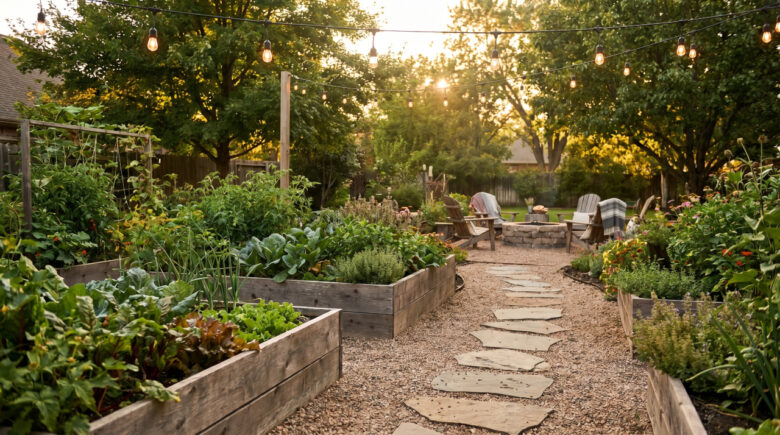
Your outdoor space has more potential than you think. Whether you have a large backyard or a modest patio, the right garden ideas can turn it into a functional and beautiful extension of your home. This list covers 18 beautiful garden ideas that work for gardens of all sizes, budgets, and growing goals. Each idea is grounded in what actually works, from raised bed layouts to vertical planters and evening ambiance. Save this guide and use it as your spring planning resource.
1. Raised Garden Beds for Organized Garden Ideas
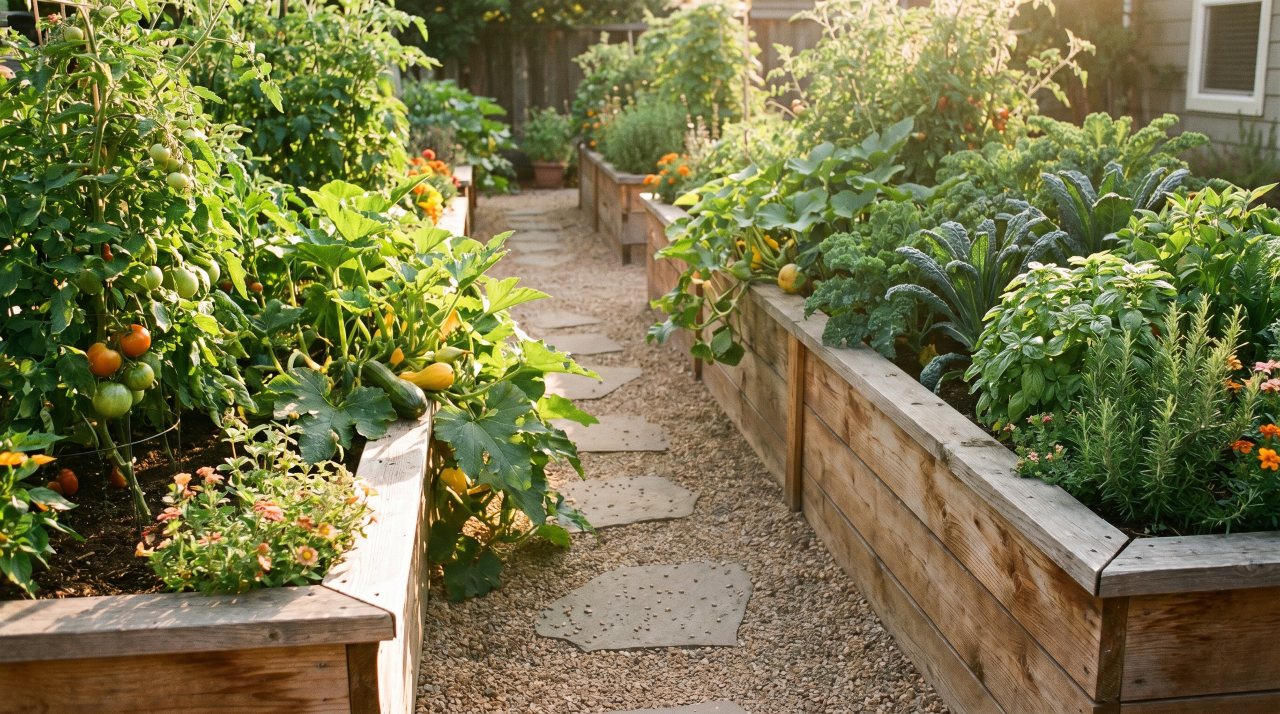
Raised beds are the foundation of a productive and attractive backyard garden. They improve drainage, warm the soil faster in spring, and create a clear visual structure in an otherwise undefined outdoor space. Wooden beds built from cedar or pine last longer and look better as they weather.
A standard raised bed size of four feet by eight feet allows you to reach the center from either side without stepping inside. Build two or three beds in parallel rows with a gravel or stone pathway between them. Keep pathways at least two feet wide for comfortable access with a wheelbarrow or garden cart.
Raised beds suit beginners and experienced gardeners equally. They are easier to manage, easier to amend, and produce more reliably than in-ground planting in most backyard conditions.
2. Vertical Herb Wall as Space-Saving Garden Ideas
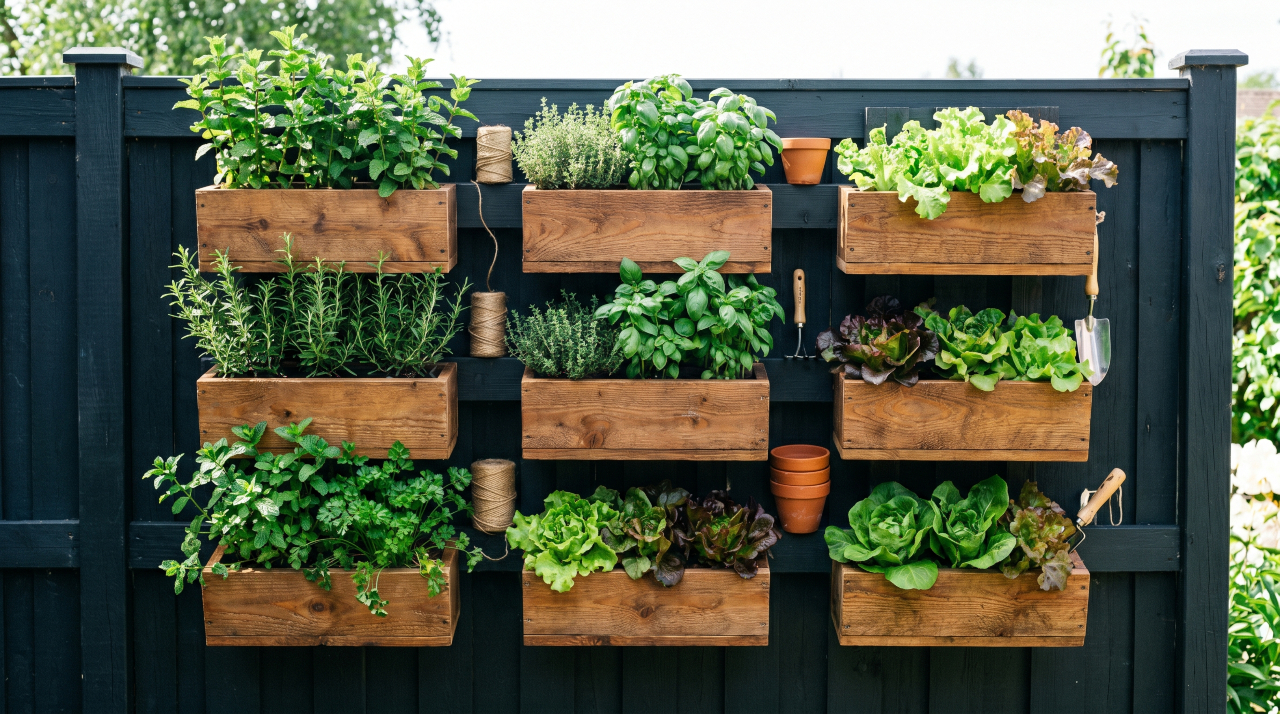
A vertical herb wall solves the problem of limited ground space. Mount a series of wooden boxes or metal planters on a fence or exterior wall, and grow herbs, lettuce, and small vegetables upward rather than outward. It creates a striking visual feature and delivers fresh produce within arm’s reach.
Build boxes from reclaimed pallet wood for a rustic finish. Use individual sections for each herb to prevent root competition and make harvesting easier. Chalkboard paint on small labels identifies each plant without permanent marking.
Position the wall in a spot that receives at least six hours of direct sunlight. South-facing fences and deck rails are ideal locations in most gardens.
3. String Lights and Fire Pit for Evening Garden Ideas
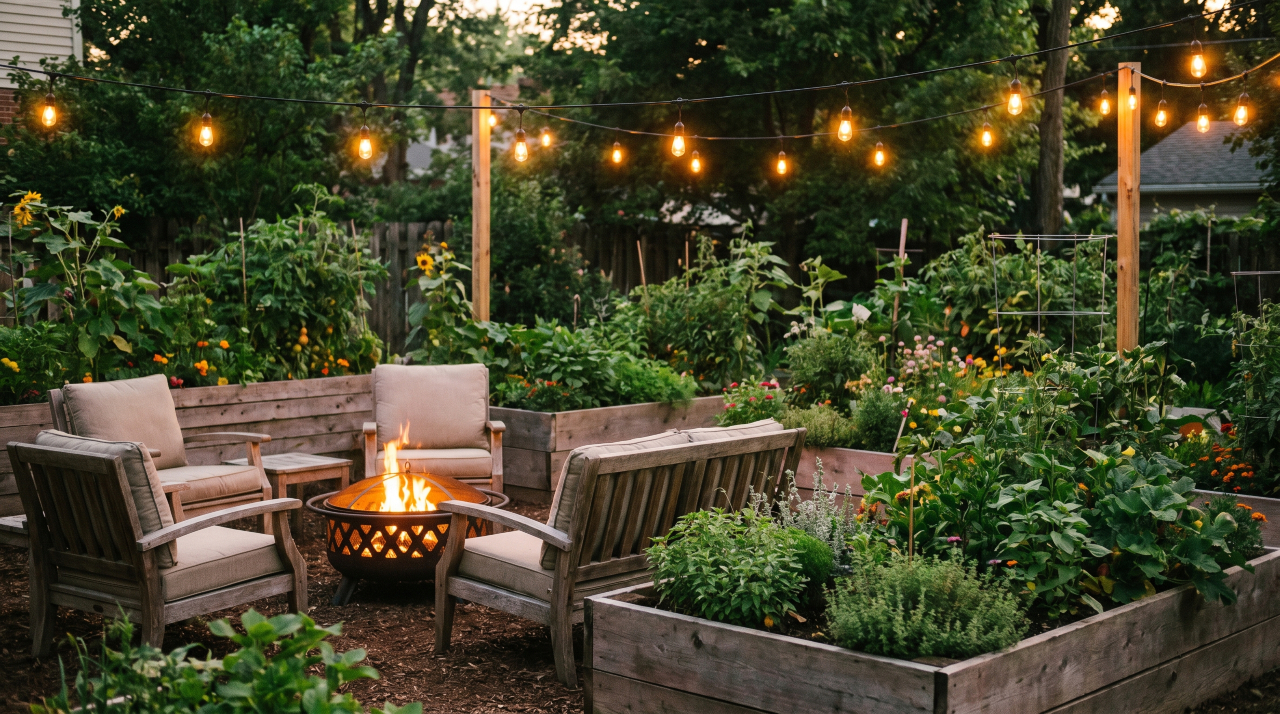
A garden that looks good only in daylight is a missed opportunity. String lights and a fire pit extend your outdoor living hours well into the evening, transforming a functional growing space into a social one. The combination of warm bulb light and firelight creates an atmosphere that is difficult to replicate indoors.
Hang Edison string lights from fence posts or across a garden arch above the seating area. Use weatherproof outdoor-rated string lights rated for damp conditions. Place a steel or cast iron fire pit on gravel or flagstone, never on decking, and position it away from overhanging branches.
Add two or three Adirondack chairs or a simple wooden bench near the fire pit. The seating turns the corner of a garden into a destination rather than just an edge.
4. Garden Arch with Climbing Plants as Structural Garden Ideas
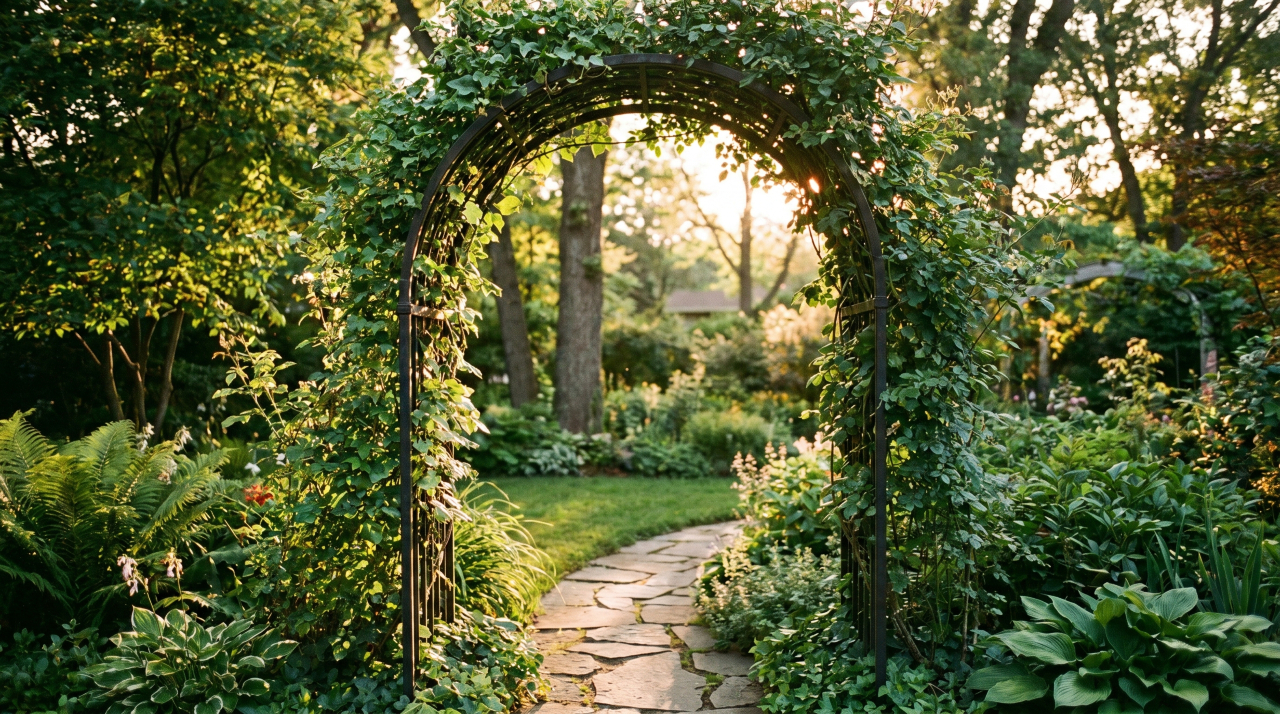
A garden arch adds vertical structure and creates a natural focal point that draws the eye through the space. When covered with climbing roses, jasmine, or fast-growing vines, it becomes one of the most photographed features in any garden.
Metal arches in matte black or dark green disappear into plantings as they fill in. Position the arch at the entrance to a vegetable garden, at the transition between lawn and planting areas, or at the end of a pathway to create a sense of destination. Drive ground stakes at least twelve inches into the soil for stability.
Plant two climbers, one on each side of the arch, and tie the young stems loosely to the structure as they grow. By the second or third season, the arch fills naturally with minimal effort.
5. Succulent Planter Box as Low-Maintenance Garden Ideas
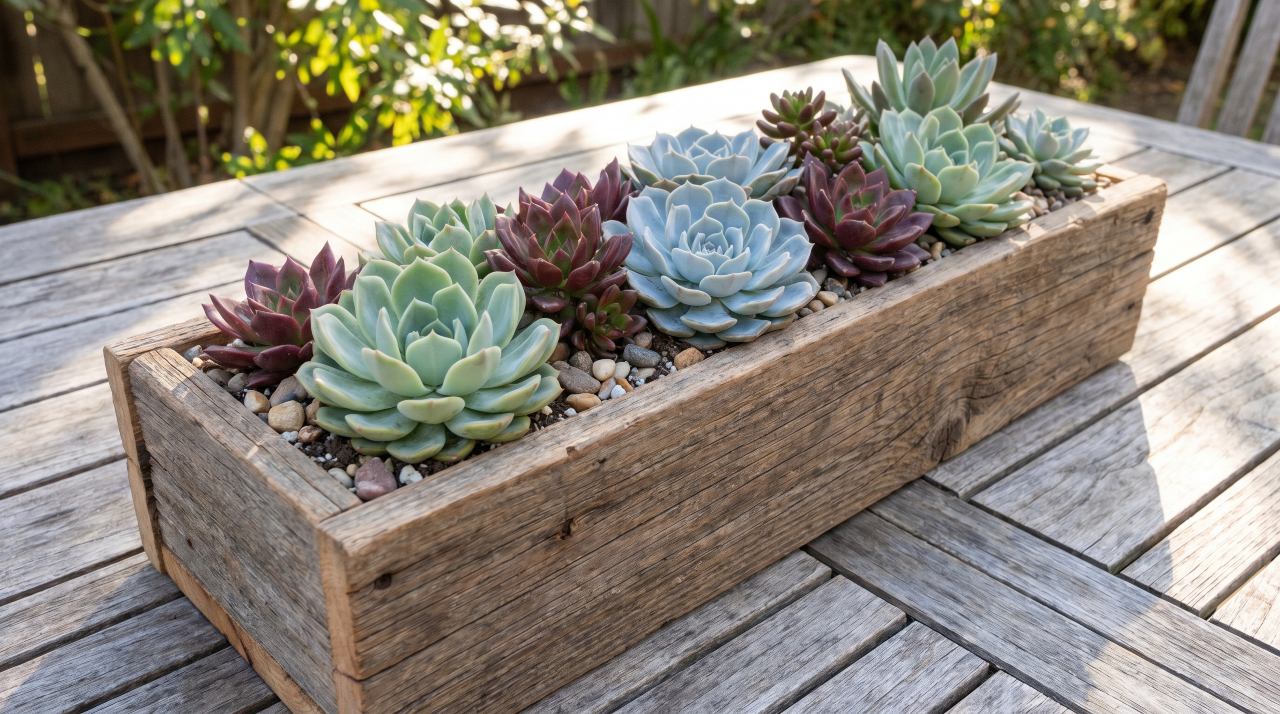
A succulent planter box brings garden ideas indoors or sits beautifully on an outdoor table as a permanent centerpiece. Fill a long reclaimed wood box with a varied mix of succulent varieties in different shapes, textures, and tones. The combination of rosette forms, trailing types, and upright columnar succulents creates natural variety without effort.
Succulents need well-draining soil. Mix standard potting soil with perlite at a ratio of one part perlite to two parts soil. Drill drainage holes in the bottom of any wooden box before planting.
Water sparingly: once every ten to fourteen days in warm months, less in winter. Succulents recover from underwatering far better than from overwatering.
6. Gravel Pathway Between Garden Ideas Zones
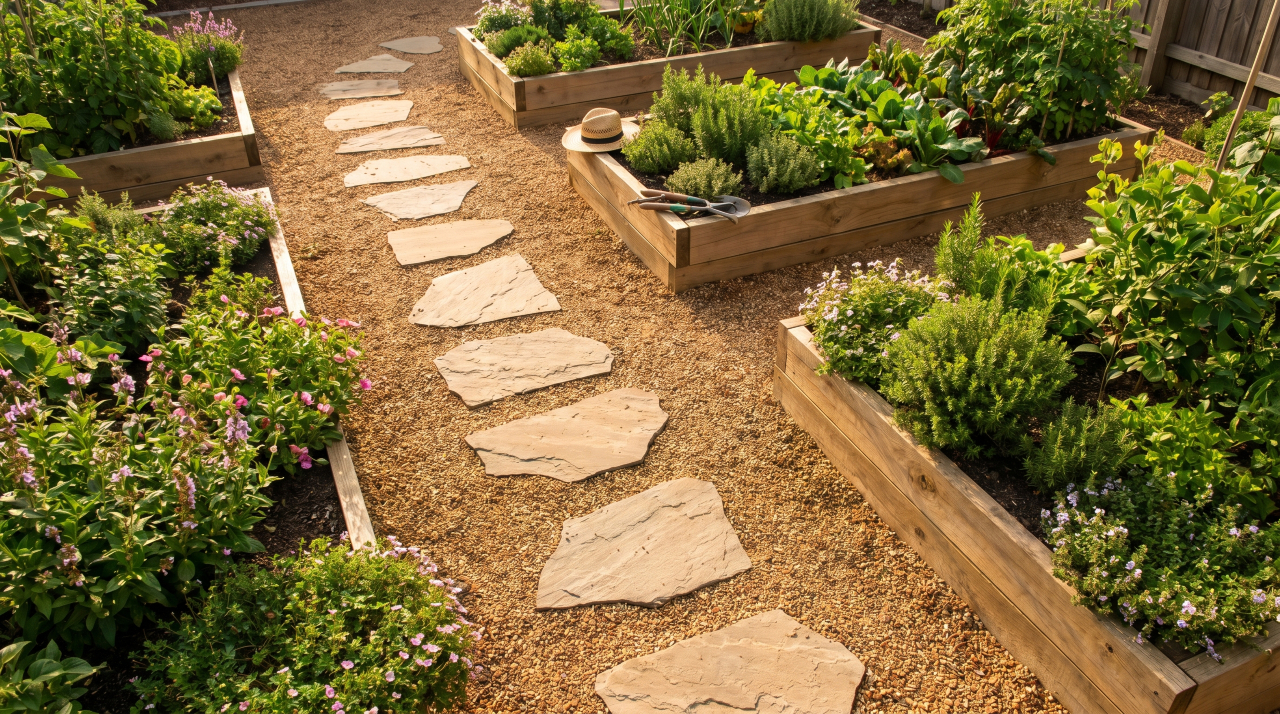
A gravel pathway defines garden zones and eliminates muddy access problems after rain. It also requires almost no maintenance compared to grass paths that need regular trimming. Pea gravel in natural buff or brown tones suits most garden aesthetics.
Lay landscape fabric beneath the gravel to suppress weeds before they establish. Border the pathway with timber edging, brick, or steel strips to keep the gravel contained. Place irregularly shaped stepping stones along the center of the path for a more organic, casual look.
A four-foot-wide pathway accommodates two people walking side by side. A two-foot-wide pathway works for single-file garden access between raised beds.
7. Container Vegetable Garden as Balcony-Friendly Garden Ideas
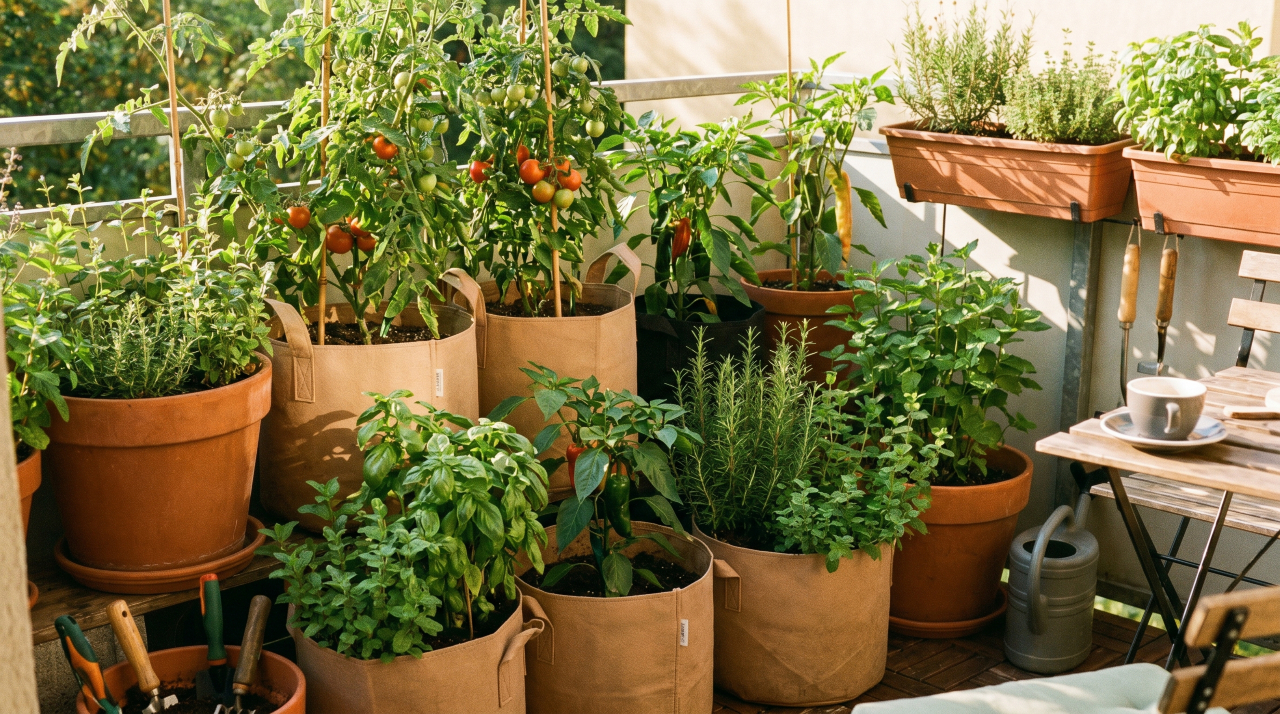
Containers make vegetable growing possible on balconies, patios, and other small outdoor spaces without ground access. Tomatoes, peppers, zucchini, lettuce, and herbs all grow successfully in large containers when given enough soil volume and drainage.
Use containers of at least twelve inches in diameter for most vegetables. Tomatoes and zucchini need at least 18 inches. Terra cotta pots are breathable but dry out faster. Fabric grow bags offer good root health and are lightweight for balcony weight limits.
Group containers together to create a micro-climate that retains humidity. Water container gardens more frequently than ground plantings, especially during summer heat.
8. Composting Corner as Sustainable Garden Ideas
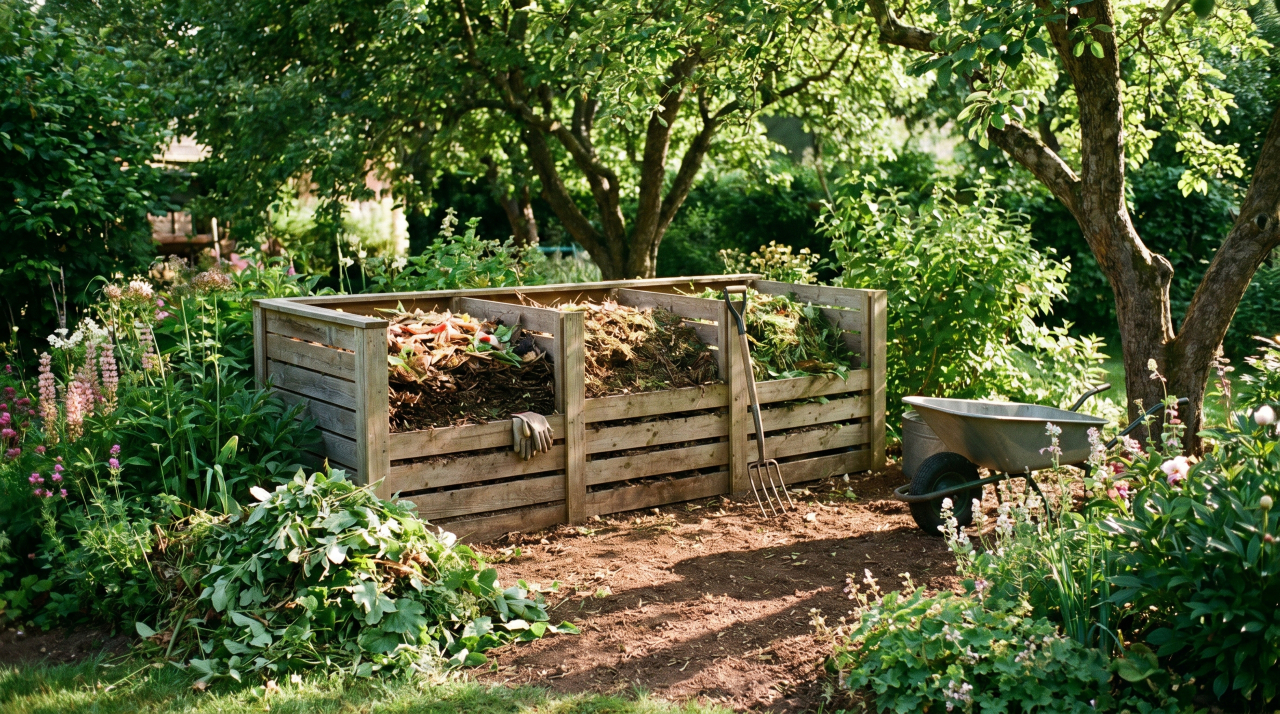
A compost bin in one corner of the garden closes the loop on kitchen and garden waste. Finished compost improves soil structure, feeds plants naturally, and reduces the need for purchased fertilizers. It is also free to set up with basic materials.
A simple three-bin system, constructed from timber pallets, allows continuous composting: one bin actively filling, one actively decomposing, and one holding finished compost ready to use. Each bin needs roughly one cubic meter of space.
Balance green materials like food scraps and fresh cuttings with brown materials like dried leaves and cardboard. Turn the pile every two weeks to accelerate decomposition.
9. Cottage Garden Style Planting as Relaxed Garden Ideas
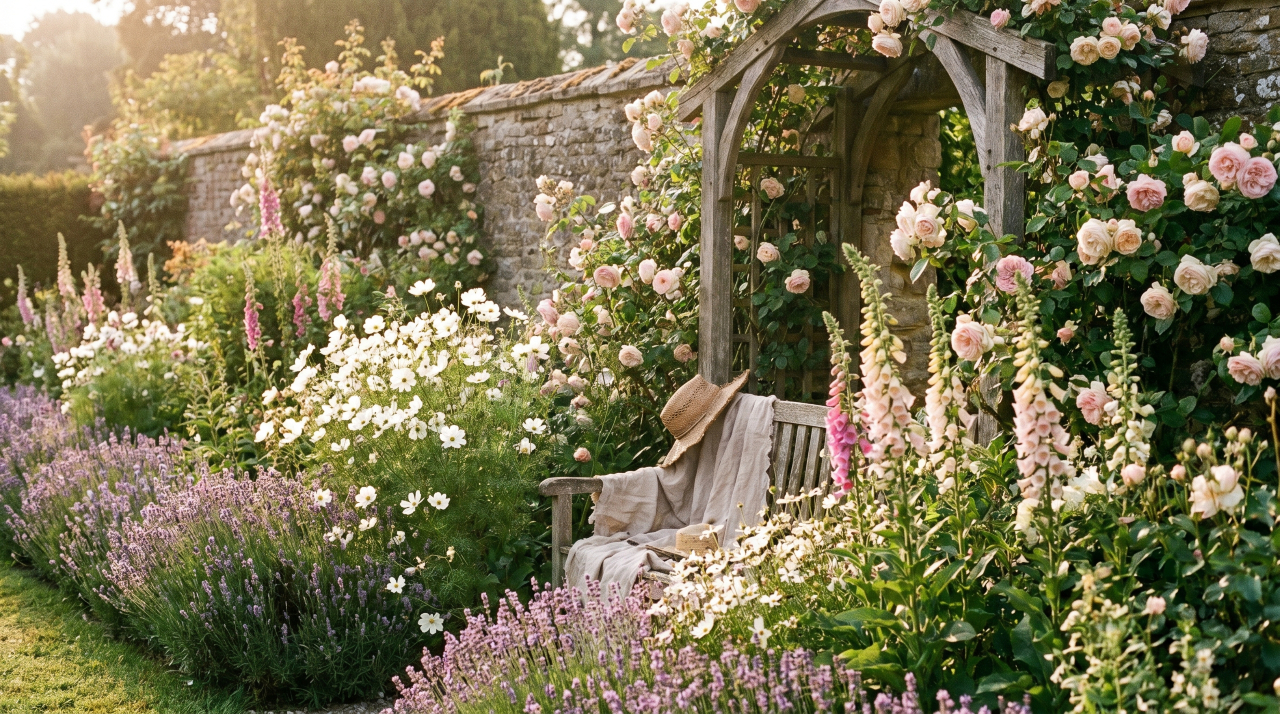
Cottage garden planting creates a lush, abundant look that feels effortless even when carefully planned. The style layers flowering perennials, climbing roses, lavender, and foxglove in informal drifts rather than rigid rows. It suits gardeners who prefer a natural, slightly wild aesthetic over formal structure.
Start with a backbone of repeat-flowering roses and hardy perennials, such as salvia, echinacea, and achillea. Fill gaps with self-seeding annuals like cosmos and nigella, which return year after year. Allow plants to grow slightly into each other: the overlapping edges are part of the appeal.
Cottage gardens attract pollinators heavily. Expect bees, butterflies, and beneficial insects throughout the growing season.
10. Outdoor Potting Bench as Functional Garden Ideas
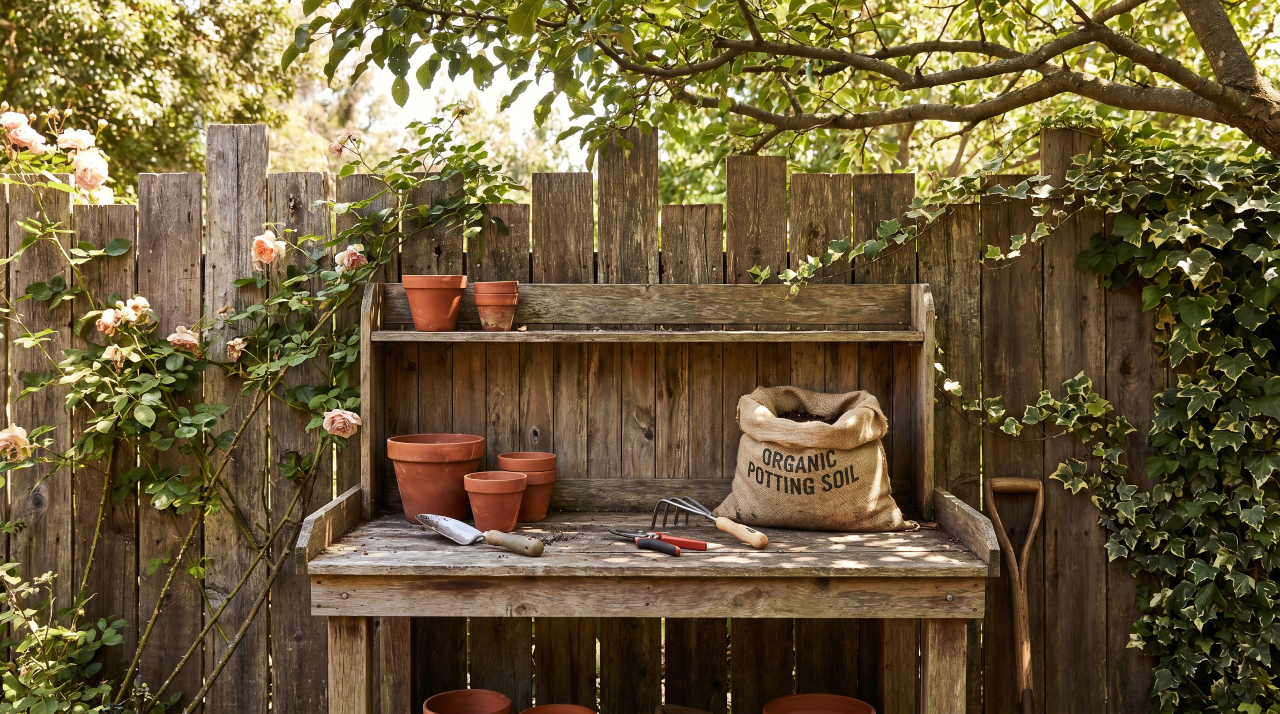
A potting bench gives you a dedicated workspace for planting, potting, and garden prep. Without one, these tasks happen on the ground, on a patio table, or not at all. A proper potting bench keeps tools, soil, and pots organized and accessible.
A basic potting bench needs a work surface at standing height, a lower shelf for bags of soil and large pots, and hooks or a hanging rail for tools. Cedar or treated pine holds up well outdoors. Paint or stain with an exterior finish to extend its life.
Position the bench near a garden tap or outdoor water source. Easy access to water makes potting far less frustrating and more enjoyable.
11. Rain Garden for Low-Lying Drainage-Problem Garden Ideas
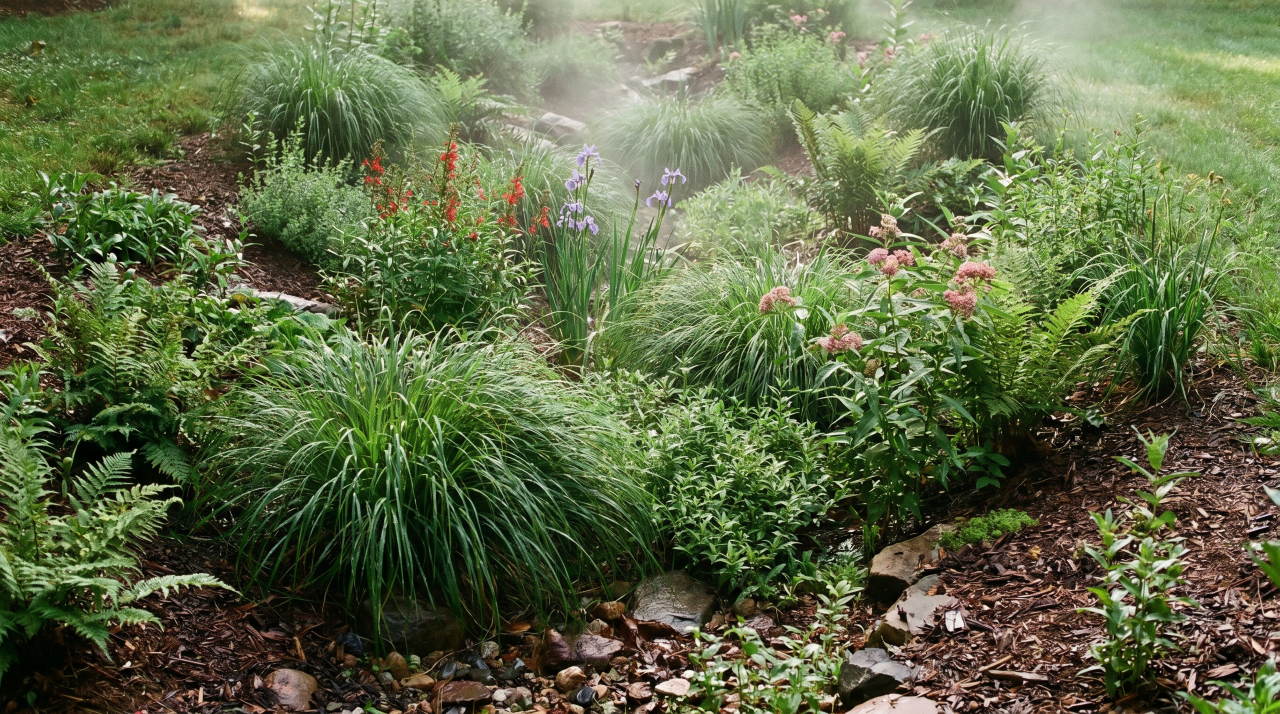
A rain garden is a planted depression that collects and absorbs rainwater runoff from roofs, driveways, or lawns. It solves drainage problems while creating a planted feature that looks intentional and supports local wildlife.
Choose a spot that naturally collects water after heavy rain. Dig the area to a depth of six to twelve inches, with gently sloping sides. Fill with a mix of native plants suited to both wet and dry conditions: sedges, rushes, ferns, and moisture-tolerant perennials all work well.
A rain garden absorbs water within 24 to 48 hours of rainfall, eliminating standing water and reducing runoff into drainage systems.
12. Wildlife-Friendly Planting as Habitat Garden Ideas
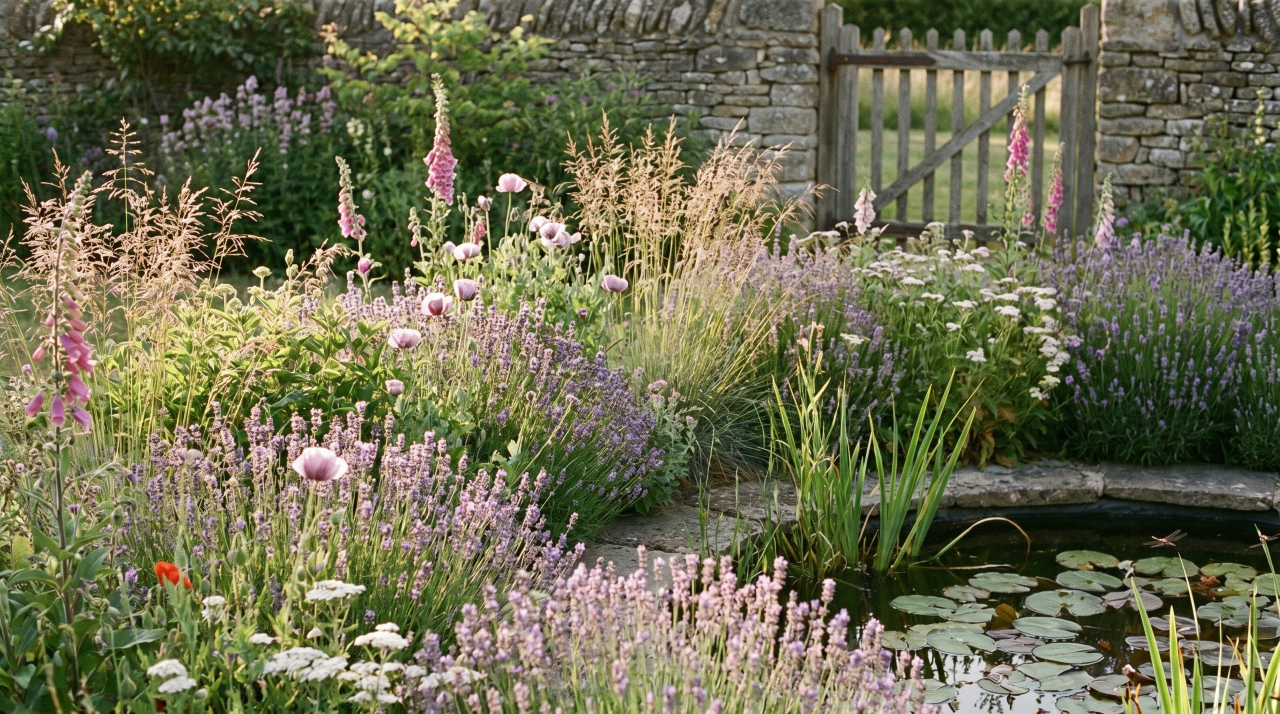
A wildlife-friendly garden supports bees, butterflies, birds, and hedgehogs, as well as offering visual appeal. Simple changes produce big results: native plants, a small water source, and a log pile in a corner provide habitat for dozens of species.
Plant single-flower varieties over double-flower cultivars. Single flowers expose their pollen and nectar to pollinators. Double flowers, despite their beauty, are often inaccessible to insects. Lavender, borage, fennel, and native wildflowers are among the most productive pollinator plants.
Leave a section of lawn unmowed through spring and summer. Long grass harbors insects, provides ground-nesting habitat, and wildflowers establish naturally in undisturbed areas.
13. Raised Bed Salad Garden as Productive Kitchen Garden Ideas
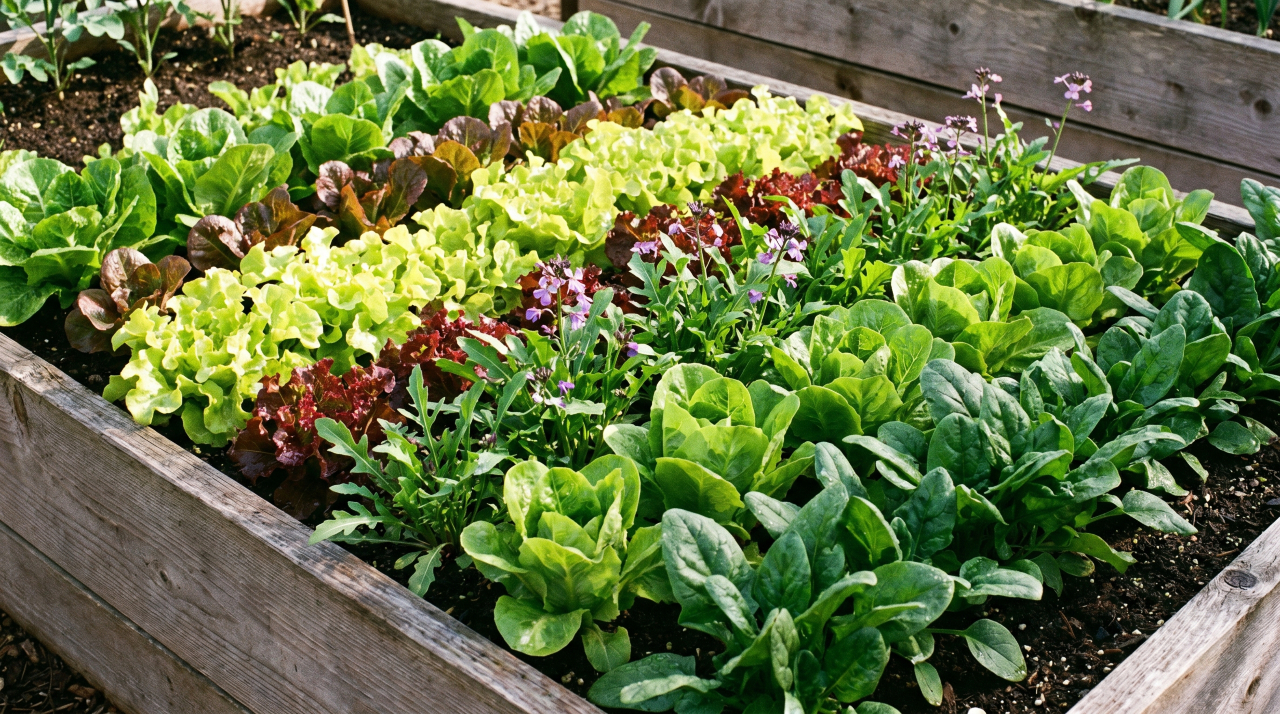
A dedicated salad raised bed produces fresh greens from early spring through late autumn with minimal effort. Cut-and-come-again varieties like loose-leaf lettuce, rocket, spinach, and mizuna regrow after harvesting, so one planting can feed a household for months.
Divide the bed into sections using simple timber dividers or string lines. Plant a different variety in each section. Stagger plantings every two to three weeks to prevent everything maturing at once and maintain a continuous harvest.
Cover with a simple wire hoop and fine mesh netting to protect from slugs, pigeons, and aphids. The mesh pays for itself in the first season.
14. Patio Herb Garden in Terracotta Pots as Compact Garden Ideas
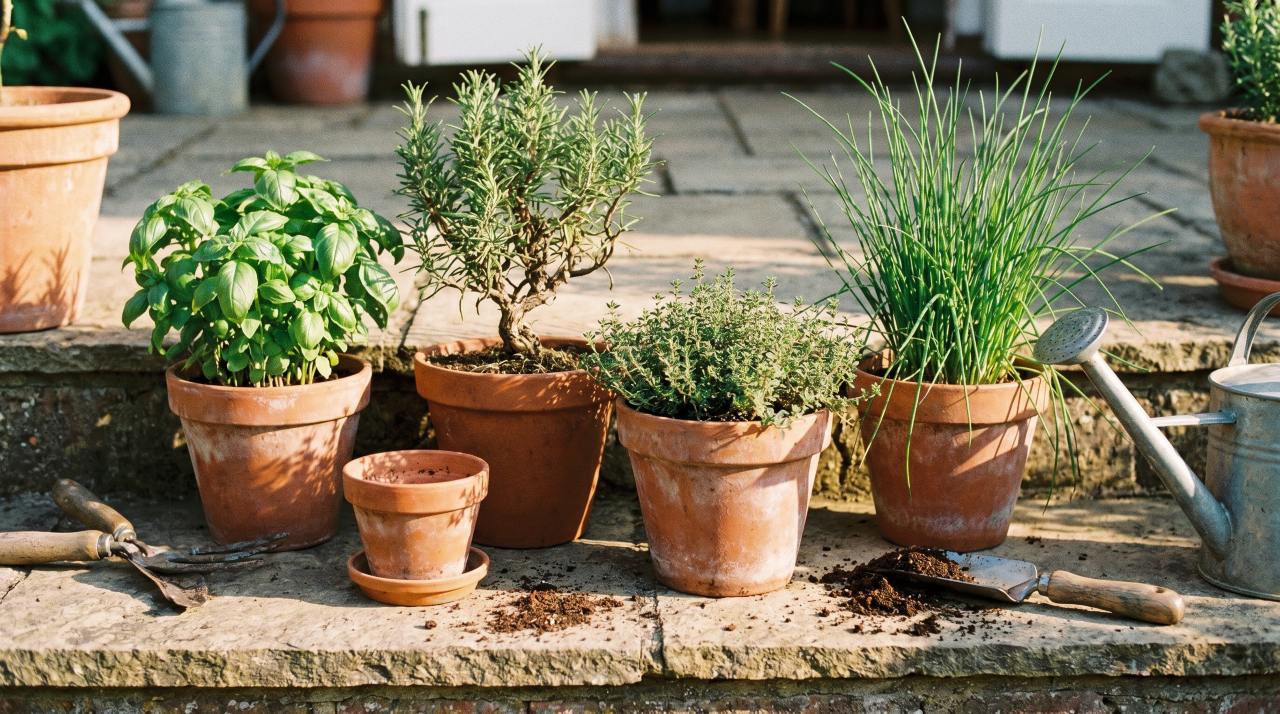
A patio herb garden in terracotta pots provides fresh culinary herbs within steps of the kitchen and looks attractive throughout the growing season. Group six to eight terracotta pots of varying sizes on a sunny patio step, table, or railing. Plant one herb variety per pot to prevent aggressive spreaders, such as mint, from taking over.
Essential culinary herbs for a beginner patio collection: basil, flat-leaf parsley, rosemary, thyme, chives, and mint. Basil needs the warmest and sunniest spot. Mint prefers slightly more moisture than the others.
Feed herb pots with a liquid fertilizer every two weeks through summer. Regular harvesting keeps plants bushy and productive.
15. DIY Stepping Stone Path as Creative Garden Ideas
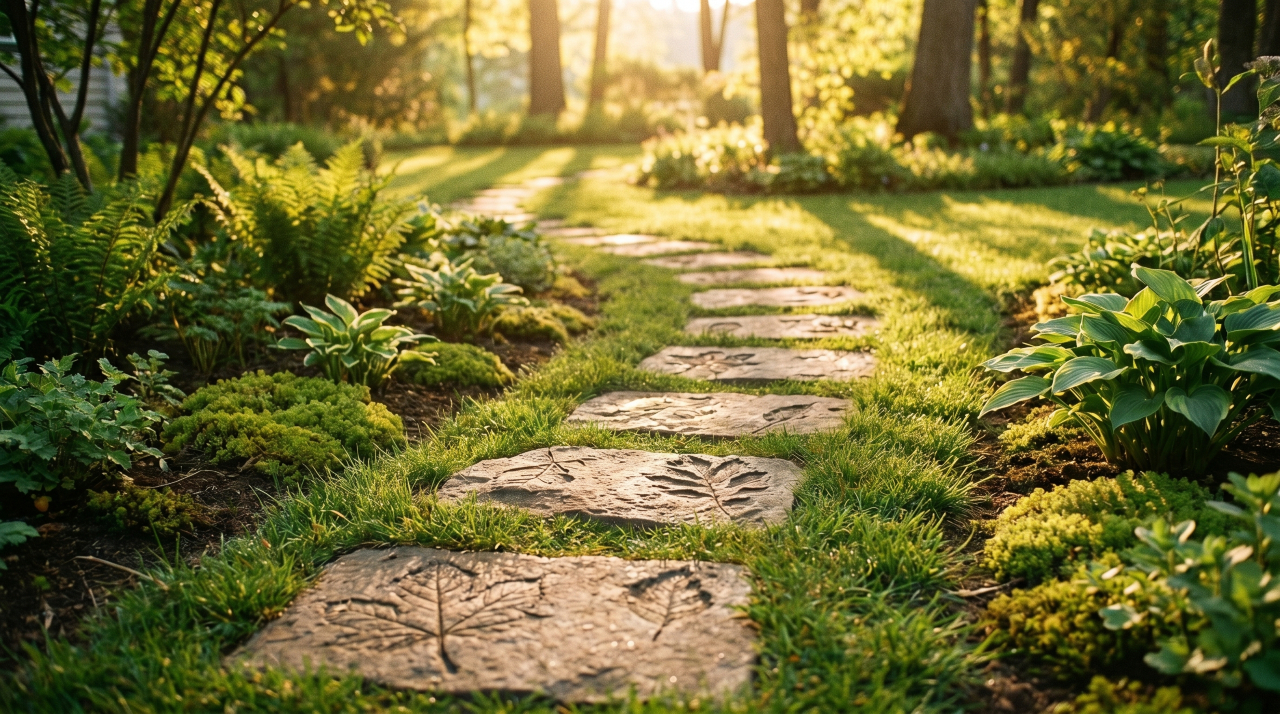
A handmade stepping stone path adds personality to a garden while solving the practical problem of muddy ground access. Cast your own stepping stones using concrete mixed with decorative aggregates, pressed leaves, or mosaic tiles. Each stone becomes a unique feature of the garden.
Buy ready-mix concrete from a hardware store. Mix to a thick but pourable consistency, then pour into plastic plant saucer molds. Press decorative elements into the surface before the concrete sets, which takes roughly two hours. Leave to cure fully for 48 hours before removing from the mold.
Space stepping stones eighteen to twenty-four inches apart, measured from center to center. This spacing suits a comfortable, natural walking stride.
16. Greenhouse or Cold Frame as Season-Extending Garden Ideas
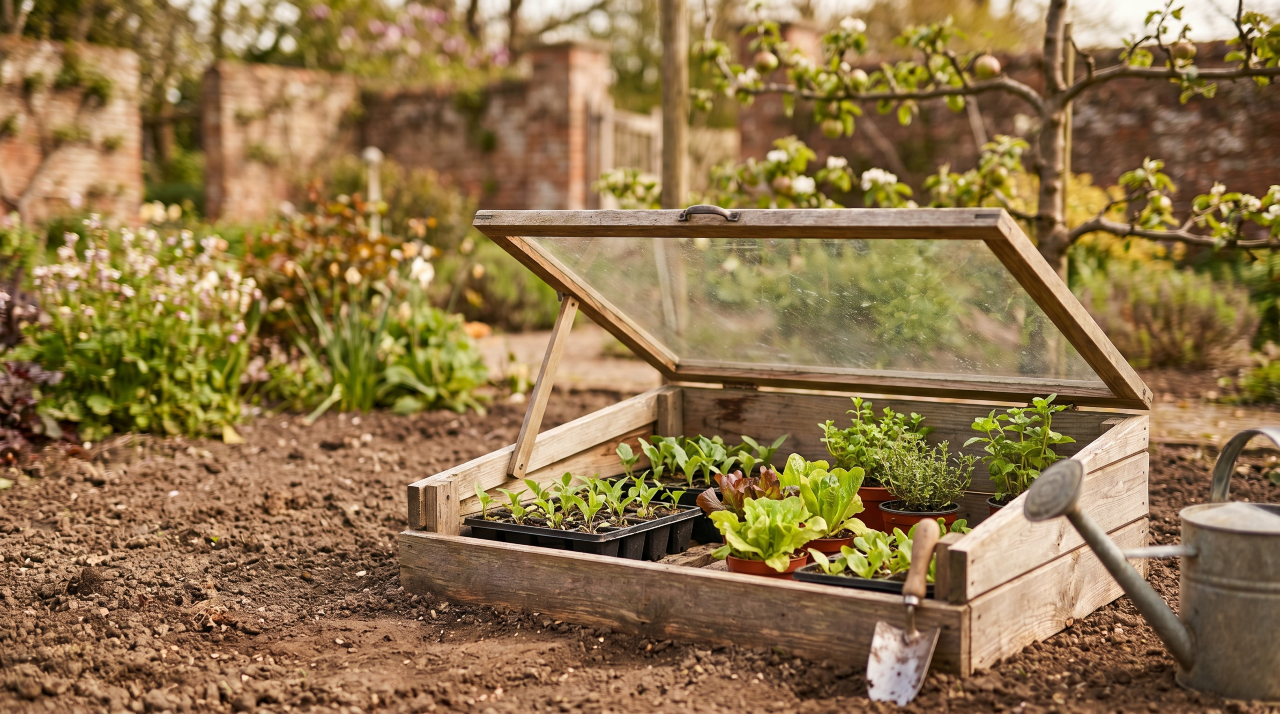
A cold frame or small greenhouse extends the growing season by six to eight weeks in both spring and autumn. Seedlings started under cover in late winter are ready for outdoor planting weeks ahead of those started outside. In autumn, protected plants continue producing long after outdoor temperatures drop.
A basic cold frame is a bottomless wooden box with a glass or polycarbonate lid. Build one from old window frames and reclaimed timber for under twenty dollars. Position it against a south-facing wall for maximum warmth.
A small lean-to greenhouse mounted to an exterior house wall captures reflected heat and stays significantly warmer than a freestanding structure in the same garden.
17. Upcycled Container Garden as Budget-Friendly Garden Ideas
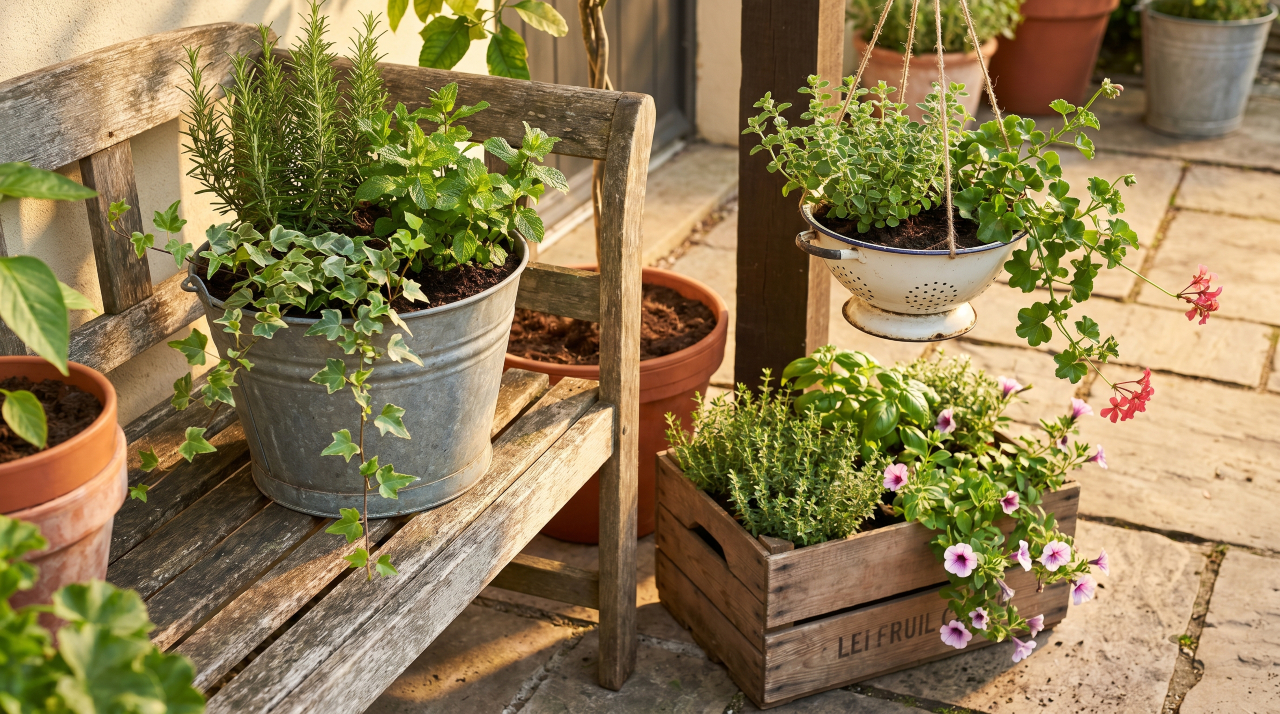
Old colanders, vintage crates, galvanized buckets, and wooden wine boxes all work as distinctive garden planters. Upcycled containers cost nothing or next to nothing and give a garden personality that store-bought pots cannot replicate.
Drill drainage holes in any container before planting. Line wooden crates with burlap to slow soil loss while maintaining drainage. Paint galvanized containers with exterior chalk paint in sage green or terracotta to tie them into the garden color palette.
Group upcycled containers at different heights using upturned crates or wooden steps as risers. The varied heights prevent the collection from looking like a cluttered pile.
18. Sensory Garden Path as Therapeutic Garden Ideas
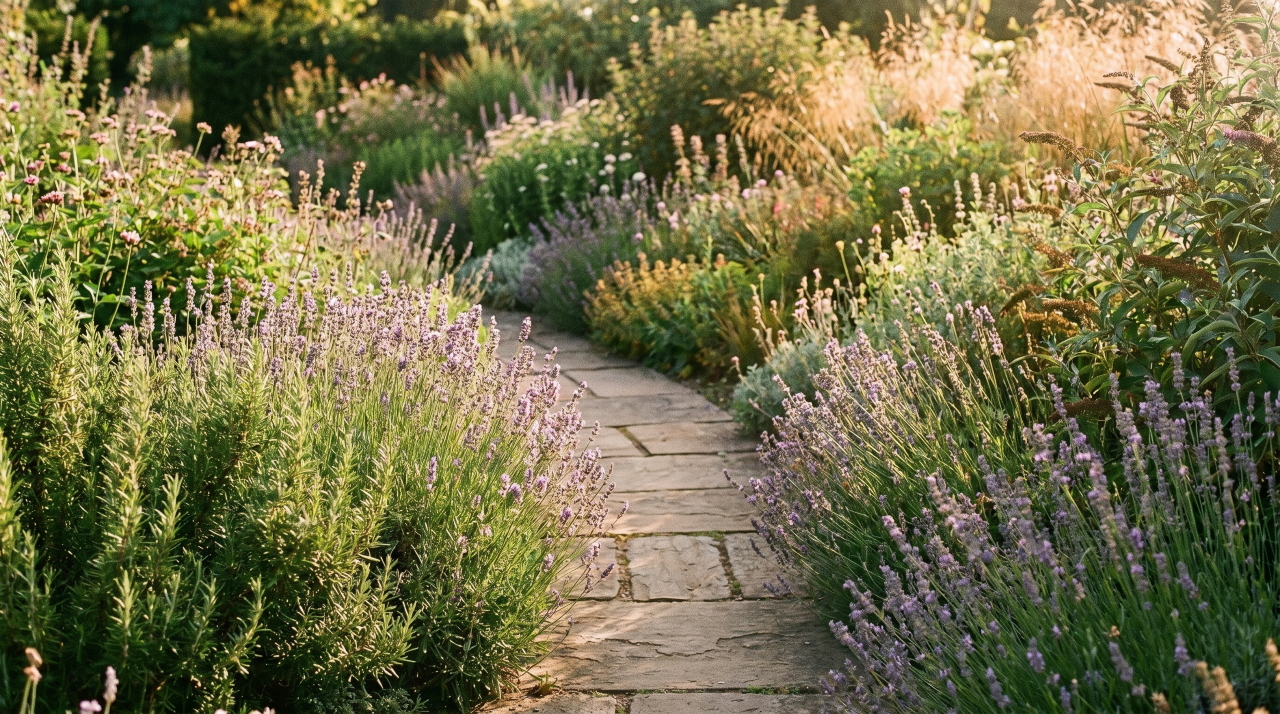
A sensory garden path engages all the senses simultaneously. Plant fragrant herbs like lavender, rosemary, and chamomile along the edges of a pathway so they brush against legs as you walk and release scent. Add tactile textural contrasts through smooth pebbles, rough bark chips, and soft grass sections.
Design the path with gentle curves rather than straight lines. Curved paths slow the pace naturally and encourage a more mindful walk through the space. Wind the path past key sensory plants and features rather than taking the most direct route.
This garden idea works in any size outdoor space. Even a four-foot-wide strip along a garden fence becomes a sensory experience with the right planting along its edges.
These 18 garden ideas cover productive growing, beautiful planting, functional structures, and evening atmosphere. Not every idea needs to happen at once. Choose the two or three that fit your space and season, execute them well, and build from there. A garden improves with each season of intentional choices. Save this list and return to it as your outdoor space grows. Find more home and garden inspiration at homegardenlab.com.