If you’ve ever stood in front of your dryer wondering whether that strange noise signals the beginning of the end, you’re not alone. One of the most common questions homeowners ask is: how long do dryers last? Understanding your appliance’s lifespan can save you money, prevent unexpected breakdowns, and help you plan for future purchases. In this comprehensive guide, we’ll break down everything you need to know about dryer longevity — from average lifespan statistics to the warning signs that it’s time to replace your machine.
The Average Lifespan of a Dryer
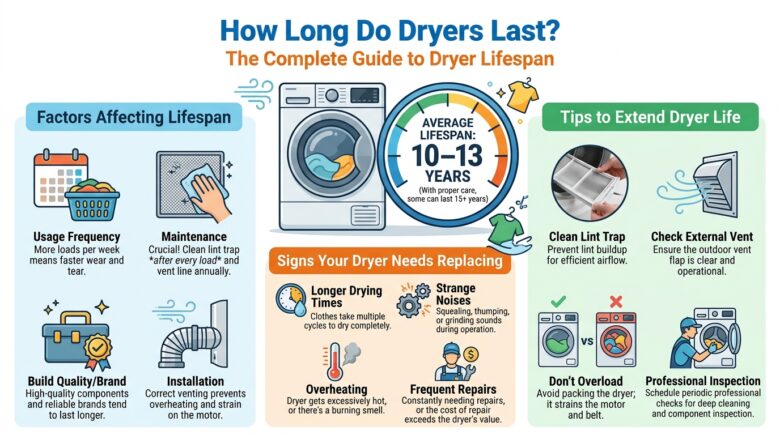
According to industry data and appliance experts, the average dryer lasts between 10 and 13 years. However, this number isn’t set in stone. Some dryers can run efficiently for up to 15–20 years with proper care and maintenance, while others may give out after just 7–8 years due to heavy use or neglect.
The type of dryer you own also plays a significant role in determining how long it will last:
- Electric dryers: Typically last 10–13 years
- Gas dryers: Often last slightly longer, averaging 11–13 years
- Vented dryers: Standard lifespan of 10–13 years
- Ventless (condenser) dryers: May have a shorter lifespan of 8–12 years due to more complex components
While these ranges are helpful benchmarks, several other factors will ultimately determine whether your dryer reaches the top or bottom of that range.
Factors That Affect How Long a Dryer Lasts
1. Frequency of Use
One of the biggest determinants of dryer lifespan is how often you use it. A family of five running three to four loads per day will put far more wear and tear on a dryer than a single person running a few loads per week. The more cycles your dryer runs, the faster its components — including the heating element, drum bearings, and motor — will wear out.
Pro Tip: If you’re doing heavy laundry loads frequently, consider investing in a commercial-grade or high-capacity dryer designed for more intensive use.
2. Maintenance and Cleaning
Regular maintenance is arguably the most important factor in how long your dryer lasts. Neglecting basic upkeep can cut your appliance’s life in half.
Key maintenance tasks include:
- Cleaning the lint trap after every load — This prevents overheating and fire hazards
- Cleaning the dryer vent and ductwork at least once a year — Clogged vents force the dryer to work harder, straining the motor and heating element
- Wiping down the drum interior — Residue from dryer sheets and fabric softeners can build up over time
- Checking the exterior vent flap — Make sure it opens and closes properly to allow proper airflow
3. Brand and Build Quality
Not all dryers are created equal. Premium brands that use higher-quality components tend to outlast budget models. Some of the most reliable dryer brands, according to consumer reports and repair data, include:
- Speed Queen — Known for exceptional durability, often lasting 25+ years
- Maytag — Reliable mid-range to premium option
- LG and Samsung — Feature-rich but may require more repairs over time
- Whirlpool — Consistent performance and widely available parts
Budget brands may save you money upfront but could end up costing more in repairs and early replacement.
4. Load Size and Overloading
Overloading your dryer is one of the fastest ways to shorten its life. When you cram too many clothes into a single load, the drum motor has to work harder, the airflow is restricted, and drying time increases significantly. Over time, this leads to premature wear on multiple components.
Rule of thumb: Fill your dryer to about ¾ of its capacity to allow proper tumbling and airflow.
5. Installation Quality
Poor installation — particularly improper venting — can dramatically reduce how long your dryer lasts. A vent that’s too long, kinked, or made of the wrong material can cause heat to build up inside the appliance, leading to overheating and component failure.
Always ensure your dryer is:
- Installed by a qualified technician
- Vented using rigid or semi-rigid metal ductwork (not plastic or foil)
- Placed in a well-ventilated area
Signs Your Dryer Is Nearing the End of Its Life
Even with excellent maintenance, there will come a time when your dryer starts showing signs of age. Knowing when to repair versus when to replace can save you significant time and money. Here are the key warning signs that your dryer may be on its last legs:
It Takes Multiple Cycles to Dry Clothes
If your dryer used to dry a full load in 45 minutes but now needs two or three cycles, something is wrong. This could indicate a clogged vent, a failing heating element, or a worn-out motor. While some of these issues are repairable, frequent occurrences on an older machine may signal it’s time to replace it.
Loud or Unusual Noises
Banging, squealing, rattling, or thumping noises during operation are red flags. These sounds often indicate:
- Worn drum bearings or rollers
- A failing motor
- A broken drive belt
- Loose internal components
Overheating or Burning Smell
If your clothes come out extremely hot, or you notice a burning smell during operation, stop using the dryer immediately. Overheating is a serious fire hazard and often indicates a clogged vent, faulty thermostat, or failing heating element.
Frequent Breakdowns and Repairs
One repair might be worth it; two or three in a short period is a warning sign. If your repair costs are approaching 50% of the cost of a new dryer, most appliance experts recommend replacing the unit instead of continuing to invest in fixes.
Age Over 10 Years
If your dryer is more than a decade old and experiencing issues, it’s likely more cost-effective to replace it with a newer, energy-efficient model than to keep pouring money into repairs.
How to Extend Your Dryer’s Lifespan
The good news is that with a little effort, you can significantly extend how long your dryer lasts. Here are proven strategies to get the most out of your appliance:
Clean the Lint Filter Every Single Load
This takes less than 30 seconds and makes an enormous difference. A clogged lint filter restricts airflow, causes overheating, and increases drying time — all of which wear out your machine faster.
Schedule Annual Vent Cleaning
Hire a professional or DIY your dryer vent cleaning at least once a year. Removing lint buildup from the ductwork improves efficiency and reduces fire risk.
Don’t Overload the Machine
Stick to the ¾ capacity rule and avoid running excessively heavy items like soaking wet comforters that strain the motor.
Use Dryer Balls Instead of Sheets
Dryer sheets can leave residue on the lint screen and drum over time. Wool dryer balls are a gentler alternative that can also reduce drying time.
Level Your Dryer
An uneven dryer vibrates excessively during operation, which can loosen components and cause premature wear. Use a level tool and adjust the feet accordingly.
Leave the Door Open Between Loads
Allowing air to circulate inside the drum prevents moisture buildup, which can lead to mold and drum damage.
Repair or Replace? How to Make the Smart Decision
When your dryer starts acting up, you’ll face the age-old question: is it worth repairing, or should I buy a new one?
Here’s a simple framework to help you decide:
| Factor | Repair | Replace |
|---|---|---|
| Dryer age | Under 7 years | Over 10 years |
| Repair cost | Less than 50% of new unit | More than 50% of new unit |
| Frequency of issues | First or second repair | Three or more repairs |
| Energy efficiency | Still relatively efficient | Old model with high energy bills |
A new dryer costs anywhere from $500 to $1,500+ depending on the model and features. If your repair quote comes in under $250 and your dryer is less than 8 years old, repair is likely the right call. If you’re spending $400+ on an aging machine that keeps breaking down, replacement is the smarter long-term investment.
Choosing a Long-Lasting Dryer: What to Look For
If you’re in the market for a new dryer, here’s what to prioritize for maximum longevity:
- Brand reputation: Opt for well-reviewed brands with strong reliability records
- Warranty: Look for models with at least a 1-year full warranty; some brands offer 10-year motor warranties
- Capacity: Choose a size appropriate for your household to avoid overworking the machine
- Simplicity of features: More electronic components and smart features mean more potential points of failure
- Energy Star certification: These models are more efficient and often built to higher standards
Getting the Most From Your Dryer
So, how long do dryers last? The answer is typically 10–13 years, but with proper care, you can push that number well beyond a decade. The key lies in regular maintenance, mindful use, and knowing when it’s time to call in a professional — or invest in a new machine.
Your dryer is one of the hardest-working appliances in your home. Treat it well, and it will return the favor for years to come.
Take Action Today!
Don’t wait for a breakdown to think about your dryer’s health. Schedule a dryer vent cleaning today, check your lint trap, and listen for any unusual sounds during operation. If your dryer is showing multiple warning signs, use the repair-vs-replace framework above to make the smartest financial decision for your home.
Have questions about your dryer’s lifespan or need advice on choosing a new model? Drop your questions in the comments below, or share this article with a friend who’s been dealing with laundry woes. Your best laundry days are still ahead!