Roughly 70 percent of houseplants sold during the holiday season are dead or struggling by February. Most of the time, it is not neglect. It is wrong care given with good intentions. Calandiva plants are one of the most misunderstood gifts people bring home, mostly because they look exotic but are actually one of the more forgiving flowering succulents you can own.
This article gives you the exact calandiva plant care steps to keep your plant healthy, prevent the most common mistakes, and get it to bloom again after the first flowers fade. You will know what to water, when to cut back, how much light to give, and what triggers a second round of blooms. No vague advice. No filler. Just what actually works.
This Article Is Written for One Person in Particular
If you just got a calandiva as a gift, picked one up at a grocery store, or bought one because the flowers looked amazing in the display, this is for you. You are probably staring at it right now wondering whether to put it on a windowsill or a table, and whether you need to water it today or wait a week.
You may have tried to look this up already and found advice that felt either too basic or too complicated. Maybe you have killed houseplants before and you want to get this one right. This article is built specifically for that moment. You do not need any gardening experience to follow what comes next.
What Calandiva Actually Is (And Why That Matters for Caring for It)
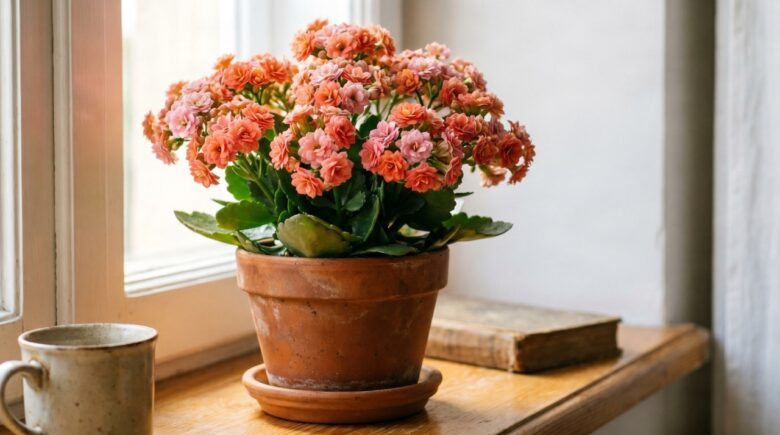
Calandiva is a trademarked variety of Kalanchoe blossfeldiana, a succulent plant originally from Madagascar. The name sounds fancy, but what it really tells you is that this plant evolved in dry, warm conditions with bright light and occasional heavy rain followed by long dry periods. That origin story is the key to everything.
Calandiva stores water in its thick leaves, which is exactly how succulents survive dry conditions. This means the plant handles drought far better than it handles sitting in wet soil. This means it handles drought much better than it handles overwatering. More calandivas die from too much water than from too little. Knowing this one fact will save your plant.
Calandivas are also what botanists call “short-day plants.” They need longer periods of darkness to trigger blooming. This is why they often arrive at stores already in flower — growers force the bloom cycle using controlled light. Once those flowers fade, getting them to bloom again requires mimicking those same conditions. More on that in a moment.
The plant typically lives three to five years with proper care. It is not a one-season decoration. Treat it right and it becomes a reliable yearly bloomer.
Calandiva Plant Care: The 7 Rules That Actually Matter
1. Light: Bright But Not Brutal
Calandivas want a lot of light, but direct afternoon sun through a window will scorch their leaves. A south or east-facing windowsill works well for most homes. If the leaves start to look pale or stretched out and leggy, the plant needs more light. If you see brown, crispy edges, it is getting too much direct sun.
A simple fix: move the plant about two feet back from a sunny window and see if the leaves look healthier within a week. You can also use a sheer curtain to diffuse intense afternoon light.
2. Watering: Less Than You Think
Water your calandiva only when the top inch of soil feels completely dry. Stick your finger into the soil up to the first knuckle. If it feels damp at all, wait. If it feels dry, water thoroughly until it drains out the bottom, then do not water again until the soil dries out.
During winter, the plant slows down and needs even less water. Many people water once every two weeks during the colder months and that is plenty. Do not let the pot sit in a tray of standing water. Root rot sets in fast and it is usually fatal for the plant.
3. Soil and Pot: Drainage Is Everything
Calandiva plant care falls apart without the right soil setup. Use a cactus or succulent potting mix, or mix regular potting soil with perlite at roughly a 50/50 ratio. The goal is soil that lets water move through quickly and does not hold moisture around the roots.
The pot must have a drainage hole. No exceptions. A decorative pot without drainage will trap water and rot the roots within weeks. If your calandiva came in a decorative outer pot, either add rocks at the bottom or remove the plant and put it in a proper nursery pot inside the decorative one.
4. Temperature: Keep It Consistent
Calandivas prefer temperatures between 60 and 85 degrees Fahrenheit. They do fine in most indoor living spaces. What harms them is sudden temperature changes. Keep the plant away from heating vents, drafty windows, and air conditioning units.
Cold drafts below 50 degrees Fahrenheit can cause the leaves to drop and blooms to die off quickly. If your windowsill gets very cold at night during winter, move the plant to a warmer spot before temperatures drop.
5. Feeding: Only When It Is Growing
Feed your calandiva with a balanced liquid fertilizer once a month during spring and summer. Use a fertilizer labeled for flowering plants, something with roughly equal parts nitrogen, phosphorus, and potassium. Do not fertilize during fall and winter when the plant is resting.
Over-fertilizing pushes the plant to grow more leaves at the expense of flowers. Less is more here. If you skip fertilizing entirely during the growing season, the plant will survive but may not bloom as fully.
6. Deadheading: Remove Old Flowers Right Away
When individual flowers die off, pinch or snip them off at the base of the flower stem. This keeps the plant looking tidy and redirects energy toward new blooms or healthy leaf growth. Do not wait until the entire flower cluster is dead.
Once a flower cluster finishes, cut the whole stem back to the nearest set of leaves. This encourages the plant to focus on root and leaf health rather than maintaining a dead stem.
7. Getting It to Bloom Again: The Dark Period Trick
This is where most people give up, thinking the plant is done. It is not. Calandiva is what botanists call a short-day plant, which means it needs long periods of darkness to trigger a new round of blooms. Specifically, it needs at least 14 hours of darkness every day during that period.
Starting in early fall, put the plant in a dark room or closet each evening around 6 PM and bring it back to the light each morning around 8 AM. Do this consistently for six weeks. After that, return the plant to its normal spot and keep up regular care. Flower buds should appear within four to six weeks. It takes patience, but it works.
What Most Calandiva Articles Get Wrong
Almost every article you will find online tells you to give calandiva “bright indirect light” and leave it at that. The problem is that advice means something completely different depending on what room you are in, what time of year it is, and which direction your windows face.
Here is the more useful truth: calandivas actually want more direct light than most articles admit. A few hours of direct morning sun from an east-facing window will make the plant stronger and more likely to bloom than keeping it in purely indirect light all day. The danger zone is intense afternoon sun from a west or south-facing window with no diffusion. Many people are unintentionally keeping their calandivas too far from the light source because they followed generic advice, and then wondering why the plant looks weak and never flowers again. If your plant looks pale and leggy, move it closer to the window before you try anything else.
How to Take Action Starting Today
Start with the two things that kill calandivas fastest: too much water and not enough light. Today, check the soil with your finger. If it is damp, put the watering can away and check again in three or four days. Then look at where the plant is sitting. Is it getting any direct morning light? If not, move it to the brightest windowsill you have.
Once those two basics are solid, look at the pot. Does it have drainage? If not, repot the plant this week into something with a hole at the bottom using cactus mix. After that, your main job is to be consistent. Water only when the soil is dry, give it steady light, and start the dark period treatment in early fall if you want blooms again. Take it one step at a time. Each step is straightforward.
The One Thing to Remember
Calandiva plant care comes down to one principle: this is a succulent from a dry climate, and it wants to be treated like one. Give it bright light, let the soil dry out between waterings, keep it away from cold drafts, and mimic the dark conditions it needs to bloom again.
Pick up a bag of cactus mix this week if you do not have the right soil, and move the plant to your brightest window. Those two actions will give your calandiva the best possible start. If you want more help getting your indoor plants to thrive year-round, read through the rest of the houseplant care guides on this site.