
When it comes to home heating solutions, heating baseboards represent one of the most efficient and cost-effective options available to homeowners. Whether you’re renovating an older property, building a new home, or simply looking to upgrade your current heating system, understanding what heating baseboards are and how they function is essential. This comprehensive guide will walk you through everything you need to know about baseboard heating, including its types, advantages, disadvantages, and whether it’s the right choice for your home.
Baseboard heating has been a staple in residential properties for decades, and for good reason. These unobtrusive heating units, typically located along the baseboards of walls, provide consistent warmth without the need for ductwork or ceiling-mounted equipment. Let’s explore this heating solution in detail.
What is Heating Baseboard? Understanding the Basics
Heating baseboards are heating units installed along the lower walls of a room, typically where the wall meets the floor. They work by distributing warm air throughout a space, either through electric resistance heating or hot water circulation. The name “baseboard” comes from their placement along the base of the walls, making them a discrete and space-saving heating option.
Unlike traditional furnaces or heat pumps that require extensive ductwork and central distribution systems, baseboards provide direct, localized heating. This makes them particularly popular in:
- Apartments and condominiums
- Older homes without existing ductwork
- Room additions and renovations
- Commercial spaces like offices and retail stores
- Basements and workshops
The fundamental principle behind baseboard heating is simple: heat rises naturally. When warm air is generated at floor level, it rises throughout the room, creating an even temperature distribution and ensuring comfort for occupants.
Types of Heating Baseboards: Electric vs. Hydronic
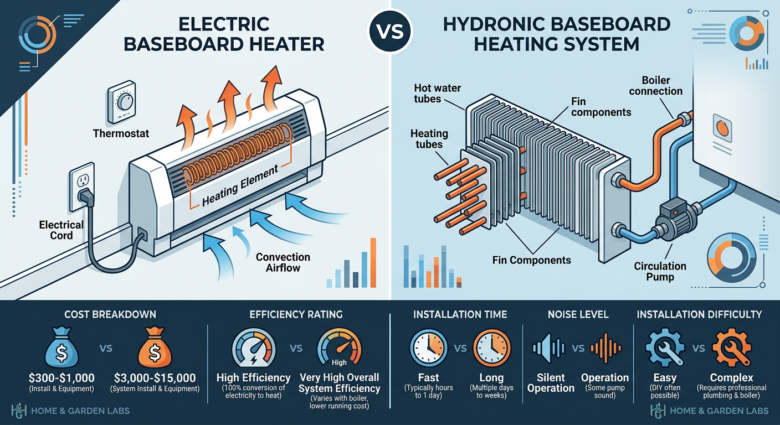
Understanding the differences between baseboard heating types is crucial for making an informed decision. There are two primary categories to consider:
Electric Baseboard Heaters
Electric baseboards are the most common and easiest to install. They operate using electric resistance heating elements that convert electrical energy directly into heat. Key characteristics include:
- No water or fuel required: They operate independently without connection to a central heating system
- Individual room control: Most electric baseboards feature thermostats, allowing independent temperature adjustment per room
- Easy installation: They can be installed without professional help in many cases
- Immediate heat output: They begin producing heat instantly when turned on
- Lower upfront costs: Generally less expensive than hydronic alternatives
Electric baseboards are ideal for situations where installing a central heating system is impractical or cost-prohibitive. They’re particularly popular in rental properties and apartment buildings.
Hydronic Baseboard Heaters
Hydronic baseboards represent a more sophisticated heating solution. These units circulate hot water through their internal tubes, providing consistent, radiant heat. Notable features include:
- Connection to central boiler: They require a centralized heating system to generate hot water
- Even heat distribution: Hydronic systems tend to provide more uniform temperature distribution
- Greater efficiency: Once heated, the water retains heat longer than electric elements
- Higher initial investment: Installation requires a boiler system and piping infrastructure
- Zone control capabilities: Multiple zones can be controlled independently for precise comfort management
- Longer heating periods: They take longer to heat up initially but maintain warmth effectively
Hydronic baseboards are often preferred in larger homes or properties where central heating systems already exist, as they typically offer better long-term efficiency and lower operating costs.
How Heating Baseboards Work: The Science Explained
Electric Baseboard Operation
When an electric baseboard heater is activated, electricity flows through a high-resistance wire or heating element. This resistance converts electrical energy into thermal energy (heat). The heat is then transferred to the surrounding air through natural convection:
- Cool air enters the baseboard unit from the bottom
- Air passes over the heated elements
- Warmed air rises naturally into the room
- As the room temperature increases, the thermostat signals the element to cycle on and off, maintaining desired warmth
Hydronic Baseboard Operation
Hydronic baseboards operate on a different principle:
- A central boiler heats water to a specific temperature
- A circulation pump moves hot water through pipes connected to baseboard units in various rooms
- The hot water passes through fin-tube elements inside the baseboards
- Heat transfers from the water to the surrounding air through the fins
- Room thermostats control circulation valves, regulating water flow and heat output
Advantages of Heating Baseboard Systems
There are numerous reasons why heating baseboards remain popular among homeowners and property managers:
Cost-Effectiveness
- Lower initial installation costs compared to central heating systems
- No expensive ductwork required
- Minimal maintenance expenses
Zoning Flexibility
- Individual room temperature control
- Eliminates heated/cooled air distribution to unused rooms
- Reduces overall energy consumption
Space Efficiency
- Takes minimal floor space
- Doesn’t require ceiling clearance
- Provides storage space above units in some configurations
Ease of Installation
- Electric models can be DIY-installed
- No need for complex ventilation systems
- Retrofitting existing spaces is straightforward
Quiet Operation
- No loud fan noise like forced-air systems
- Creates a peaceful, quiet home environment
Health Benefits
- No forced air movement reduces dust circulation
- Beneficial for allergy sufferers
- Maintains consistent humidity levels
Disadvantages and Considerations
While heating baseboards offer numerous benefits, there are some potential drawbacks to consider:
Electric Baseboard Limitations
- Higher operating costs in areas with expensive electricity
- Slower heat-up time initially
- Less efficient for very large spaces
- Can feel less modern to some homeowners
Hydronic Baseboard Challenges
- Requires professional installation
- Higher upfront equipment costs
- Potential for leaks in the water circulation system
- Takes longer to achieve desired temperatures
General Considerations
- Aesthetic concerns for some homeowners
- Can collect dust and require regular cleaning
- May not be suitable for homes in extremely cold climates
- Furniture placement limitations directly in front of units
Cost Analysis: Installation and Operating Expenses
Electric Baseboard Costs
- Installation: $300-$1,000 per unit for professional installation
- Equipment: $100-$400 per baseboard heater
- Operating costs: Varies based on local electricity rates; typically higher than alternative systems
- Maintenance: Minimal costs; occasional cleaning and thermostat checks
Hydronic Baseboard Costs
- Installation: $3,000-$15,000+ for complete system
- Equipment: $200-$500 per baseboard unit, plus boiler costs ($2,000-$8,000)
- Operating costs: Generally lower than electric, depending on fuel source
- Maintenance: Annual boiler servicing ($150-$300) and occasional bleeding of air from lines
Is Heating Baseboard Right for Your Home?
Determining whether baseboard heating suits your needs depends on several factors:
Choose baseboard heating if you:
- Live in a smaller home or apartment
- Have an irregular property layout unsuitable for ductwork
- Value individual room temperature control
- Have a limited renovation budget
- Don’t have extreme climate conditions
- Prefer quiet, dust-free heating
Consider alternatives if you:
- Have a very large home requiring extensive heating
- Live in an extremely cold climate
- Desire central air conditioning
- Have aesthetic concerns about visible heating units
- Want the lowest possible operating costs in high-electricity areas
Maintenance Tips for Optimal Performance
Proper maintenance ensures your baseboard heating system operates efficiently:
- Monthly cleaning: Vacuum fins and remove dust buildup
- Thermostat checks: Ensure accurate temperature readings
- Quarterly inspections: Look for signs of damage or leaks (hydronic systems)
- Annual professional service: Schedule annual inspections for hydronic systems
- Furniture placement: Keep furniture and curtains at least 12 inches away from units
- Bleeding air: For hydronic systems, bleed trapped air monthly during heating season
Energy Efficiency and Modern Improvements
Modern baseboard heating has evolved significantly. Contemporary models feature:
- Programmable thermostats for automated temperature control
- Smart home integration for remote management
- Improved insulation reducing heat loss
- Eco-friendly refrigerants in hydronic systems
- Lower wattage electric elements maintaining comfort with reduced consumption
Conclusion
Heating baseboards offer a practical, efficient heating solution for numerous residential and commercial applications. Whether you’re considering electric or hydronic systems, understanding their operation, advantages, and limitations helps you make an informed decision tailored to your specific needs and circumstances.
Electric baseboards provide affordability and ease of installation, while hydronic systems deliver superior long-term efficiency and uniform heating. Both options eliminate the need for complex ductwork and provide flexible zoning capabilities that many homeowners appreciate.
Ready to Explore Your Heating Options?
If you’re considering baseboard heating for your home or property, don’t leave this important decision to chance. Contact a certified HVAC professional today to receive a personalized assessment of your heating needs. They can provide detailed cost estimates, discuss energy efficiency options, and help you determine whether baseboard heating is the optimal solution for your unique situation.
Invest in comfort and efficiency—your home deserves the best heating solution. Reach out to a qualified heating contractor today and discover how baseboard heating can improve your home’s comfort while potentially reducing your energy expenses.