
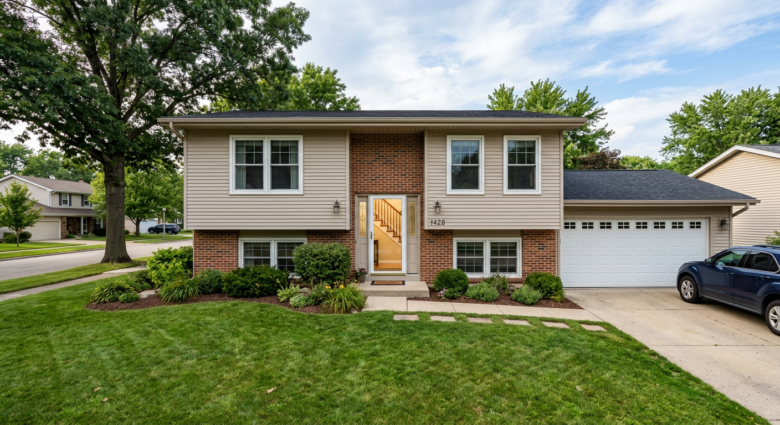
If you’ve been browsing real estate listings or exploring home designs, you’ve likely come across the term “bi-level home.” But what exactly does that mean, and how does it differ from other split-level or two-story designs? Whether you’re a first-time homebuyer, an investor, or someone considering a renovation, understanding the bi-level home layout can help you make an informed decision.
In this comprehensive guide, we’ll break down everything you need to know about bi-level homes — from their defining features and history to their advantages, disadvantages, and how they compare to other home styles.
What Is a Bi-Level Home?
A bi-level home is a residential property with two distinct living levels separated by a short flight of stairs. When you enter a bi-level home through the front door, you typically arrive at a landing or small foyer situated between the two floors. From there, you either walk up a half flight of stairs to the main living area or descend a half flight to the lower level.
Unlike a traditional two-story home where the second floor sits directly above the first, a bi-level home staggers its floors so that each level is only partially above or below grade. The upper level usually contains the primary living spaces — the kitchen, living room, dining area, and bedrooms — while the lower level often houses additional bedrooms, a family room, a laundry area, and sometimes a garage.
This design creates a home that effectively doubles its usable square footage without requiring a full basement or a conventional second story.
The History of Bi-Level Homes
Bi-level homes surged in popularity during the 1950s, 1960s, and 1970s, particularly in suburban neighborhoods across the United States and Canada. During the post-World War II housing boom, builders needed affordable, space-efficient designs that could be constructed quickly on smaller lots. The bi-level layout offered a practical solution.
By splitting the home into two levels connected by a short staircase, builders maximized living space without dramatically increasing construction costs. The design also adapted well to sloped or uneven terrain, making it a go-to choice for suburban developments with varied lot conditions.
While their popularity waned somewhat in the 1980s and 1990s in favor of open-concept ranch homes and traditional two-story homes, bi-level homes have experienced renewed interest in recent years. Modern homeowners and designers are reimagining the classic bi-level layout with contemporary finishes, updated floor plans, and energy-efficient features.
Key Features of a Bi-Level Home
Understanding the defining characteristics of a bi-level home will help you identify one quickly and determine whether it’s the right fit for your lifestyle:
- Split-entry design: The front door opens to a foyer or landing between the two levels, with stairs going up and down.
- Two living levels: The upper and lower floors are offset, each approximately half a story above or below ground level.
- Lower level partially below grade: The bottom floor is partially underground, often with windows along the above-grade portion.
- Compact footprint: Bi-level homes maximize square footage on smaller lots by building vertically rather than spreading outward.
- Separate living zones: The staggered levels naturally create distinct areas for different activities, offering a degree of privacy between spaces.
- Cost-effective construction: Because the lower level shares a foundation wall and doesn’t require full excavation like a basement, building costs are often lower than comparable two-story homes.
Bi-Level Home vs. Split-Level Home: What’s the Difference?
One of the most common points of confusion is the difference between a bi-level home and a split-level home. While the terms are sometimes used interchangeably, there are important distinctions.
Bi-Level Home
- Has two levels connected by a single set of stairs from the entry foyer.
- The front door opens to a mid-level landing.
- The design is relatively simple, with one level up and one level down.
Split-Level Home
- Has three or more levels staggered at different heights.
- Typically includes a main level, an upper level (bedrooms), and a lower level (family room/garage), all connected by short flights of stairs.
- The layout is more complex and offers greater separation between living zones.
In short, a bi-level home is essentially a simpler version of a split-level, featuring only two distinct floors rather than three or more.
Advantages of a Bi-Level Home
Bi-level homes offer several compelling benefits that continue to attract buyers and homeowners:
1. Affordable Price Point
Bi-level homes are generally more affordable than comparable two-story homes. Their efficient construction methods and smaller footprints translate to lower purchase prices, making them an excellent option for first-time buyers or budget-conscious families.
2. Maximized Living Space
The design effectively doubles the usable area without requiring a large lot. The lower level offers ample space for additional bedrooms, recreation areas, home offices, or rental units.
3. Natural Separation of Living Spaces
The staggered levels create a built-in division between public and private areas. For example, noisy activities in the lower-level family room are naturally buffered from the bedrooms upstairs. This separation is especially valuable for families with children, teenagers, or multigenerational households.
4. Adaptability to Sloped Lots
Bi-level homes are ideally suited for properties with uneven terrain. The split-entry design works harmoniously with gentle slopes, eliminating the need for extensive grading or foundation work.
5. Potential for Rental Income
The lower level of a bi-level home can often be converted into a separate living suite with its own entrance, kitchen, and bathroom. This makes bi-level homes attractive to investors or homeowners looking to offset their mortgage with rental income.
6. Natural Light in Lower Level
Because the lower level is only partially below grade, it typically features above-grade windows that let in natural light. This makes the lower level feel much more inviting than a traditional basement.
Disadvantages of a Bi-Level Home
Like any home style, bi-level homes come with certain drawbacks that prospective buyers should consider:
1. Stairs at Every Entry
Every time you enter or leave a bi-level home, you must navigate stairs. This can be a significant inconvenience for elderly individuals, people with mobility challenges, or families with very young children.
2. Limited Curb Appeal
The split-entry design and prominent garage door can make the front facade appear less visually appealing than that of ranch or colonial-style homes. However, modern renovations can dramatically improve curb appeal.
3. Resale Challenges
In some markets, bi-level homes can be harder to sell than other styles. Buyer preferences have shifted toward open-concept layouts and single-level living, making bi-levels less desirable to certain demographics.
4. Noise Transfer Between Levels
While the separation of levels offers some sound buffering, the open staircase in the center of the home can act as a sound conduit, carrying noise between floors.
5. Smaller Room Sizes
Because bi-level homes were designed to maximize space on compact lots, individual rooms can sometimes feel smaller or more compartmentalized compared to modern open-concept designs.
How to Modernize a Bi-Level Home
If you already own a bi-level home or are considering purchasing one, several renovation strategies can bring the design into the 21st century:
- Open up the floor plan: Remove non-load-bearing walls on the upper level to create a more open kitchen, dining, and living area.
- Update the entryway: Replace dated foyer finishes with modern materials like tile, hardwood, or contemporary railings to make a strong first impression.
- Improve curb appeal: By adding new siding, a modern front door, updated landscaping, and exterior lighting to enhance the home’s street presence.
- Finish the lower level: Transform the lower floor into a polished living space with proper flooring, drywall, recessed lighting, and updated bathrooms.
- Add a deck or patio: Extend living space outdoors by adding a deck off the upper level or a walkout patio from the lower level.
- Upgrade windows and insulation: Replace old windows and add insulation to improve energy efficiency and comfort throughout both levels.
Who Should Consider a Bi-Level Home?
A bi-level home may be the perfect fit if you:
- Are you a first-time homebuyer looking for an affordable property with ample space
- Need separate living zones for a growing family or multigenerational living
- Want the potential for rental income from a lower-level suite
- Are you purchasing property on a sloped or uneven lot
- Enjoy DIY renovation projects and see the potential to modernize an older home
- Prefer a home with a smaller footprint that still offers generous square footage
Final Thoughts
A bi-level home is a practical, affordable, and versatile housing option that has stood the test of time for good reason. While the style may carry some stigma from its mid-century origins, today’s homeowners are discovering that with thoughtful updates and modern finishes, a bi-level home can be just as stylish and functional as any other design.
Whether you’re drawn to the natural separation of living spaces, the potential for rental income, or the budget-friendly price point, understanding what a bi-level home offers is the first step toward making a smart real estate decision.