
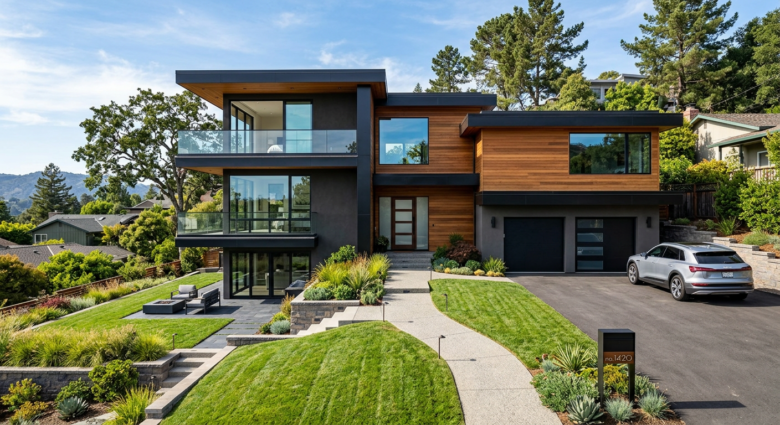
If you’ve been browsing real estate listings lately, you may have come across the term “tri-level home” and wondered exactly what it means. Is it the same as a split-level? Is it a three-story house? How does it differ from a traditional two-story home? These are all valid questions — and this comprehensive guide has the answers.
Whether you’re a first-time homebuyer, a real estate investor, or simply someone curious about architectural styles, understanding what a tri-level home is can help you make more informed decisions in today’s competitive housing market. Let’s dive deep into everything you need to know about this unique and functional home style.
What Is a Tri-Level Home?
Atri-level home is a type of residential structure that is divided into three distinct living levels or floors, each typically offset from one another by a short flight of stairs rather than a full floor’s worth of steps. Unlike a traditional multi-story house where each floor is completely separate, a tri-level home creates a staggered, interconnected layout that maximizes the use of vertical space.
In most tri-level homes, you’ll find:
- The lowest level — Often partially below ground, this space is commonly used as a family room, recreational area, laundry room, or additional bedroom.
- The main or middle level — This is typically the entry level, housing the kitchen, living room, and dining area.
- The upper level — This floor generally contains the bedrooms and bathrooms, offering privacy away from the main living areas.
This three-tiered design was especially popular in American suburban neighborhoods during the 1950s, 1960s, and 1970s, and many of these homes are still highly sought after today for their distinctive layout and architectural character.
Tri-Level Home vs. Split-Level Home: What’s the Difference?
One of the most common points of confusion in real estate is the difference between a tri-level home and a split-level home. While they are often used interchangeably, there are subtle but important distinctions.
Split-Level Homes
A split-level home typically features an entry point that sits between two levels, with a short staircase going up to one section and another going down to a lower section. They generally have two to four levels, but the transition between levels is the defining characteristic.
Tri-Level Homes
A tri-level home, on the other hand, specifically refers to a home with exactly three levels, each separated by a partial staircase. The layout is more structured and predictable, making it easier to understand how the space is organized.
Key differences at a glance:
| Feature | Tri-Level Home | Split-Level Home |
|---|---|---|
| Number of levels | Exactly 3 | 2–4 levels |
| Entry point | Usually middle level | Between levels |
| Layout consistency | More uniform | More varied |
| Architectural era | 1950s–1970s | 1950s–present |
The History and Architecture of Tri-Level Homes
The tri-level home emerged as a practical solution to post-World War II housing demands in the United States. As suburban areas expanded rapidly and families grew larger, architects and developers needed designs that could offer more living space without requiring a large footprint.
The split-entry and tri-level designs became the answer. By staggering the floors, builders could maximize square footage on smaller lots while keeping construction costs relatively low. The style was championed by builders like National Homes Corporation and others who saw the design as both economical and functional.
From an architectural standpoint, tri-level homes often feature:
- Low-pitched rooflines or gabled roofs
- Brick, wood, or vinyl siding exteriors
- Attached garages often located at the lowest level
- Large picture windows on the main living level
- Open or semi-open floor plans on the main level
Although the style peaked decades ago, tri-level homes have experienced a resurgence in popularity as buyers seek unique layouts, more square footage, and homes that stand out from cookie-cutter new construction.
Pros of Living in a Tri-Level Home
Understanding the advantages of a tri-level home can help you determine if this style is the right fit for your lifestyle and needs.
1. Efficient Use of Space
Tri-level homes are masterclasses in space optimization. By building upward in stages, these homes offer more livable square footage without necessarily requiring a larger lot. This makes them an excellent option in areas where land is expensive or limited.
2. Natural Separation of Living Areas
The built-in zoning of a tri-level home is one of its most appreciated features. The different levels create natural boundaries between:
- Public spaces (living room, kitchen, dining area)
- Private spaces (bedrooms, bathrooms)
- Recreational or utility spaces (family room, laundry, storage)
This separation is ideal for families with children, people who work from home, or homeowners who frequently entertain guests.
3. Unique Aesthetic Appeal
In a sea of standard ranch-style or two-story homes, a tri-level home stands out. The staggered design gives the exterior a dynamic, interesting look that many homeowners find visually appealing. Curb appeal matters — and tri-level homes often have plenty of it.
4. Potentially Lower Cost per Square Foot
Because tri-level homes were originally designed with cost-efficiency in mind, older models can offer excellent value. In many markets, you can find more square footage at a lower price point compared to equivalent two-story or ranch homes.
5. Ideal for Hillside or Sloped Lots
The tri-level design is naturally suited for lots with elevation changes or slopes. Instead of extensive grading or landscaping to level the ground, a tri-level home can be built to follow the natural contours of the land — saving both money and the environment.
Cons of Living in a Tri-Level Home
No home style is without its drawbacks. Here are some of the challenges associated with tri-level homes that you should consider before making a purchase.
1. Stairs, Stairs, and More Stairs
The most obvious downside is the abundance of staircases. For elderly individuals, people with mobility issues, or families with very young children, navigating multiple levels multiple times a day can become a challenge or even a safety concern.
2. Heating and Cooling Challenges
Because of the open, staggered design, it can be more difficult to maintain consistent temperatures throughout a tri-level home. Heat tends to rise, meaning the upper bedroom level can get warmer in summer, while the lowest level may feel cooler or damp in winter. Upgraded HVAC systems or zoned heating and cooling solutions may be necessary.
3. Limited Open-Concept Appeal
Modern buyers often gravitate toward open-concept floor plans. While the main level of a tri-level home can offer an open layout, the stairways and level changes can make it feel less expansive compared to a true open-concept design.
4. Renovation Complexity
If you’re planning to renovate or remodel a tri-level home, be prepared for added complexity and cost. Structural modifications can be more involved due to the staggered construction, and it can be more difficult to reconfigure the layout compared to a traditional single-story or two-story home.
Who Is a Tri-Level Home Best Suited For?
Tri-level homes aren’t for everyone, but they’re a fantastic choice for specific types of buyers. You might love a tri-level home if you are:
- A growing family looking for natural separation between adult and children’s spaces
- A remote worker who needs a dedicated home office level
- A buyer on a budget who wants more square footage for the money
- An entertainer who appreciates keeping living and sleeping areas separate
- A buyer with a sloped lot who wants a home design that works with the terrain
- A vintage or architectural enthusiast drawn to mid-century modern aesthetics
Tri-Level Homes in Today’s Real Estate Market
In today’s competitive real estate market, tri-level homes occupy an interesting niche. They are often found in established suburban neighborhoods and may offer more character and space than newer builds at comparable price points.
Here’s what today’s market looks like for tri-level homes:
- Price advantage: Many tri-level homes are priced competitively compared to similar-sized two-story homes.
- Renovation opportunities: Buyers with vision can update older tri-level homes with modern finishes, open stairway designs, and contemporary kitchens for significant value gains.
- Strong resale potential: As design trends cycle, mid-century and retro-style homes are increasingly fashionable, driving up demand.
- Location benefits: Many tri-level homes are located in mature neighborhoods with established trees, schools, and infrastructure.
Tips for Buying a Tri-Level Home
If you’re considering purchasing a tri-level home, keep these expert tips in mind:
- Hire a qualified home inspector familiar with split and tri-level designs to identify any structural or moisture issues, particularly in the lower level.
- Evaluate the HVAC system carefully and budget for potential upgrades to ensure efficient heating and cooling across all three levels.
- Consider the long-term livability of the staircase layout, especially if you plan to age in the home or have family members with limited mobility.
- Look for natural light on the lower level — basements or semi-underground spaces can feel dark, so ensure there are windows or consider how you might add them.
- Factor in renovation costs if the home needs updating, and work with a contractor who has experience with multi-level home remodels.
Is a Tri-Level Home Right for You?
A tri-level home offers a compelling combination of space efficiency, natural zoning, architectural character, and value — making it an excellent choice for the right buyer. While the multiple stairways and unique layout may not suit every lifestyle, those who appreciate the design’s thoughtful organization and distinctive look often become devoted tri-level enthusiasts.
Understanding what a tri-level home is — and how it compares to other home styles — is the first step toward making a confident, informed real estate decision.