Imagine stepping outside on a warm summer morning to find your garden alive with the gentle hum of bees and the graceful flutter of butterfly wings. Sounds magical, right? The good news is that creating a pollinator-friendly garden is easier than you think — and it all starts with choosing the right plants.
Pollinators like butterflies, bees, and hummingbirds play a critical role in our ecosystem. In fact, according to the U.S. Department of Agriculture, pollinators are responsible for one out of every three bites of food we eat. Yet their populations are declining at an alarming rate due to habitat loss, pesticide use, and climate change. By planting a pollinator garden, you’re not just creating a beautiful outdoor space — you’re actively contributing to the health of our planet.
In this comprehensive guide, we’ll explore the best plants for pollinators, share expert tips on how to attract more butterflies and bees to your garden, and help you build a thriving, vibrant outdoor sanctuary from scratch. Whether you’re a seasoned gardener or a complete beginner, this guide has everything you need to get started.
Why Planting for Pollinators Matters
Before we dive into our top plant recommendations, it’s worth understanding why creating a pollinator-friendly garden is so important.
Pollinators are essential for:
- Food production – Most fruits, vegetables, and nuts rely on pollinators for reproduction
- Biodiversity – Pollinators support the growth of trees, flowers, and other plants that serve as food and shelter for wildlife
- Ecosystem balance – A healthy pollinator population keeps natural ecosystems thriving
Unfortunately, bee and butterfly populations have suffered dramatic declines over recent decades. The monarch butterfly population, for example, has decreased by more than 80% in the last 20 years. By choosing the right butterfly-attracting plants and bee-friendly flowers, you can make a real difference — one garden at a time.
The Best Plants to Attract Butterflies and Bees
1. Lavender (Lavandula)
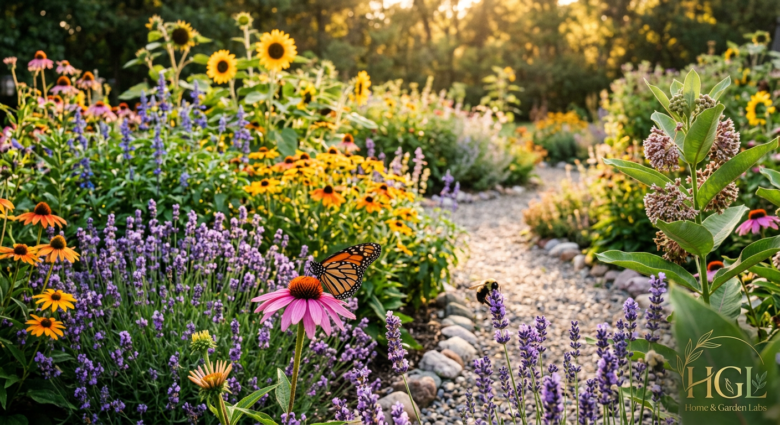
When it comes to plants that attract bees, lavender is arguably the reigning champion. Its vibrant purple flower spikes and intoxicating fragrance make it irresistible to bumblebees, honeybees, and even butterflies.
Why pollinators love it:
- Rich in nectar, providing a high-energy food source for bees
- Blooms for extended periods, offering sustained support throughout summer
- The ultraviolet patterns on lavender flowers are especially visible to bees
Growing tips:
- Thrives in full sun with well-drained soil
- Drought-tolerant once established — perfect for low-maintenance gardens
- Plant in clusters of three or more to maximize pollinator attraction
- Hardy in USDA zones 5–9
Lavender is also incredibly versatile. It works beautifully as a border plant, in raised beds, or in containers on a sunny patio. Plant it near your vegetable garden and you’ll enjoy the added benefit of improved pollination for your crops.
2. Coneflower / Echinacea (Echinacea purpurea)
Coneflowers are one of the most celebrated native plants for pollinators in North America, and for good reason. Their bold, daisy-like blooms in shades of pink, purple, orange, and white are absolute magnets for bees and butterflies alike.
Why pollinators love it:
- The raised central cone provides a perfect landing platform for butterflies
- Long blooming season from midsummer through early fall
- Goldfinches and other birds feed on the seed heads in winter, adding year-round wildlife value
Growing tips:
- Extremely low-maintenance and drought-resistant once established
- Thrives in full sun to partial shade
- Self-seeds readily, spreading naturally over time
- Hardy in USDA zones 3–9
Echinacea is a powerhouse plant that delivers stunning visual impact while supporting a wide range of pollinator species. It pairs beautifully with lavender, salvia, and ornamental grasses for a naturalistic garden design.
3. Sunflower (Helianthus annuus)
Few plants are as instantly recognizable — or as wildly popular with pollinators — as the sunflower. These cheerful giants are among the best flowers for bees, offering enormous quantities of pollen and nectar in a single bloom.
Why pollinators love it:
- Large, open flower heads provide easy access to pollen and nectar
- Attract a wide variety of bee species, including bumblebees, sweat bees, and honeybees
- Also beloved by monarch and painted lady butterflies
Growing tips:
- Plant in a sunny location with well-drained soil
- Direct sow seeds after the last frost for best results
- Avoid hybrid “pollen-free” varieties — pollinators need the pollen!
- Great for children and beginner gardeners due to rapid, reliable growth
Sunflowers are a fantastic option for adding height and structure to your pollinator garden. Plant them at the back of borders where they can tower majestically without shading smaller plants.
4. Salvia (Salvia spp.)
Salvia is one of the most versatile and reliable plants for attracting butterflies and bees. With hundreds of species available in a stunning range of colors — from deep blue and violet to red, pink, and white — there’s a salvia for every garden style.
Why pollinators love it:
- Tubular flowers are perfectly shaped for bees and hummingbirds
- Produces abundant nectar throughout its long blooming season
- The aromatic foliage naturally deters pests, making it a great companion plant
Growing tips:
- Thrives in full sun with average, well-drained soil
- Deadhead spent blooms regularly to encourage continuous flowering
- Many varieties are deer-resistant, making them ideal for rural gardens
- Annual varieties can be grown in USDA zones 2–11; perennial types in zones 5–10
Salvia is particularly effective when planted in large drifts or clusters. Blue salvia (Salvia farinacea) and hot lips salvia (Salvia microphylla) are especially popular choices for pollinator gardens.
5. Milkweed (Asclepias spp.)
If you want to support monarch butterflies specifically, milkweed is absolutely non-negotiable. It is the only plant on which monarchs will lay their eggs, making it a critical host plant for one of America’s most beloved butterfly species.
Why pollinators love it:
- Essential host plant for monarch butterfly larvae
- Fragrant flower clusters attract a wide range of bee and butterfly species
- Provides both nectar and larval food resources
Growing tips:
- Choose native milkweed species suited to your region (e.g., Asclepias tuberosa for most of the U.S.)
- Plant in a sunny location with well-drained soil
- Allow plants to go to seed to support natural spreading
- Hardy in USDA zones 3–9, depending on the species
Planting milkweed isn’t just a gardening choice — it’s a conservation act. With monarch populations critically threatened, every milkweed plant genuinely makes a difference.
6. Butterfly Bush (Buddleja davidii)
True to its name, the butterfly bush is one of the most effective plants for attracting butterflies available to gardeners. Its long, cone-shaped flower clusters come in shades of purple, pink, white, and red, and they absolutely teem with butterfly activity throughout summer and fall.
Why pollinators love it:
- Produces extraordinary quantities of nectar
- Attracts an impressive variety of butterfly species, including swallowtails, fritillaries, and painted ladies
- Long blooming season from midsummer through frost
Growing tips:
- Plant in full sun for best flowering performance
- Deadhead regularly to prevent self-seeding and promote continuous blooms
- Note: Butterfly bush can be invasive in some regions — check local guidelines and consider sterile varieties like Buddleja ‘Lo & Behold’ series
- Hardy in USDA zones 5–9
While butterfly bush is a spectacular pollinator plant, it’s worth noting that it functions primarily as a nectar source rather than a host plant. For a truly comprehensive pollinator garden, pair it with host plants like milkweed and native wildflowers.
Pro Tips to Maximize Pollinator Activity in Your Garden
Choosing the right plants is just the beginning. Here are expert strategies to supercharge your pollinator garden:
Plant in Clusters
Pollinators are more likely to visit your garden when plants are grouped together in masses rather than scattered individually. Aim for clusters of at least three to five plants of the same species to create a visible, accessible food source.
Prioritize Native Plants
Native plants have co-evolved with local pollinator species over thousands of years, making them uniquely suited to meet local wildlife needs. Research native flowering plants in your region and make them the backbone of your pollinator garden.
Eliminate Pesticides
Even “bee-friendly” pesticide labels can be misleading. To create a truly safe haven for pollinators, avoid all synthetic pesticides and herbicides. Instead, embrace natural pest control methods such as companion planting, hand-picking pests, and encouraging beneficial insects.
Provide Seasonal Blooms
Aim to have something blooming in your garden from early spring through late fall. This ensures pollinators have a continuous food source throughout the seasons. Plan your planting calendar to include early bloomers like crocus and lungwort, summer stalwarts like coneflower and lavender, and fall favorites like asters and goldenrod.
Add Water Sources
A shallow dish of water with pebbles or marbles for landing spots gives bees and butterflies a safe place to hydrate. Change the water regularly to prevent mosquito breeding.
Start Your Pollinator Garden Today
Best Plants for Pollinators? Creating a pollinator-friendly garden is one of the most rewarding things you can do as a gardener — for yourself, for wildlife, and for the planet. With the right plant choices and a few simple strategies, you can transform even a small outdoor space into a thriving habitat for butterflies, bees, and countless other beneficial creatures.
Whether you start with a single lavender plant on your balcony or plan an entire wildflower meadow, every pollinator-friendly choice you make counts. The butterflies and bees will thank you — and so will future generations who depend on these vital creatures for a healthy, abundant world.