
One dandelion plant can produce up to 15,000 seeds in a single season. Those seeds float through the air and land anywhere in your yard. That means one plant left untreated can turn into a full-blown infestation faster than you expect.
Most people try to pull dandelions and feel good about it, only to see them come back two weeks later. This happens because dandelions have a long root called a taproot that goes deep into the soil. If you leave even a small piece of that root behind, the plant grows back.
This article will show you exactly how to get rid of dandelions using methods that actually work. You will learn how to remove them by hand, which products to use, and how to stop them from coming back. Whether you want a chemical-free approach or something stronger, there is a method here that fits your situation.
What Makes Dandelions So Hard to Kill
Dandelions are not just any weed. They are one of the most stubborn plants you will ever deal with in a lawn or garden. Their taproots can grow anywhere from 6 to 18 inches deep into the ground. That depth is what makes them so good at coming back.
The plant also has a survival advantage most people do not think about. Even after you mow over them, dandelions can still bloom close to the ground. They adapt quickly. They can grow in almost any soil type, and they thrive in both sun and partial shade.
Understanding the life cycle of a dandelion helps you fight it smarter. Dandelions are perennial plants, which means they come back every year from the same root system. They also spread through seeds carried by wind. Tackling both the root and the seed spread is the key to real control. For a more detailed look at how dandelion root systems work, the University of Minnesota Extension dandelion guide is a reliable and easy to read resource worth bookmarking.
Timing Matters More Than You Think
Getting rid of dandelions is much easier when you do it at the right time of year. Early spring and fall are the two best windows to take action. During these seasons, dandelions are actively moving nutrients between their leaves and roots, which makes them more vulnerable to treatment.
In spring, attack dandelions before they flower and go to seed. Once those white seed heads appear, the seeds are already on their way to spreading across your lawn. Acting early in spring stops the next generation before it starts.
Fall is actually the most effective season to use herbicides on dandelions. The plant pulls nutrients down into the root as it prepares for winter. Any weed killer you apply during this time gets pulled deeper into the root system, which gives you a much better kill rate. Many lawn care experts say fall treatment is twice as effective as spring treatment.
Hand Pulling Works, But Only If You Do It Right
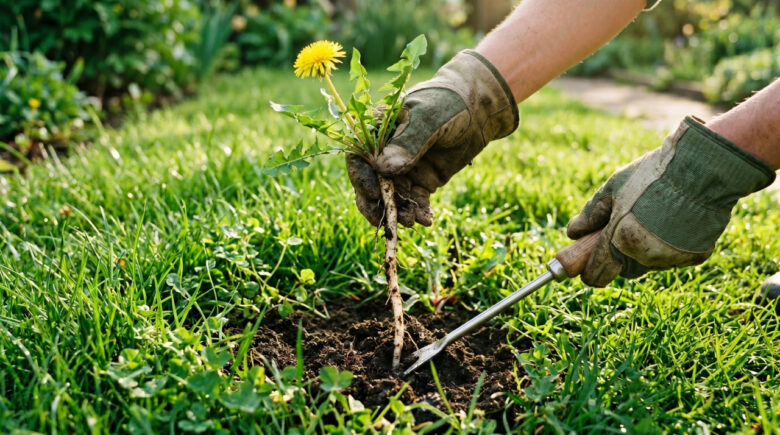
Hand pulling is the most natural way to get rid of dandelions. It costs nothing, adds no chemicals to your lawn, and can be very effective when done properly. The problem is that most people do it wrong. They grab the leaves and pull, leaving the taproot in the ground.
To do it right, you need to remove the entire taproot. The best tool for this is a dandelion digger, also called a weeding fork or fishtail weeder. Push the tool straight down into the soil right next to the plant. Then angle the tool slightly and use it to lever the root up and out of the ground. Wiggle it gently as you go to loosen the soil around the root.
Wet soil makes this much easier. The day after a good rain is the best time to do hand pulling. If the ground is dry, water the area first and wait a few hours. Pull the whole plant out, root and all, and place it directly into a bag so seeds do not spread.
Natural Ways to Kill Dandelions Without Chemicals
Not everyone wants to use herbicides. Some people have pets or children who play on the grass. Others just prefer to avoid chemicals when possible. The good news is there are several natural methods that can help control dandelions without reaching for a bottle of weed killer.
Boiling Water
Pouring boiling water directly onto a dandelion plant kills it fast. The heat destroys the leaves and can damage the upper part of the root. This works best on dandelions growing in cracks in sidewalks or driveways where surrounding grass is not a concern. Be careful because boiling water will kill any plant it touches, including your lawn grass.
Salt and Dish Soap Mixture
A mix of one cup of salt, one tablespoon of dish soap, and one tablespoon of white vinegar sprayed directly on dandelion leaves can kill the plant. This is a contact method, which means it damages the plant on the surface. It may not fully kill the deep taproot, so repeat treatments are often needed. Again, keep this mixture away from grass you want to keep alive.
Corn Gluten Meal
Corn gluten meal is a natural pre-emergent. It does not kill existing dandelions, but it can stop dandelion seeds from germinating. Apply it in early spring before dandelions sprout. This is a good preventive measure to add to your overall weed control plan.
Covering and Smothering
If dandelions are in a garden bed, you can smother them with a thick layer of mulch. Cover the area with cardboard first, then add three to four inches of mulch on top. This blocks sunlight and makes it very hard for weeds to grow through.
When and How to Use Weed Killers Safely
Sometimes natural methods are not enough, especially if you have a large lawn covered in dandelions. In those cases, a selective herbicide is one of the most effective tools you can use. Selective herbicides are designed to kill broadleaf weeds like dandelions without harming grass.
Look for products that contain 2,4-D, MCPP, or dicamba as active ingredients. These are the most common chemicals used in broadleaf weed killers. Brands like Ortho Weed B Gon and Spectracide are widely available at most home improvement stores. Always read the label before you buy or apply any product.
The best time to spray is in fall when temperatures are between 50 and 85 degrees Fahrenheit. Spray directly on the dandelion leaves until they are wet but not dripping. Avoid spraying on windy days to keep the product from drifting onto plants you want to keep. Also avoid applying before rain because it will wash the product away before it can absorb. Before you apply any weed killer product to your lawn, take a few minutes to review the EPA guidelines on safe herbicide use so you know exactly how to protect yourself, your family, and your yard.
Choosing the Right Product for Your Situation
There are two main types of weed killers, and knowing the difference will save you time and money. Pre-emergent herbicides stop weed seeds from sprouting in the first place. Post-emergent herbicides kill weeds that have already grown.
| Type | When to Use | What It Does |
|---|---|---|
| Pre-Emergent | Early spring, before weeds appear | Stops seeds from germinating |
| Post-Emergent | Spring or fall, when weeds are visible | Kills existing dandelions |
For dandelions specifically, post-emergent herbicides are usually the better choice because the plants are already established in most lawns. Use a pre-emergent the following season to reduce new growth from seeds that spread during the year.
Getting Dandelions Out of Flower and Vegetable Gardens
Dandelions in garden beds are a different problem than dandelions in lawn grass. You cannot spray a selective herbicide in a garden bed without risking damage to flowers, vegetables, or other plants you want to keep. This means you need to rely on manual and natural methods in these areas.
Hand pulling is still the most reliable method in garden beds. Use a narrow weeding tool and take your time to get the full root out. Work carefully around the roots of the plants you want to keep. Check the area every week during the growing season and pull new dandelions as soon as they appear so they do not establish deep roots.
Mulch is a powerful tool in garden beds. A layer of three to four inches of wood chip mulch makes it hard for dandelion seeds to reach the soil. Combine mulch with landscape fabric for an even stronger barrier. Check periodically and remove any dandelions that manage to push through before they flower.
How to Keep Dandelions Away for Good
Getting rid of dandelions is only half the battle. Keeping them away is just as important. The most powerful tool you have is a thick, healthy lawn. Dandelions grow best in thin or weak grass. When your lawn is dense and healthy, it is much harder for dandelion seeds to find bare soil to germinate in.
Overseed thin areas of your lawn every fall. Choose a grass seed that is right for your climate and soil type. Combine overseeding with proper fertilization. A well-fed lawn grows thick and crowd out weeds naturally. Many lawn care experts say that a good fertilization schedule reduces weed pressure by 50 to 70 percent over time.
Mow at the right height. Cutting your grass too short stresses it and opens up space for weeds. Most cool-season grasses should be mowed to a height of three to four inches. Taller grass shades the soil and makes it harder for dandelion seeds to sprout. This one simple change can make a big difference in how many dandelions appear each season.
Simple Habits That Make Weed Control Easier
Preventing dandelions is easier than removing them. A few consistent habits throughout the year can dramatically reduce how many dandelions appear on your property. These habits take very little extra time once they become part of your regular lawn care routine.
Water your lawn deeply but less often. Deep watering encourages grass roots to grow deeper into the soil, which makes the lawn stronger and more competitive against weeds. Shallow watering keeps grass roots near the surface where they are weak. Aim for about one inch of water per week from rain or irrigation combined.
Do a quick check of your lawn every two to three weeks during spring and summer. Look for new dandelions that are small and easy to remove. Pulling a two-inch dandelion takes five seconds. Pulling a fully established plant with a deep root takes much more effort. Catching weeds early is always the most efficient approach.
Avoid leaving bare spots in your lawn unattended. Any bare patch of soil is an open invitation for dandelion seeds to land and grow. Patch bare spots quickly with grass seed and keep the area watered until new grass is fully established. This closes the door on new weed growth before it starts.
Mistakes That Make Dandelions Worse
Many people accidentally make their dandelion problem worse by doing the wrong things. One of the most common mistakes is pulling the plant and leaving the root behind. As mentioned earlier, even a small piece of taproot left in the soil will grow back. Take the extra time to get the full root every single time.
Another big mistake is mowing over dandelions that have already turned to seed. When you run a mower over a dandelion with white seed heads, you are essentially spreading hundreds of seeds across your entire lawn at once. Check your lawn before mowing and hand pull or spot treat any dandelions that have gone to seed first.
Some people apply herbicides during hot summer weather when dandelions are in a dormant or stress state. This is largely a waste of product. The plant is not actively absorbing nutrients and therefore will not take in as much of the herbicide. Stick to fall or early spring for the best results with any weed-killing product.
The Surprising Benefits of Dandelions
Before you go to war against dandelions, it is worth knowing that they are not completely useless. Dandelions are edible and have been used in salads, teas, and herbal remedies for hundreds of years. The leaves are high in vitamins A, C, and K. The roots and flowers are also edible and have been used in traditional medicine.
Dandelions are also beneficial for pollinators. Bees rely heavily on dandelion flowers in early spring when other food sources are scarce. If you have a large property and are not too worried about lawn appearance in some areas, letting dandelions grow in one section can support local bee populations. If supporting bees and other pollinators matters to you, the Pollinator Partnership guide to bee-friendly gardening is a great place to learn how to balance weed control with a healthier local ecosystem.
That said, once dandelions establish themselves in a lawn they are meant for, most homeowners want them gone. Knowing they have some value does not change the fact that they can take over quickly if left unchecked. The goal is to manage them where they are unwanted while being practical about it.
The Best Tools and Products to Get Rid of Dandelions
You do not need to spend a lot of money to control dandelions effectively. A few good products and tools will cover most situations you will encounter. Here is what is worth having on hand:
For hand removal:
- A dandelion digger or fishtail weeder (Cost: $10 to $25)
- A good pair of gardening gloves
For natural control:
- White vinegar (household concentration or 20% horticultural grade)
- Corn gluten meal (available at most garden centers)
For chemical control:
- A broadleaf herbicide containing 2,4-D
- A pump or battery-powered garden sprayer for even application
For prevention:
- Grass seed for overseeding thin spots
- A quality slow-release lawn fertilizer
These tools give you options for every situation. Start with hand pulling and natural methods first. Move to herbicides only when the infestation is too large to control manually. Having everything ready before the growing season starts means you can respond fast when dandelions appear.
Setting Realistic Expectations for Results
One of the most common questions people ask is how long it takes to see results. The honest answer depends on what method you are using and how bad the infestation is. Hand pulling gives you immediate results because you are physically removing the plant. But if you miss roots or if seeds are still in the soil, new plants will appear within weeks.
Herbicides can take anywhere from one to three weeks to fully kill a dandelion plant. You may see the leaves curl and yellow within a few days, but the root takes longer to die completely. In some cases, a second application is needed, especially on large or mature plants.
Full lawn-wide control over a serious dandelion infestation can take one to two full growing seasons. That is not what most people want to hear, but it is the truth. Consistent effort every spring and fall, combined with good lawn health practices, will get you to a point where dandelions are barely a problem at all. Patience and consistency are what make the difference.
You Can Win Against Dandelions with the Right Plan
Getting rid of dandelions is not a one-day project, but it is absolutely doable. The key is knowing what you are dealing with, acting at the right time of year, and using the right method for your situation. Whether you go with hand pulling, natural sprays, or herbicides, the most important thing is to act before those yellow flowers turn to white seed heads.
Start this season by doing a quick walk of your property. Count how many dandelions you see and note where they are concentrated. Use that information to decide whether hand pulling or a broader treatment plan makes more sense for your yard. The sooner you start, the easier the job becomes.
A thick, well-fed lawn is your best long-term defense. Invest time in overseeding thin spots, mowing at the right height, and watering deeply. These simple habits make it much harder for dandelions to take hold year after year. Take action now, and next spring you will see a big difference.