Here is a fact that might surprise you. According to the National Association of Realtors, good landscaping can increase a home’s value by up to 15%. That means the space between your front door and the street is worth real money. Most homeowners ignore it or just mow the grass and call it done.
Your front yard is the first thing people see when they visit your home. It sets the tone for everything inside. A well planned front yard tells a story about who lives there, and it makes your neighbors look twice.
The good news is that you do not need to spend a fortune to make your front yard look amazing. You just need the right ideas, a little time, and a plan that fits your lifestyle. This article gives you all of that.
Why Your Front Yard Matters More Than You Think
Most people focus all their outdoor energy on the backyard. They build decks, plant gardens, and set up fire pits back there. But the front yard is what the whole neighborhood sees every single day.
A great front yard does more than look pretty. It can lower your stress when you come home from work. It can make your kids proud of where they live. It can even help your home sell faster if you ever decide to move.
Think of your front yard as a first impression. Just like a firm handshake or a clean shirt, a well kept front yard says a lot without saying a word. People form opinions about your home in the first seven seconds of seeing it, and your front yard is doing all the talking.
Start With a Simple Plan Before You Plant Anything
The biggest mistake most homeowners make is buying plants at the garden center without a plan. They get excited, grab what looks good, bring it home, and then wonder why nothing looks right together. A simple plan saves you time and money.
You do not need to be a professional designer to make a plan. Walk out to the street and look at your home from there. Take a photo. Notice what is missing, what looks crowded, and what catches your eye for the wrong reasons. That photo becomes your starting point.
Write down what you want your front yard to do. Do you want shade? Privacy? Color? Low maintenance? Once you know what you want, every decision becomes easier. You will spend less money and get better results.
Think about your local climate too. A plant that thrives in Florida will die in Minnesota. Choosing plants that naturally do well in your area means less watering, less fertilizing, and less frustration. This is one of the smartest moves you can make.
Choose the Right Plants for Your Climate and Lifestyle
Plants are the heart of any front yard design. But not all plants are created equal when it comes to how much work they need. Picking the right plants from the start makes the difference between a yard you love and one that becomes a chore.
Native plants are one of the best choices for almost any front yard. They are plants that grow naturally in your region, which means they already know how to deal with your weather, your soil, and your rainfall. They need less water and fewer chemicals than non native plants. Many native plants also attract butterflies and birds, which adds life and movement to your yard.
Perennials are another smart pick. These are plants that come back year after year without you replanting them. You pay for them once and they keep giving. Some popular perennials include coneflowers, black eyed Susans, daylilies, and lavender. They are tough, colorful, and require very little attention once they get established.
If you live in a dry climate, look into drought tolerant plants like ornamental grasses, succulents, or Russian sage. These plants can handle long stretches without rain and still look great. They save water and save you money on your water bill.
Low Maintenance Front Yard Ideas That Still Look Great
Not everyone has hours to spend outside every weekend. If you want a beautiful front yard without a lot of upkeep, you need to design for low maintenance from the beginning. This means fewer plants that need frequent care, and more features that take care of themselves.
One of the best low maintenance strategies is replacing some of your grass with ground cover plants. Creeping thyme, mondo grass, and clover are all great options. They spread on their own, crowd out weeds, and look lush without constant mowing. Clover is especially useful because it stays green even during dry spells.
Mulch is another low maintenance hero. Spreading a two to three inch layer of mulch around your plants and flower beds does three important things. It keeps moisture in the soil, stops weeds from growing, and makes your beds look neat and finished. You only need to refresh it once a year, and your plants will thank you for it.
Hardscaping is the term for non plant features like stone pathways, gravel beds, and decorative rocks. Adding hardscaping to your front yard reduces the amount of space where plants need to grow. It also adds texture and visual interest that stays looking good through all four seasons.
Front Yard Flower Bed Ideas That Add Real Color
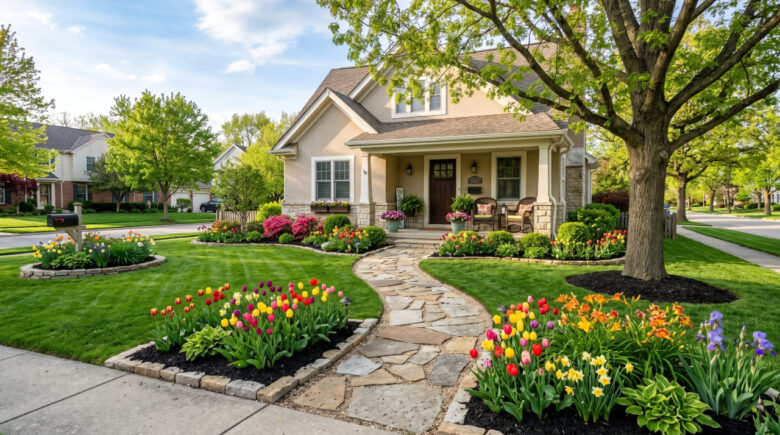
Flower beds are one of the fastest ways to add color and personality to a front yard. A well placed flower bed along a walkway or in front of a porch can completely change how your home looks. You do not need a lot of space to make a big impact.
The key to a great flower bed is layering. Put your tallest plants in the back, medium height plants in the middle, and short or ground hugging plants in the front. This way, every plant gets sunlight and you can see them all clearly from the street. It also makes the bed look full and lush even when you have not planted that many different things.
Color combinations matter more than most people realize. Warm colors like red, orange, and yellow grab attention and create energy. Cool colors like purple, blue, and white feel calm and elegant. You can pick one color family and stick with it, or you can mix warm and cool colors to create contrast. Either approach works as long as you are consistent.
Do not forget about plants that bloom at different times of the year. If you only plant flowers that bloom in spring, your bed will look bare by summer. Mix early bloomers like tulips and pansies with summer favorites like zinnias and marigolds, then add fall performers like mums and asters. This way your flower bed has color from March through November.
Walkway and Pathway Ideas That Guide the Eye
A pathway does more than show people how to get to your front door. It creates a visual line that leads the eye through your yard. A good pathway makes your whole front yard feel organized and intentional. A bad one, or none at all, makes it feel scattered.
Straight pathways feel formal and clean. They work well with symmetrical landscapes where the plantings on the left and right match each other. Curved pathways feel more natural and relaxed. They work better with cottage style or wild looking gardens where the plants spill and sprawl.
The materials you use for your pathway say a lot about your style. Concrete is durable and easy to maintain but can look plain. Brick is classic and adds warmth. Flagstone looks natural and pairs well with garden plants. Gravel is affordable and drains well, though it can scatter if you are not careful. Each material has its strengths depending on your budget and look.
Edging your pathway is a small detail that makes a huge difference. A clean edge between your pathway and your lawn or garden bed makes everything look intentional and well cared for. You can use metal edging, brick borders, or even low growing plants to define the line. It takes about an hour to do and the payoff is worth every minute.
How to Use Shrubs and Trees to Add Structure
Shrubs and trees give your front yard its bones. They are the permanent elements that stay in place year after year and give the whole yard its shape. Flowers and annuals add color, but shrubs and trees add the weight and structure that makes a yard feel complete.
Foundation shrubs are the plants you see lining the base of most homes. They hide the concrete foundation, soften the hard edges of the house, and create a visual connection between the home and the ground. Good choices for foundation shrubs include boxwood, holly, yew, and spirea. These are all plants that stay green, grow at a reasonable pace, and can be trimmed to keep their shape.
Trees in the front yard add shade, height, and seasonal interest. A flowering tree like a dogwood, cherry, or crabapple gives you beautiful blooms in spring, interesting bark in winter, and color in fall. A shade tree like a maple or oak can lower your home’s cooling costs in summer by blocking direct sunlight from hitting your roof and windows.
When you plant shrubs and trees, think about how big they will get. A shrub that looks perfect in front of your window when it is two feet tall will block the view completely when it reaches eight feet. Read the plant tag before you buy and plan for the full grown size, not the size it is today.
Front Yard Lighting Ideas That Work Day and Night
Most people only think about their landscaping in daylight. But good outdoor lighting can make your front yard look just as impressive at night as it does during the day. It also adds a layer of safety and security that matters to most homeowners.
Solar lights are the easiest way to add lighting without any wiring or electrical work. You stick them in the ground and the sun charges them during the day. At night they turn on automatically. They work great along pathways, at the base of trees, or near your mailbox. The only downside is that they are not as bright as hardwired lights.
Uplighting is a technique where you place lights at the base of trees or large shrubs and aim them upward. This creates dramatic shadows and highlights the texture of the plant at night. It makes a single tree or shrub look like a focal point in the dark. Uplighting is especially effective with trees that have interesting bark or branching patterns.
Porch and entry lighting deserves attention too. The light above or beside your front door should be bright enough for safety but warm enough to feel welcoming. A light that is too harsh makes your home look like a parking lot. Choose bulbs with a warm white color temperature, somewhere around 2700 to 3000 Kelvin, for the most inviting look.
Budget Friendly Front Yard Landscaping Ideas
You do not need a big budget to create a front yard that looks like a million dollars. Some of the most beautiful front yards in any neighborhood were built on modest budgets by homeowners who knew how to shop smart and work with what they had.
One of the best budget strategies is to start small and build over time. Pick one area of your front yard, fix it up, and then move to the next. This way you spread the cost out over months or years instead of writing one huge check. You also get to see what works before you commit to doing it across the whole yard.
Buying plants in smaller sizes saves a lot of money up front. A one gallon shrub costs much less than a five gallon one. Yes, the smaller plant takes a year or two longer to reach its full size, but the end result is the same. Meanwhile, you saved money that you can put toward other parts of your yard.
Swapping plants with neighbors and friends is another great strategy. Many perennials spread and divide over time. Your neighbor might have a clump of daylilies that needs to be divided anyway. You could offer to help divide it and keep half. This is how experienced gardeners have been building their gardens for generations, and it costs nothing but time.
Seasonal Front Yard Ideas to Keep It Looking Fresh All Year
A great front yard does not just look good in spring when everything is blooming. It looks good in summer, fall, and even winter. Planning for all four seasons takes some thought, but it is worth it when your yard stays beautiful all year long.
Spring is the easiest season for front yards. Bulbs like tulips and daffodils pop up on their own if you planted them in fall. Flowering trees burst into bloom. The lawn greens up and looks lush again after winter. The main job in spring is cleaning up any debris from winter and giving your flower beds a fresh layer of mulch.
Summer is when your annuals and perennials really shine. This is also when your lawn needs the most attention, especially in dry climates. Watering consistently and mowing at the right height keeps your grass healthy and green. Letting your grass get too short stresses it out and turns it yellow, so keep your mower blade set a little higher than you might think necessary.
Fall is actually a great time for planting. The soil is still warm but the air is cooler, which is perfect for root growth. Mums, ornamental kale, and asters give you rich color in fall tones. You can also plant spring flowering bulbs in fall so they are ready to go when the cold weather breaks.
Winter front yards do not have to look sad and bare. Evergreen shrubs and trees hold their color all through the cold months. You can add simple holiday decorations or seasonal containers near your front door to keep things looking intentional and cared for even when nothing is growing.
Eco Friendly Front Yard Ideas That Help the Environment
More and more homeowners are thinking about how their landscaping affects the environment. The good news is that eco friendly landscaping is often easier and cheaper than traditional landscaping. It just requires a different way of thinking.
Rain gardens are a great eco friendly feature for any front yard. A rain garden is a shallow depression in the ground planted with water loving plants. When it rains, water collects there instead of running off into the street and storm drains. The plants filter the water naturally and it slowly soaks into the ground. Rain gardens reduce flooding, clean runoff water, and attract wildlife.
Replacing your traditional lawn with native ground covers or native grass varieties is one of the biggest eco friendly moves you can make. Traditional lawns require large amounts of water, fertilizer, and pesticides to stay green. Native grasses and ground covers need almost none of those things because they are built for your local environment.
Composting is another easy eco friendly practice. Instead of throwing away your grass clippings and garden waste, turn them into compost. Compost feeds your soil naturally and reduces the need for chemical fertilizers. You can make a simple compost bin out of old wooden pallets or buy an inexpensive one at any hardware store.
Common Front Yard Landscaping Mistakes to Avoid
Even people with great taste make landscaping mistakes. Knowing what the common ones are helps you avoid them before they cost you time or money.
| Common Mistake | Why It Happens | Easy Fix |
|---|---|---|
| Planting too close together | Plants look small when purchased | Read the mature size on the plant tag |
| Ignoring the foundation | Homeowners focus on color not structure | Add foundation shrubs first, then decorate |
| No seasonal interest | Only planting spring flowers | Mix plants that bloom in different seasons |
| Poor lighting | Lighting is an afterthought | Plan lighting during the design phase |
| Skipping mulch | Seems unnecessary | Mulch saves water and stops weeds |
One of the most common mistakes is overplanting. When plants are small, it is tempting to fill every inch of space. But plants grow, and in a year or two your carefully spaced garden becomes a crowded, messy tangle. Give your plants room to breathe and fill in the gaps with mulch for now.
Another mistake is ignoring the view from the street. Homeowners often design their front yard from the front door looking out. But the yard needs to look great from the street looking in. Stand at the curb regularly as you make changes and see how things look from that perspective.
Skipping soil preparation is a mistake that shows up slowly over time. Plants that are stuck in poor soil never reach their full potential no matter how much you water them. Before you plant, add compost to your soil to give your plants the best possible start. Healthy soil grows healthy plants, and healthy plants look great.
How to Make a Small Front Yard Look Bigger
Small front yards can feel limiting, but they are actually easier to work with than you might think. With the right design choices, a small front yard can look full, rich, and even larger than it actually is.
Using vertical space is the key to making small yards look bigger. Tall, narrow plants like columnar arborvitae or ornamental grasses draw the eye upward instead of outward. A trellis with a climbing vine adds height without taking up floor space. Even a tall lamp post or a decorative obelisk can add vertical interest to a small space.
Keeping the design simple is also important in a small yard. Too many different plants, colors, and textures make a small space feel chaotic and even smaller. Pick a simple color palette, use repetition with your plants, and let the space breathe. Three well placed shrubs look more elegant than fifteen random ones crammed together.
Light colored materials make spaces feel bigger. If your pathway is made of light colored stone or concrete, it will feel more open than a dark material would. Light colored mulch, pale gravel, or white flowering plants all contribute to making a small yard feel more spacious and airy.
Front Yard Landscaping Ideas for Different Home Styles
Your front yard should match the style of your home. A formal colonial house and a casual craftsman bungalow call for very different landscaping approaches. When your yard style matches your home style, the whole property feels polished and intentional.
Traditional or colonial homes look best with formal, symmetrical landscaping. This means matching plants on both sides of the front door, neatly trimmed hedges, and classic flowers like roses, boxwood, and hydrangeas. Brick pathways and structured flower beds with clean edges complete the look.
Craftsman and cottage style homes look best with relaxed, slightly wild landscaping. Perennials that spill over their edges, stone pathways with moss growing between the joints, and a mix of textures and colors all feel right at home with this style. The goal is organized chaos, a yard that looks like it grew naturally but is still cared for.
Modern and contemporary homes look great with minimalist landscaping. Clean lines, simple plant choices, and a limited color palette work best. Ornamental grasses, succulents, and low growing ground covers suit this style. Concrete or steel edging, gravel mulch, and geometric planting beds reinforce the modern look without overpowering the home’s architecture.
Ranch style homes are usually long and low, which means they benefit from plantings that add some vertical interest. A few tall grasses or small trees break up the horizontal line of the house. Window boxes add charm and color at eye level, which helps the home feel less flat and more dimensional.
How to Get Started This Weekend
Reading about front yard landscaping is one thing. Actually doing it is another. The good news is that you can make a real difference in your front yard in just one weekend with the right focus and a little energy.
Start by cleaning up what you already have. Pull weeds, cut back overgrown shrubs, edge your lawn, and remove any dead plants or debris. This alone will make your yard look significantly better. Most people are shocked by how much a simple cleanup improves the look of their front yard without adding a single new plant.
Next, add fresh mulch to your existing beds. This step costs less than most people think and has one of the biggest visual impacts of any landscaping task. Fresh mulch makes old plants look new, ties the whole bed together, and gives your yard a polished, finished appearance.
Pick one thing to add or change. Maybe it is a new flower bed near the mailbox. Maybe it is a row of shrubs along the front of your house. Maybe it is a new pathway material. Doing one thing well is better than doing five things halfway. Pick your highest impact change, do it right, and enjoy the result before moving on to the next project.
Your Best Front Yard Starts With One Small Step
Your front yard has real potential. It does not matter if it is big or small, shady or sunny, in the city or the suburbs. With the right plants, a simple plan, and a few smart design choices, you can create a front yard that makes you proud every time you pull into the driveway.
Remember that great landscaping is not about spending a lot of money. It is about making good decisions. Choose plants that fit your climate. Plan for all four seasons. Give your plants room to grow. Add structure with shrubs and trees before you worry about flowers. Keep it simple and do one thing at a time.
The difference between a yard that looks great and one that looks neglected is not as big as most people think. A little planning, a little work, and a little investment in the right places can completely change how your home looks and how you feel when you come home every day.