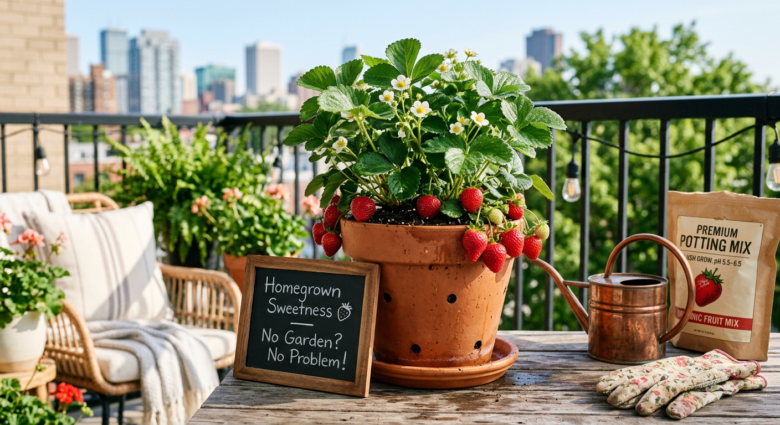
There is something almost magical about plucking a perfectly ripe, ruby-red strawberry straight from the plant and popping it into your mouth. The flavor is incomparable — sweeter, juicier, and infinitely more satisfying than anything you will ever find wrapped in plastic at a grocery store. The best part? You do not need a sprawling backyard, a raised garden bed, or even a patch of grass to make it happen.
Growing strawberries in a pot has become one of the most popular trends in urban and suburban gardening — and for very good reason. Whether you live in a city apartment with a small balcony, a suburban home with a modest patio, or anywhere in between, container gardening puts fresh strawberries within your reach. All it takes is the right pot, the right soil, a little sunlight, and some basic care.
In this comprehensive guide, you will learn exactly how to grow strawberries in a pot, from choosing the best container and soil to watering schedules, sunlight requirements, fertilizing tips, and how to troubleshoot common problems. By the time you finish reading, you will have everything you need to grow your very own thriving strawberry plant — no garden required.
Prefer to learn by watching? We have got you covered!
Check out our step-by-step video tutorial on exactly how to grow strawberries in a pot — from choosing the right container to harvesting your very first berry.
Choosing the Right Strawberry Variety for Container Growing
Before you even think about picking up a pot, you need to choose the right type of strawberry plant. Not all strawberries are created equal, and some varieties perform significantly better in containers than others.
The Three Main Types of Strawberries
1. June-Bearing Strawberries
These produce one large, concentrated crop per year, typically in late spring or early summer. While they yield an impressive harvest, they require more space and are slightly less ideal for small containers.
2. Everbearing Strawberries
As the name suggests, these varieties produce fruit two to three times per year — in spring, summer, and sometimes fall. They are an excellent choice for pot growing because they offer a more consistent, spread-out harvest throughout the growing season.
3. Day-Neutral Strawberries
These are arguably the best strawberries for container gardening. Day-neutral varieties like Albion, Seascape, and Tristar produce fruit continuously throughout the growing season, regardless of daylight hours. They tend to stay compact, thrive in pots, and deliver a steady supply of berries from late spring all the way through early fall.
Top Recommended Varieties for Pots
- Albion – Large, sweet berries with excellent disease resistance
- Seascape – Highly productive and incredibly flavorful
- Tristar – Compact, day-neutral, and perfect for small containers
- Quinault – A fast producer, great for beginners
- Alpine Strawberries – Tiny but intensely flavored, ideal for hanging baskets
1: Selecting the Perfect Pot for Strawberries
The container you choose will play a massive role in the success of your strawberry plants. Get this step right, and you are already halfway to a great harvest.
What Size Pot Do You Need?
For a single strawberry plant, you will want a pot that is at least 10 to 12 inches in diameter and at least 8 inches deep. This gives the roots enough room to spread out and access the nutrients and moisture they need to thrive.
If you want to grow multiple plants — which most gardeners do — consider a larger container. A 16-inch pot can comfortably accommodate two to three plants. Alternatively, strawberry planters (those classic tower-style pots with multiple planting pockets) are a fantastic space-saving option that allows you to grow six or more plants in a very small footprint.
The Non-Negotiable Rule: Drainage Holes
This cannot be overstated — your pot must have drainage holes. Strawberries are extremely sensitive to waterlogged soil. Without proper drainage, the roots will rot, the plant will decline, and your harvest will be ruined before it even begins. If you fall in love with a decorative pot that lacks drainage holes, simply drill two to four holes in the bottom before planting.
Best Materials for Strawberry Pots
- Terracotta or clay pots – Breathable and attractive, though they dry out quickly in hot weather
- Plastic containers – Lightweight and affordable, they retain moisture well
- Fabric grow bags – Excellent air circulation and drainage, great for root health
- Ceramic pots – Beautiful but heavy; ideal if you do not plan to move the container often
- Hanging baskets – Perfect for trailing strawberry varieties; adds a decorative element to any porch or balcony
2: Filling Your Pot With the Right Soil
Soil quality is everything when it comes to growing strawberries in containers. Standard garden soil is far too dense for pot growing and should be avoided entirely.
The Ideal Soil Mix for Container Strawberries
You want a well-draining, nutrient-rich potting mix that keeps moisture consistent without becoming waterlogged. Look for a high-quality all-purpose potting mix — not garden soil — and enhance it further with the following additions:
- Perlite or coarse sand (about 20–30% of the mix) to improve drainage and aeration
- Compost to add natural nutrients and improve soil structure
- Coconut coir to help retain moisture without causing sogginess
Getting the pH Right
Strawberries are particular about soil acidity. They thrive in a slightly acidic pH range of 5.5 to 6.5. If the soil pH falls outside this range, the plant will struggle to absorb nutrients properly, even if those nutrients are present in the soil.
You can test your soil pH easily with an inexpensive home testing kit available at most garden centers. If the pH is too high (too alkaline), add garden sulfur to lower it. If it is too low, add a small amount of garden lime to raise it.
3: Planting Your Strawberry Correctly
Proper planting technique is one of the most overlooked aspects of growing strawberries in a pot — but it makes a significant difference in plant health and fruit production.
The Crown Placement Rule
Every strawberry plant has what is known as the crown — the thick, central growing point located between the roots and the leaves. This crown must be positioned exactly at soil level when you plant.
- If the crown is buried too deep, it will rot
- If the crown is too high above the soil, the roots will dry out and the plant will struggle
This is truly one of the golden rules of strawberry planting, so take your time to get it right.
Planting Steps
- Fill your pot about two-thirds full with your prepared potting mix
- Create a small mound in the center of the pot
- Set the strawberry plant on top of the mound, spreading the roots gently downward
- Fill in the remaining soil around the roots, pressing lightly to eliminate air pockets
- Ensure the crown sits exactly at the soil surface
- Water thoroughly immediately after planting
4: Sunlight Requirements for Potted Strawberries
Strawberries are sun-loving plants, and they will reward you generously when given enough light.
How Much Sun Do Strawberries Need?
Your strawberry pot should receive a minimum of 6 to 8 hours of direct sunlight every day. More sun generally means more fruit, sweeter flavor, and a more productive plant overall.
One of the great advantages of growing strawberries in a container is that you can move the pot to follow the sun throughout the day or throughout the season. Place your pot on a south or west-facing balcony, patio, or windowsill for the best light exposure.
If you are growing strawberries indoors, place them directly in front of your sunniest window or supplement with a full-spectrum grow light to meet their daily light requirements.
5: Watering Your Strawberry Plants Properly
Consistent watering is essential for healthy strawberry plants and a generous fruit harvest.
How Often Should You Water Potted Strawberries?
The general guideline is to provide approximately 1 inch of water per week. However, containers dry out faster than garden beds — especially in warm weather or in terracotta pots — so you may need to water more frequently during summer.
A simple test: push your finger about one inch into the soil. If it feels dry at that depth, it is time to water. If it still feels moist, wait another day and check again.
Watering tips for success:
- Water at the base of the plant, not over the leaves or crown, to prevent fungal diseases
- Water in the morning so excess moisture can evaporate during the day
- Never let the pot sit in standing water — empty saucers after watering
- Consider using a drip irrigation system or self-watering pot for more consistent moisture levels
Fertilizing, Pruning, and Extra Care Tips
Fertilizing for Maximum Fruit Production
Once your strawberry plants are established (about two to three weeks after planting), begin a regular fertilizing routine. Use a balanced, slow-release fertilizer or a formula slightly higher in potassium and phosphorus, which promotes flower and fruit development over leafy growth.
Feed your plants every two to three weeks during the growing season and reduce or stop feeding in winter when the plants are dormant.
Managing Runners
As strawberry plants grow, they will send out long, horizontal shoots called runners. If left unchecked, runners will divert energy away from fruit production. Snip them off regularly unless you want to propagate new plants — in which case, you can pin a runner to a small pot of soil and allow it to root.
Pest and Disease Management
Watch out for common strawberry pests including aphids, spider mites, and slugs. Combat them with neem oil spray or insecticidal soap. Ensure good air circulation around your plants to prevent fungal issues like gray mold (botrytis) and powdery mildew.
Harvesting Your Homegrown Strawberries
The moment you have been waiting for! Strawberries are ready to harvest when they are fully red all the way to the tip, firm to the touch, and fragrant. Do not wait for them to go soft — pick them when they look perfect and eat them the same day for the best possible flavor experience.
Harvest by pinching the stem just above the berry rather than pulling the fruit directly, which can damage the plant.
Start Growing Your Strawberries in a Pot Today
Growing strawberries in a pot is one of the most rewarding, beginner-friendly, and space-efficient gardening projects you can undertake. With the right container, the right soil, adequate sunlight, and consistent watering, you will be enjoying fresh, homegrown strawberries in no time — right from your balcony, patio, or windowsill.
Ready to get started? Head to your local garden center, pick up a healthy strawberry plant and a quality potting mix, and take the first step toward your very own container strawberry garden. Have a question, a tip to share, or a photo of your strawberry pot? Drop it in the comments below — we would love to hear from you!