Cork Floors Look Great Until One Wrong Cleaner Changes That. Cork flooring is used in about 6% of American homes, but it comes with a cleaning learning curve that most homeowners do not expect. It is softer than hardwood, more porous than tile, and highly sensitive to moisture. One overly wet mop or one harsh chemical can dull the finish, warp the surface, or leave permanent marks. That is not a small risk.
This guide gives you a safe, clear method for cleaning cork flooring on a regular basis, plus advice on what to absolutely skip. You will know exactly what products work, what tools to use, and how to handle spills, dirt, and deep cleaning without second-guessing yourself.
Cork floors are genuinely beautiful and very livable. The only thing standing between you and a floor that stays that way is knowing the right approach from the start.
This Guide Is for You If You Are in This Specific Situation
You probably just moved into a home with cork floors, or you recently had them installed and now you are staring at a mop wondering what to do next. Maybe you already used the wrong cleaner once and noticed a dull patch or a slightly warped plank, and now you want to make sure it does not happen again.
This article is written for the homeowner who wants to protect their floor investment without hiring a professional cleaning service every time there is a mess. If you have unsealed or unfinished cork tiles, some of this advice will apply, but you should consult a flooring specialist before using any liquid at all. Most of what follows assumes your cork floor has a factory-applied or aftermarket polyurethane or wax seal.
Why Cork Floors Need a Different Approach
Cork comes from the bark of the cork oak tree, and its structure is nothing like hardwood or laminate. It is made up of millions of tiny air-filled cells, which is why it feels soft underfoot and holds warmth well. That same structure makes it absorbent. Water that sits on it or soaks into the seams can swell the material and break down the adhesive under floating cork tiles.
Most cork floors sold today have a protective finish on top, either polyurethane or a wax-based coating. That finish is what you are mostly cleaning when you mop the floor. But that finish can be stripped or dulled by the wrong products, especially anything acidic, abrasive, or alcohol-based. Vinegar, for example, is often suggested as a natural floor cleaner. On cork, it can slowly eat away the finish over time. That is a big deal because once the finish degrades, the raw cork underneath absorbs dirt, moisture, and stains much more easily.
The seal is your floor’s first line of defense. Cleaning properly means protecting that seal, not just removing surface dirt.
How to Clean Cork Flooring the Right Way
Step 1: Sweep or Vacuum First, Every Time
Before any liquid touches the floor, remove loose dirt and debris. Fine grit and sand act like sandpaper on cork’s finish when you mop over them. A soft-bristle broom works well. A vacuum with a hard floor setting works even better because it pulls debris from seams.
Never use a vacuum with a beater bar attachment. Those rotating brushes are designed for carpet and will scratch cork. Use a flat suction head or a felt pad attachment only. Do this sweeping step before every wet cleaning session, even if the floor looks clean.
Step 2: Use a Barely Damp Mop, Not a Wet One
This is the most critical rule for how to clean cork flooring. The mop should feel barely damp when you touch it, not wet. If you wring it out and water drips, wring it again. A steam mop is a hard no on cork floors. The heat and concentrated moisture will damage the finish and can warp planks permanently.
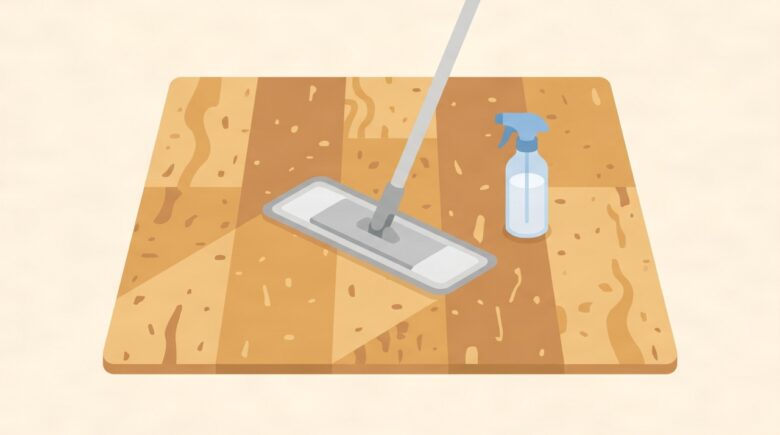
A microfiber flat mop is the best tool here. It holds just enough moisture to pick up surface grime without releasing too much liquid onto the floor. Mop in the direction of the planks or tiles to avoid pushing water into the seams.
Step 3: Choose the Right Cleaner
A pH-neutral cleaner made for cork or hardwood floors is your safest option. Look for labels that say “hardwood safe” or “safe for finished floors.” Mix it according to the directions, usually just a few drops in a bucket of water.
Here is what to avoid completely:
- Vinegar or citrus-based cleaners — acidic and damaging to finish
- Bleach or ammonia products — strip sealant and discolor cork
- Oil soaps — leave residue that dulls the surface over time
- Steam cleaners — excessive heat and moisture damage the structure
- Abrasive scrubbers — scratch the finish layer off
Bona Hardwood Floor Cleaner and Method Squirt and Mop are two widely available options that work well on sealed cork. Always spot test any new cleaner in a corner or closet before using it across the whole floor.
Step 4: Handle Spills Immediately
Cork’s finish slows absorption, but it does not stop it. A spill that sits for five minutes is much easier to deal with than one that sits for an hour. Blot spills with a clean dry cloth rather than wiping, which can spread the liquid further.
After blotting, go over the area with a barely damp cloth and a small amount of your pH-neutral cleaner. Dry the spot with a clean towel right after. Do not let any area air dry with standing liquid on it.
Step 5: Deep Clean Sparingly
Most cork floors only need deep cleaning two to four times per year, depending on foot traffic. For a deep clean, use the same damp mop method but go over the floor twice. Let the floor dry completely between passes.
After a deep clean is also a good time to check for areas where the finish looks worn or dull. Thin or worn spots mean moisture is getting through. If you see them, the floor may need a new coat of sealant before the next cleaning cycle.
Step 6: Protect the Floor Between Cleanings
Prevention does a lot of the work. Put felt pads under all furniture legs. Use doormats at every entry point to catch grit before it reaches the floor. Ask people to remove shoes, or at least avoid wearing stiletto heels, which concentrate weight onto a tiny point and can dent cork permanently.
Area rugs help in high-traffic zones, but choose rugs with natural backings. Rubber-backed rugs can react with cork’s finish and leave discoloration over time.
Step 7: Re-Seal When Needed
Cleaning only works as well as the seal beneath it. A polyurethane-finished cork floor typically needs resealing every three to five years in normal household use. A wax-finished floor may need buffing and rewaxing once a year. You can test your seal by placing a few drops of water on the floor. If they bead up, the seal is holding. If they absorb within a minute, it is time to reseal.
What Most Cork Floor Cleaning Articles Get Wrong
Almost every article about how to clean cork flooring mentions avoiding excess water. That is good advice. What most of them skip is the damage that “gentle” natural cleaners can cause when used regularly over time.
Vinegar is the biggest example. It is promoted widely as a safe, natural cleaner. On cork, it is not. Acetic acid in vinegar breaks down polyurethane finishes gradually, and the effect is not immediately obvious. You will not see damage after one use. After six months of weekly cleaning, though, the finish starts to look hazy and dull in the areas you clean most. By the time most people connect the cleaner to the problem, they need to refinish the floor entirely.
The same goes for essential oil-based cleaners and citrus solutions. They smell pleasant and feel natural, but acidic ingredients are acidic regardless of where they come from. Stick with pH-neutral products, and do not let the word “natural” substitute for actually checking the label.
How to Start a Cleaning Routine That Actually Works
Start this week with one sweep and one damp mop using a pH-neutral cleaner. That is all. Establish that as your weekly habit for regular foot traffic areas and twice weekly in the kitchen or entryway.
Next, check your sealer. Do the water drop test described in Step 7. If the seal is holding, you are in good shape. If water absorbs quickly, order or buy a compatible sealant and plan to reseal within the next few weeks before your next deep clean.
After that, focus on prevention. Add felt pads to your furniture if you have not, put a quality doormat at your main entrance, and switch to pH-neutral cleaner if you are currently using anything else. These three things prevent 80% of the damage that happens to cork floors over time. Getting the cleaning right is simpler than it sounds once you have the right products and a consistent routine.
The Most Important Thing to Take Away
Cork floors are not fragile, but they do require the right method. Use a barely damp mop, a pH-neutral cleaner, and protect the seal. Those three habits will keep your floor looking good for a decade or more.
Check the state of your seal today using the water drop test. If it needs attention, that is your first real action step. A clean floor that sits on a damaged seal will still look dull and absorb stains. Start with the seal, then build the cleaning routine around it.