Homes with vaulted ceilings sell 15% faster and can add up to $20,000 in resale value according to real estate industry data. That’s a huge number, and it explains why so many homeowners consider this dramatic upgrade when building or renovating. But before you knock out your ceiling joists and start swinging hammers, you need to know exactly what you’re getting into.
This article will walk you through everything about vaulted ceilings. You’ll learn what they actually are, how much they cost, and whether they’re worth the investment for your specific situation. I’m going to be straight with you about both the good and the bad because this is a major decision that affects your wallet, your comfort, and your home’s value.
The Simple Definition of a Vaulted Ceiling
A vaulted ceiling is any ceiling that angles upward toward the roof to create extra height in a room. Instead of the standard flat ceiling you see in most homes, a vaulted ceiling follows the pitch of the roof or creates an arch that extends upward. This creates vertical space that makes rooms feel bigger and more open.
The term “vaulted” comes from old architectural language, referring to arched structures that support weight from above. In modern homes, these ceilings don’t always have true arches, but the name stuck. You’ll most commonly see vaulted ceilings in living rooms, master bedrooms, and entryways where homeowners want to create a sense of grandeur.
Most standard ceilings sit at 8 to 9 feet high. A vaulted ceiling typically reaches 12 to 15 feet at its highest point, though some go even higher. The extra height completely changes how a room feels when you walk into it.
Where Vaulted Ceilings Come From
Vaulted ceilings have been around for thousands of years. Ancient Romans used them in their temples and public buildings. European churches and cathedrals made them famous during the medieval period, creating soaring spaces that inspired awe and reverence.
These ceiling designs stayed mostly in grand public buildings until the mid 20th century. In the 1960s and 1970s, residential architects started bringing vaulted ceilings into American homes. The trend exploded in the 1980s and 1990s when open concept floor plans became popular.
Today, vaulted ceilings remain a sought after feature in home design. They fit perfectly with modern and contemporary styles, but they also work in traditional homes. The key difference is that modern versions focus more on clean lines and natural light, while traditional designs might include decorative beams and classic architectural details.
7 Popular Types of Vaulted Ceilings You Should Know
Not all vaulted ceilings look the same. Each type creates a different effect and comes with its own cost and complexity level. Here’s what you need to know about the most common options.
Cathedral Ceilings follow the exact pitch of the roof with two equal sloping sides that meet at a center ridge. These are the most popular type in modern homes because they’re relatively straightforward to build and create maximum height. They work best in rooms with a peaked roof directly above them.
Groin Vault Ceilings feature two barrel vaults that intersect at right angles, creating an X pattern where they meet. This is one of the more complex and expensive options, typically seen in high end custom homes. The intersecting curves create visual drama that simpler designs can’t match.
Barrel Vault Ceilings curve in a single continuous arch, like the inside of a barrel cut lengthwise. This classic design brings a softer, more elegant feel than sharp angled ceilings. The curved shape requires special framing and more skilled labor, which pushes up the cost.
Cove Ceilings feature gentle curves where the walls meet the ceiling instead of sharp corners. The center portion might be flat or slightly raised. This subtle approach adds architectural interest without the extreme height of other vault types, making it more energy efficient.
Dome Ceilings rise up in a circular or oval shape from all sides of a room. These create the most dramatic effect but also cost the most to install. You’ll typically see dome ceilings in entryways or formal dining rooms where the wow factor justifies the expense.
Shed Ceilings slope in just one direction instead of two, creating an angled look that’s simpler and cheaper than cathedral ceilings. This works great in additions or rooms where the roof structure only allows for a single slope. They still add height and interest without breaking the budget.
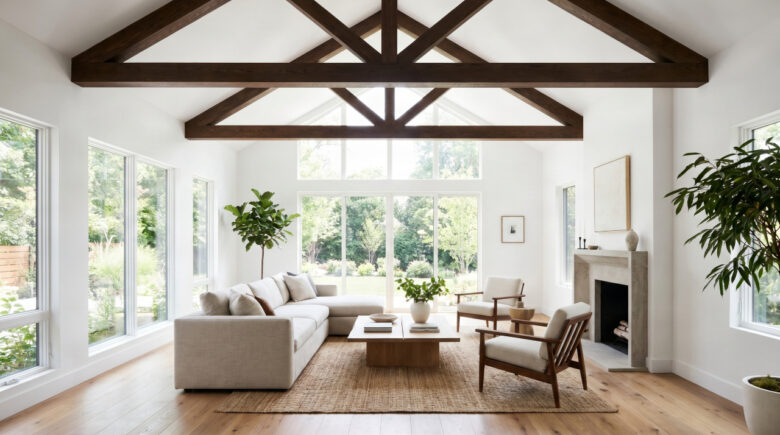
Scissor Truss Ceilings expose the structural beams in a crisscross pattern, combining the height of a vaulted ceiling with rustic charm. The beams can be real structural elements or decorative additions. This style fits perfectly with farmhouse, cabin, and industrial design themes.
| Ceiling Type | Typical Height | Cost Level | Best For |
|---|---|---|---|
| Cathedral | 12-18 feet | Medium | Living rooms, great rooms |
| Groin Vault | 10-14 feet | High | Formal spaces, luxury homes |
| Barrel Vault | 10-15 feet | High | Hallways, master bedrooms |
| Cove | 9-12 feet | Medium | Any room needing subtle elegance |
| Dome | 12-20 feet | Very High | Entryways, formal dining rooms |
| Shed | 10-14 feet | Low to Medium | Additions, modern designs |
| Scissor Truss | 12-16 feet | Medium | Rustic or farmhouse styles |
What You Actually Get from a Vaulted Ceiling
Let’s talk about the real benefits that make people spend thousands of dollars on this upgrade. These aren’t just theoretical advantages. They’re practical improvements that affect how you live in your home every day.
Makes rooms feel bigger. This is the number one reason people choose vaulted ceilings. The vertical space tricks your brain into perceiving the room as much larger than it actually is. A 300 square foot living room with a vaulted ceiling feels more spacious than a 400 square foot room with a standard flat ceiling. This psychological impact is especially valuable in smaller homes where you need to maximize the feeling of openness.
Brings in more natural light. Vaulted ceilings create opportunities for windows and skylights that would be impossible with standard ceiling heights. You can add transom windows near the peak or install skylights along the slope. This floods the room with natural light, reducing your dependence on artificial lighting during the day. More natural light improves mood, makes colors look better, and creates a healthier living environment.
Adds home value. Real estate agents consistently report that vaulted ceilings help homes sell faster and for more money. The National Association of Realtors data shows that buyers will pay a premium for homes with architectural features like vaulted ceilings.
Creates architectural interest. A vaulted ceiling becomes an instant focal point. It adds character to what might otherwise be a plain box of a room. This is especially valuable in newer construction homes that sometimes lack distinctive features. The ceiling draws the eye upward and creates visual drama without requiring expensive finishes or furnishings.
Better air circulation. Hot air naturally rises, and a vaulted ceiling gives it somewhere to go. This improves air movement in the room, which can make it feel fresher and more comfortable. Combined with ceiling fans and proper HVAC planning, good air circulation helps maintain consistent temperatures and air quality.
Design flexibility. The extra height opens up decorating possibilities that flat ceilings don’t allow. You can hang a statement chandelier, install tall bookcases, display large artwork, or add exposed beams for character. The vertical space gives you room to be creative with lighting, paint treatments, and architectural elements.
Honest Talk About Vaulted Ceiling Drawbacks
Now for the reality check. Vaulted ceilings aren’t perfect, and they create some genuine challenges you need to consider before committing.
Higher energy costs are probably the biggest ongoing expense. All that extra volume means more air to heat in winter and cool in summer. Heat rises naturally, so your warm air collects up near the peak where you’re not sitting. Your HVAC system has to work harder to maintain comfortable temperatures at floor level. Homeowners report energy bills that are 10% to 40% higher depending on climate, insulation quality, and ceiling height. In extreme climates, this can add up to several hundred dollars per year.
Expensive to install is the barrier that stops many people from moving forward. If you’re building new, adding a vaulted ceiling costs $4,000 to $8,000 more than a standard ceiling for an average sized room. Retrofitting an existing room costs even more because you’re paying to remove the old ceiling, modify the structure, and deal with complications like moving wiring and insulation. Total retrofit costs range from $18,000 to $30,000 or higher for complex designs.
Difficult maintenance becomes obvious the first time you need to change a light bulb or clean cobwebs from the peak. You can’t just grab a stepladder. You need extension poles, special equipment, or professional help. Painting requires scaffolding rental or hiring contractors. These aren’t one time costs either. They recur every time something needs attention up there.
Noise and echo problems happen because sound bounces off all those hard, angled surfaces. Conversations can echo, televisions sound hollow, and footsteps from upstairs carry more than they would with standard ceilings. You can fix this with area rugs, upholstered furniture, and sound absorbing panels, but it takes extra effort and money.
Can feel cold or impersonal in some situations. The soaring space that feels grand in a large living room might feel cavernous and unwelcoming in a bedroom where you want coziness. The extra height can make furniture look small and spaces feel less intimate. This isn’t a problem in public areas of your home, but think carefully about whether you really want it in private spaces.
Real Numbers: What You’ll Pay for a Vaulted Ceiling
Money matters, so let’s get specific about what this actually costs. These numbers come from recent contractor estimates and homeowner reports across different U.S. regions.
New construction costs are the most affordable option because the ceiling gets built correctly from the start. Adding a vaulted ceiling to new construction runs $4,000 to $8,000 for a standard sized room compared to a flat ceiling. This includes the additional framing lumber, extra drywall, increased insulation needs, and labor. Complex vault designs like groin vaults or domes can push this to $10,000 to $15,000.
Retrofit or remodel costs are significantly higher. You’re paying to demolish the existing ceiling, modify or remove ceiling joists, add structural support, relocate wiring and fixtures, install new insulation, hang drywall on difficult angles, and finish everything. A typical retrofit project costs $18,000 to $30,000 for a living room sized space. Larger rooms or complex designs can easily hit $40,000 or more.
Cost breakdown by type varies based on complexity. A simple shed ceiling might cost only $6,000 to $10,000 because it’s just one angled plane. Cathedral ceilings fall in the middle at $18,000 to $25,000 for retrofits. Barrel vaults, groin vaults, and domes start at $25,000 and go up from there because they require curved framing and specialized skills.
Hidden expenses catch many homeowners by surprise. Your HVAC system might need modifications to handle the extra volume, adding $2,000 to $5,000. You’ll need new light fixtures designed for high ceilings, which cost more than standard options. Additional insulation and proper ventilation add another $1,500 to $3,000. Building permits and inspections run $500 to $1,500 depending on your location. These extras can add 20% to 30% to your base estimate.
Ways to save money do exist if you’re strategic. Consider vaulting only part of a room instead of the entire space. This creates visual interest while cutting costs by 30% to 50%. Choose simpler designs like shed ceilings over complex curves. Do your own painting and finishing work if you’re handy. Time your project during the contractor’s slow season (usually winter in most markets) when they’re more willing to negotiate.
Here’s a quick reference for budgeting:
- Basic shed ceiling retrofit: $8,000 to $12,000
- Cathedral ceiling retrofit: $18,000 to $25,000
- Barrel or groin vault retrofit: $25,000 to $40,000
- New construction premium: $4,000 to $10,000
- HVAC and electrical updates: $2,000 to $6,000
How Contractors Actually Install Vaulted Ceilings
Understanding the installation process helps you know what you’re paying for and what to expect during construction.
Planning and permits come first. A structural engineer or architect needs to evaluate whether your home can support a vaulted ceiling. They check the roof structure, exterior walls, and foundation to ensure everything can handle the load redistribution. Most jurisdictions require building permits for this type of major structural change. The permit process takes one to three weeks and costs $500 to $1,500.
Structural changes form the core of the project. Contractors remove the existing ceiling and ceiling joists, which were holding your roof up. They install ridge beams and support posts to transfer that load to the exterior walls. In some cases, they need to add steel beams or reinforce walls. This is skilled carpentry work that requires precision and experience.
Insulation work is critical for comfort and energy efficiency. The sloped ceiling needs proper insulation and ventilation to prevent ice dams, moisture buildup, and heat loss. Spray foam insulation works best for vaulted ceilings because it seals gaps and provides high R-values in less space. You need at least R-30 insulation in most climates, and R-38 to R-49 in colder regions.
Finishing work includes hanging drywall on the angled surfaces, taping and mudding seams, texturing if desired, and painting. Working on angles and heights takes longer than standard ceiling work. Many contractors use scaffolding or special lifts to reach the high areas safely. Final touches include installing new light fixtures, ceiling fans, and any decorative elements like beams.
Timeline expectations range from two weeks to six weeks for most projects. Simple vaults in new construction might finish in 10 days. Complex retrofits with structural complications can take two months. You’ll likely need to move out of the room during construction, and dust will spread throughout your home despite containment efforts.
Which Rooms Work Best with Vaulted Ceilings
Location matters enormously when deciding where to add a vaulted ceiling.
Living rooms are the most popular choice for good reason. This is where you entertain guests and spend family time, so the wow factor delivers maximum impact. The open feel supports furniture arrangements and makes the space versatile. Most living rooms are large enough to justify the expense, and you get daily enjoyment from the improvement.
Master bedrooms create a luxury hotel feel that many homeowners love. Vaulted ceilings in bedrooms offer great opportunities for skylights, which bring in natural light and stargazing views. The dramatic space makes the room feel like a true retreat. Just make sure you want that open feeling rather than a cozy cave vibe.
Kitchens benefit from the open concept trend. Vaulted ceilings make kitchens feel less boxy and connect them visually to adjacent living spaces. You can install taller cabinets for extra storage or leave the upper wall space open for a lighter look. The improved air circulation helps with cooking odors and heat from the stove.
Entryways and foyers deliver the biggest first impression bang for your buck. Even a small entry can accommodate a vaulted ceiling, and it immediately tells visitors this is a special home. The cost is lower because you’re working with a smaller square footage, but the impact is huge.
Rooms to avoid include most bathrooms because the moisture and ventilation issues get complicated with vaulted ceilings. Small bedrooms feel cavernous rather than cozy. Rooms without direct roof access above them require expensive structural gymnastics that rarely make financial sense. Home offices often work better with standard heights because the space feels more focused and intimate.
How to Make Your Vaulted Ceiling Look Amazing
Once you have the structure, smart design choices make it shine.
Lighting strategies become especially important with all that vertical space. A statement chandelier draws the eye upward and fills the void. Choose one that’s proportionally large enough for the space. Recessed lighting should be placed strategically along the slope to wash light down the ceiling and walls. Pendant lights work well over kitchen islands or dining tables. Track lighting offers flexibility to adjust as your needs change.
Paint and color choices affect how the ceiling feels. Many designers recommend painting vaulted ceilings the same color as the walls to create a cohesive envelope that emphasizes the shape. Light colors make the space feel even larger and reflect more light. Dark colors can actually look stunning on a vaulted ceiling because they create dramatic contrast and make the room feel more intimate despite the height.
Exposed beams add character and help break up large expanses of ceiling. Real wood beams are beautiful but expensive and heavy. Faux beams made from polyurethane look remarkably realistic and cost 60% less. Stain them to match your floors or other woodwork. Space them evenly, typically 3 to 4 feet apart, for the best visual rhythm.
Window treatments for tall windows need careful planning. Floor to ceiling curtains emphasize the height. Motorized shades make sense for high windows you can’t reach. Skylights might need blackout shades in bedrooms where you need darkness for sleeping. Balance the desire for natural light with privacy needs.
Furniture scale requires adjustment. Standard height furniture can look lost under a 15 foot ceiling. Choose taller bookcases, armoires, or display cabinets to fill vertical space. Large artwork hung higher than usual helps activate the wall space. Tall plants and trees work beautifully in rooms with vaulted ceilings.
Keeping Your Vaulted Ceiling Room Comfortable Year Round
Temperature control is the biggest practical challenge with vaulted ceilings.
The heat rises problem is basic physics. Your furnace heats air, and that air floats up to the peak of your vaulted ceiling. Meanwhile, you’re sitting down at floor level in cooler air. The thermostat mounted on the wall reads the middle temperature and doesn’t accurately reflect what you’re experiencing. This creates hot and cold zones that standard HVAC systems struggle to manage.
Best HVAC solutions include zoned heating and cooling, which uses multiple thermostats to control different areas independently. This costs $2,000 to $4,000 extra but makes a huge difference in comfort and efficiency. High velocity systems force air more effectively into all areas of the room. Some homeowners install floor vents near exterior walls to push warm air where they actually sit.
Ceiling fan strategies are essential for air circulation. Install the largest fan your room can accommodate, typically 52 to 60 inches for most spaces. Run it clockwise on low speed during winter to push warm air down without creating a cooling breeze. Switch to counterclockwise in summer to create a cooling effect. Mount the fan on a downrod so the blades sit 8 to 9 feet above the floor for optimal air movement.
Insulation importance can’t be overstated. Spray foam insulation provides the best performance because it seals air leaks while insulating. Aim for R-38 minimum in moderate climates and R-49 in cold climates. Proper ventilation between the insulation and roof deck prevents moisture problems and extends your roof’s life.
Taking Care of Your Vaulted Ceiling Long Term
Maintenance is harder than with standard ceilings, but manageable with the right approach.
Regular cleaning needs include dusting and removing cobwebs from the peak areas. Extension poles with microfiber dusters work for routine maintenance. Plan to clean thoroughly at least twice per year. Dust accumulation is more visible on vaulted ceilings because light hits them from more angles.
Repainting challenges mean this isn’t a DIY weekend project for most people. You need scaffolding or special ladders to reach high areas safely. Many homeowners hire professionals for repainting, which costs more than painting standard ceilings. The good news is that high ceilings don’t need repainting as often because they get less direct contact and wear.
Light bulb changes become easier with LED bulbs that last 15 to 25 years. Spend the extra money on quality LEDs so you rarely need to change them. Keep a telescoping extension pole with a bulb changing attachment for when you do need to swap them out. Smart bulbs let you adjust brightness and color temperature without physical access.
Inspection points to check annually include looking for cracks in the drywall, water stains that might indicate roof leaks, and sagging areas that could signal structural issues. Catch problems early before they become expensive repairs. Most issues show up near seams and corners first.
Understanding the Key Differences Between Vaulted and Cathedral Ceilings
People use these terms interchangeably, but there’s actually a distinction worth knowing.
A cathedral ceiling specifically follows the roof’s pitch with two equal sloping sides meeting at a ridge. The slopes mirror the exterior roofline exactly. This is a subset of vaulted ceilings and the most common type in residential construction.
A vaulted ceiling is the broader category that includes any ceiling design rising above standard height. This covers cathedral ceilings, barrel vaults, groin vaults, dome ceilings, and other styles. The ceiling might follow the roofline or create its own shape independent of the roof structure.
The cost difference between them depends on complexity rather than the label. A simple cathedral ceiling costs less than an elaborate groin vault, even though both are technically vaulted ceilings. When talking to contractors, describe the specific design you want rather than relying on terminology that might mean different things to different people.
Cathedral ceilings work better in homes with simple gable roofs. Other vault styles give you more flexibility with different roof types and architectural situations. Choose based on your home’s structure and your aesthetic preferences, not just the name.
How to Decide If You Should Install One
Making this decision requires honest assessment of your situation, priorities, and budget.
Questions to ask yourself include these key considerations. Can you afford $20,000 to $30,000 for this upgrade without straining your finances? Do you plan to stay in this home long enough to enjoy the improvement, or are you selling soon? Does your climate make heating and cooling costs a major concern? Do you prefer cozy, intimate spaces or open, airy ones?
When it makes sense is during new construction when the incremental cost is relatively small. It also works well if you’re already doing a major renovation that involves the ceiling anyway. Homeowners who love entertaining benefit most because the space impresses guests. If you’re in a competitive real estate market where distinctive features help homes sell, the investment often pays off.
When to skip it includes situations where your budget is tight and the money would serve you better elsewhere. Homes in extreme climates face ongoing energy costs that might outweigh the benefits. Older homes with structural limitations might require so much reinforcement that costs spiral out of control. If you genuinely prefer cozier, more intimate spaces, don’t let trends push you into something that doesn’t match your personality.
Alternative options give you some of the benefits without the full commitment. Tray ceilings add a few feet of height in the center of the room without the extreme vault. Coffered ceilings create architectural interest through pattern rather than height. Simply raising a flat ceiling from 8 feet to 9 or 10 feet provides more spaciousness without the complexity of a true vault.
Making Your Vaulted Ceiling Decision
Vaulted ceilings transform ordinary rooms into dramatic spaces that feel larger, brighter, and more valuable. The extra height creates opportunities for natural light, interesting design elements, and architectural character that flat ceilings simply can’t match. Real estate data backs up what homeowners already know: buyers pay more for homes with these distinctive features.
But these benefits come with real costs and challenges. You’ll spend $18,000 to $30,000 or more to retrofit an existing room. Energy bills will increase because of the extra volume to heat and cool. Maintenance becomes more complicated when you need a ladder just to change light bulbs.
The right decision depends entirely on your specific situation. If you’re building new, the relatively small additional cost makes vaulted ceilings an easy win in key rooms. If you’re renovating an existing home, run the numbers carefully and get multiple professional opinions on feasibility and cost. Consider whether you’ll stay in the home long enough to enjoy the improvement, or if you’re basically renovating for the next owner.
Ready to explore whether a vaulted ceiling fits your home and budget? Contact a licensed contractor for a free consultation and structural assessment. Get at least three quotes before making your final decision, and ask to see examples of their previous vaulted ceiling projects. This is a permanent change that will affect your home for decades, so take the time to make an informed choice that you’ll love living with.