
Your house is probably the biggest investment you will ever make. That’s why keeping it looking good and protected matters so much. One key way to do this is painting it regularly. But here’s the thing: most homeowners don’t know how often they should actually paint. Some paint too frequently and waste money. Others wait too long and let their homes get damaged.
The truth is that there’s no single answer that works for everyone. The right painting schedule depends on several factors. These include where you live, the quality of paint you use, and which part of your house needs painting. Interior walls need painting much less often than exterior ones. Climate plays a huge role too. A house in sunny Arizona faces different challenges than one in rainy Oregon.
Getting this right saves you thousands of dollars over time. It also keeps your home protected from weather damage, wood rot, and other costly problems. In this guide, we’ll break down exactly how often you should paint different parts of your house. You’ll learn what factors affect your painting schedule. By the end, you’ll have a clear action plan for keeping your home in great shape.
How Often Should You Paint Exterior Walls
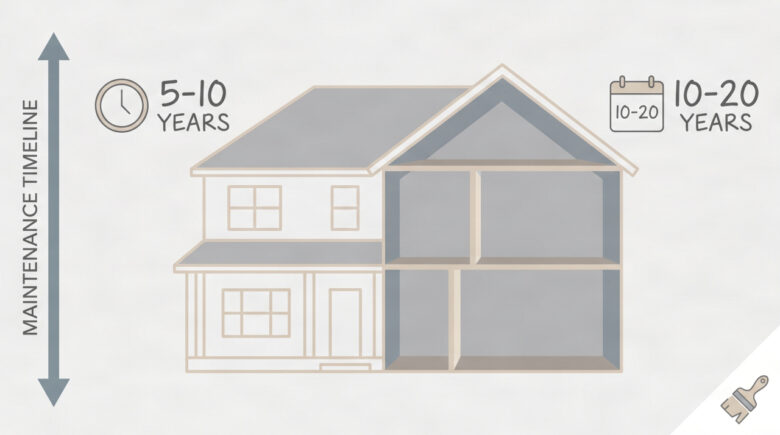
Your home’s exterior is under attack every single day. Sun, rain, wind, and temperature changes all work against your paint. Most experts agree that exterior walls should be repainted every five to ten years. But this is just a starting point. The actual timeline for your house might be shorter or longer.
High quality exterior paint can last closer to ten years. Budget paint might only hold up for three to five years. If you live in a harsh climate, expect to repaint sooner. Homes in areas with intense sun exposure fade faster. Coastal properties face salt spray that eats away paint quickly. Rainy climates create moisture problems that shorten paint life.
One easy way to check if your exterior needs repainting is the simple touch test. Walk around your house and gently rub the painted surface with your hand. If paint comes off on your fingers, it’s time to repaint. You might also notice chalking on the surface. This white powder residue means the paint is breaking down. Peeling, cracking, or blistering are clear signs you need a new coat.
The age of your last paint job matters too. If you can’t remember when you last painted, it’s probably been too long. Most homeowners should keep a simple record of when work was done. This takes just a few minutes but helps you plan ahead. You can even set a reminder on your phone for when to get an inspection.
Interior Walls Paint Frequency
Interior painting is completely different from exterior work. Your interior walls don’t face weather, UV rays, or extreme temperature swings. This means they last much longer between paint jobs. Most interior walls can go ten to fifteen years between paintings. Some can even last twenty years if you take good care of them.
The main things that damage interior paint are moisture, dirt, and daily wear. Bathrooms and kitchens need more frequent repainting than living rooms or bedrooms. These areas have high humidity that causes paint to peel and bubble. Moisture is the enemy of interior paint. If you notice any bubbling or peeling in these rooms, address it quickly to prevent bigger problems.
Kids and pets also speed up the need for repainting. Fingerprints, scuffs, and marks on walls appear quickly in homes with young children. Pet owners deal with paw prints and occasional accidents that stain walls. These cosmetic issues might make you want to repaint sooner. Repainting just for these reasons is fine. It keeps your home looking fresh without waiting for the paint to actually wear out.
Color choice affects how often you’ll want to repaint. Light colors show dirt and stains much more easily than dark colors. White walls might need touching up every few years for cosmetic reasons. Darker colors hide imperfections better. If you prefer minimal maintenance, choose paint colors that work with your lifestyle.
High traffic areas like hallways and entryways wear faster than quiet rooms. The constant foot traffic rubs the paint. Doors getting opened and closed puts stress on nearby walls. These areas might need attention every eight to ten years. Bedrooms and formal living rooms, on the other hand, can go longer without repainting.
Climate and Weather Impact on Paint
Where you live makes a huge difference in how long your paint lasts. Climate is one of the biggest factors affecting your painting schedule. Understanding your local weather patterns helps you plan correctly.
Hot, sunny climates are tough on paint. The constant UV radiation breaks down the paint’s molecules. Colors fade quickly in these areas. Homes in Arizona, southern California, and parts of Texas often need repainting every four to six years. The intense sun simply overwhelms most paints. Using premium UV resistant paint helps, but it still won’t last as long as in milder climates.
Cold climates present different challenges. Freeze and thaw cycles cause paint to crack and peel. Water gets into these cracks and causes further damage. Northern states and high altitude areas deal with this problem constantly. Ice and snow melt during the day, then freeze again at night. This continuous expansion and contraction destroys paint. Homes in these areas should plan for repainting every four to seven years.
Humid and rainy climates create moisture problems. Paint traps moisture underneath, which leads to mildew and peeling. Coastal areas with salt spray face extra challenges. The salt corrodes paint and causes it to break down quickly. If you live near the ocean, budget for exterior repainting every three to five years.
Mild climates with moderate temperatures are the easiest on paint. Places like the Pacific Northwest have cool, gentle conditions. While rain is common, extreme sun and cold are not. Homes in these areas often get the longest paint life. You might only need to repaint every seven to ten years.
The direction your home faces also matters. North facing walls last longer because they get less sun. South and west facing walls take a beating from afternoon sun. East facing walls see morning sun and early warmth. Consider having a professional inspect the sunny sides of your home first when checking if repainting is needed.
Signs Your House Needs Repainting
Don’t wait for a calendar date to tell you when to repaint. Your house will give you plenty of warning signs. Learning to spot these signs helps you avoid costly damage.
Peeling and cracking paint is the most obvious sign. If chunks of paint are coming off, you’ve waited too long. Water can now get behind the remaining paint and cause rot. Get this fixed as soon as possible. Even small areas of peeling paint can become big problems quickly.
Fading color means your paint is breaking down. Your blue shutters might look pale or washed out. This indicates UV damage from sun exposure. Fading doesn’t mean you must repaint immediately, but it’s a warning sign. Plan to repaint within the next year or two.
Chalking is a powdery white residue that appears on painted surfaces. Rub your hand on a chalky wall and white powder comes off on your fingers. This means the paint’s binding agents are deteriorating. Interior paint rarely chalks. When you see chalking on exterior walls, the paint is near the end of its life.
Bubbling or blistering paint indicates moisture problems. Paint bubbles when water gets trapped underneath. This happens most often in bathrooms and kitchens. Fix the moisture problem first, then repaint. Otherwise, the new paint will bubble too.
Mold or mildew growth under or on paint is serious. This means moisture is present and the paint isn’t stopping it. Don’t just paint over mold. Clean it thoroughly and fix the underlying moisture issue first.
Visible wood or substrate showing through means the paint has completely failed. Your siding or drywall is now exposed to the elements. This requires immediate attention to prevent rot and structural damage.
Paint Quality and Its Effect on Longevity
Not all paint is created equal. The quality of paint you choose directly affects how long it lasts. Cheap paint might save you money now but cost you later.
Budget paint typically lasts three to five years on exterior surfaces. It has lower quality binders and pigments. The paint thins out quickly and offers less protection. Budget paints are okay for interior walls that don’t get much wear. They’re not a good choice for exterior work.
Mid range paint is the sweet spot for most homeowners. It lasts six to eight years on exterior surfaces. It offers decent protection without breaking the bank. Most quality paint brands fall into this category. You can find good mid range paint at any major home improvement store.
Premium paint lasts ten to fifteen years or more. It has superior binders, pigments, and additives. Premium paint resists UV damage better and handles extreme weather. It also covers better, often requiring fewer coats. For exterior work, premium paint saves money over time despite its higher upfront cost.
Specialty paints offer extra benefits. Mildew resistant paint helps in humid climates. Heat reflective paint keeps homes cooler in hot areas. Salt resistant paint protects coastal homes. Moisture blocking primers help in damp environments. Choose specialty products based on your specific climate challenges.
Always use proper primers under your paint. A good primer helps paint stick better and last longer. Primers also block stains from showing through. Quality primers are especially important on exterior work and over stained or damaged surfaces.
Maintenance Tips to Extend Paint Life
Proper maintenance between paint jobs keeps your paint looking good longer. Regular care prevents damage and extends the life of your current paint.
Clean your exterior walls annually. Use a soft brush and mild soap with water. Dirt and grime accelerate paint breakdown. Coastal homeowners should wash more frequently to remove salt spray. Never use a pressure washer on painted surfaces. The high pressure can damage paint and force water behind it.
Check for and fix problems early. Small peeling areas are easy to touch up. Ignore them and they become large problem spots. Walk around your home twice a year looking for trouble. Spring and fall are good times to inspect. Catching issues early saves thousands in repairs.
Keep gutters and downspouts clean. Water overflow damages painted surfaces below. It also causes stains and mold growth. Clean gutters prevent water from running down your walls. This simple task prevents many paint problems.
Trim back vegetation that touches your exterior. Plants hold moisture against painted surfaces. They also create shade that encourages mold. Keep bushes and trees trimmed back at least two feet from your home.
Fix water damage immediately. Even small leaks eventually damage paint. Address roof leaks, foundation cracks, and plumbing issues quickly. Moisture problems are the biggest threat to paint longevity.
Paint over small damaged areas as needed. Touch up paint is inexpensive and easy to apply. Keeping ahead of small damage prevents the need for full repainting sooner.
Regional Painting Schedules
Different parts of the country have different needs. Consider where you live when planning your painting schedule.
Southern States: Hot, humid summers and intense sun mean exterior repainting every four to six years. Interior painting can stretch to fifteen years. Moisture resistance is important.
Northern States: Cold winters with freeze thaw cycles require exterior repainting every four to seven years. Interior painting lasts ten to fifteen years. Quality paint is worth the investment here.
Coastal Areas: Salt spray and high humidity demand exterior repainting every three to five years. Interior painting lasts ten to twelve years. Mildew resistant paint is essential.
Southwest Desert: Intense sun requires exterior repainting every four to six years. Fading happens quickly. UV resistant premium paint is a smart choice. Interior paint can last fifteen to twenty years.
Pacific Northwest: Mild climate with rain allows exterior paint to last seven to ten years. Interior paint can easily last fifteen to twenty years. Good ventilation helps prevent moisture problems.
Midwest: Temperature swings and occasional severe weather mean exterior repainting every five to eight years. Interior paint lasts twelve to fifteen years. Durable paint that handles temperature changes is important.
Should You Paint Interior Every Room at Once
Most homeowners don’t repaint their entire interior at the same time. Interior painting is optional based on your preferences. High traffic areas like hallways and kitchens might need attention while bedrooms are still fine.
Painting rooms as you go saves money initially. You spend only on what needs repainting. However, this approach has drawbacks. Paint color variations appear when you paint at different times. Lighting and age differences show up easily. What looked like the same paint color five years ago might look different now.
Full interior repainting creates consistency. All walls look fresh and uniform. Color matches perfectly throughout. It gives your home a complete updated look. Most designers recommend this approach if you’re doing substantial work.
Consider your timeline and budget. If money is tight, paint high traffic areas first. You can finish other rooms later. Just be aware of potential color variation issues. Saving the original paint can can help. Try to match paint exactly when doing touch ups later.
DIY Painting Versus Professional Services
You can save money painting your home yourself. However, professionals deliver better results that last longer.
DIY exterior painting is physically demanding and requires equipment. You need ladders, scaffolding, and safety gear. Improper application shortens paint life. Mistakes are expensive to fix. Most homeowners lack the skill to paint exterior surfaces properly.
Professional painters have experience and proper equipment. They prepare surfaces correctly, which is critical for paint longevity. Poor preparation causes paint to fail early. Professionals also apply paint in proper conditions. Temperature and humidity matter. They know how to apply primer and paint in the right order and thickness.
Interior DIY painting is more forgiving. Mistakes are easier to hide. The physical demands are lower. Many homeowners successfully paint interior rooms themselves. You can see immediate results without spending much money.
Even if you’re painting interior, consider hiring professionals for trim and high walls. Cutting in along the ceiling is harder than it looks. Getting clean lines takes practice. Professionals can also paint faster than most homeowners.
Budget for professional work on exterior painting. The cost is worth it for the better results and durability. Interior painting can go either way depending on your skills and time availability.
Cost Considerations and Budgeting
Painting costs vary widely based on location, home size, and paint quality. Understanding costs helps you budget properly.
Exterior painting costs between 1,500 and 4,000 dollars for an average home. This varies based on the size of your home, siding type, and paint quality. Premium paint and preparation work increase costs. Multiple stories mean higher labor costs. Geographic location affects pricing too. Costs are higher in major cities and coastal areas.
Interior painting costs between 800 and 2,500 dollars for an average home. This depends on room count, ceiling height, and how much preparation is needed. Painting just one or two rooms costs 200 to 400 dollars per room.
Painting more frequently prevents expensive damage. A 2,000 dollar exterior painting job today prevents 5,000 to 10,000 dollars in rot repair later. This is why staying on schedule makes financial sense.
Set aside a painting budget in your home maintenance fund. Plan for exterior repainting every five to seven years. Budget for interior touch ups as needed. This spreads costs over time instead of facing big bills all at once.
Compare multiple quotes from professional painters. Quality varies as much as price does. A cheaper quote might mean they’re cutting corners. The lowest price often leads to poor results that won’t last.
Special Considerations for Different Climates
Specific climates require special attention and planning.
Dry climates have their own challenges. Low humidity seems like it would be good for paint, but it creates other problems. Intense UV radiation breaks down paint quickly. Temperature swings between day and night stress paint. UV blocking and reflective paints work well here.
Wet climates need moisture resistant solutions. Mold and mildew grow easily. Vapor barriers and good ventilation are essential. Anti microbial paint products help prevent mold. Make sure gutters and downspouts work properly to keep water away from painted surfaces.
Coastal properties need corrosion resistant paint. Salt spray attacks regular paint. Specialty marine grade paint costs more but lasts longer. Annual washing removes salt buildup. Consider zinc rich primers for extra protection.
High altitude areas face intense sun and temperature swings. Paint needs to handle both UV exposure and freeze thaw cycles. Premium quality paints are worth the investment. Expect to repaint more frequently than lower elevation homes.
Preparing for Your Next Paint Job
Start planning your next painting project now. Advance preparation saves time and money.
Document your current paint. Take photos of your home in good light. Note the paint color and brand if you know it. Keep any leftover paint for touch ups. Store paint cans in a cool, dry place. Paint slowly separates when stored, so you might need to remix it. Good storage prevents paint from spoiling.
Get professional inspections if you’re unsure about paint condition. Painters can evaluate your paint’s health. They estimate how much longer your paint will last. This helps you plan when to budget for repainting.
Research local painters and get quotes early. The best painters book up months ahead. Getting on their schedule when you want the work done is difficult if you wait until the last minute.
Budget for the work and save accordingly. Spreading costs over time makes large projects manageable. You can start painting some areas while saving for others.
Monitor paint conditions regularly. Catch problems early before they become expensive. The sooner you address peeling or damage, the less structural damage occurs.
Conclusion
Your house painting schedule depends on several factors working together. Climate, paint quality, and location all matter. Your lifestyle and personal preferences also affect how often you want fresh paint.
Most homes need exterior repainting every five to ten years. Interior walls can go ten to twenty years between paintings. These are just guidelines. Your specific situation might be different.
The best approach is regular inspection. Walk around your home twice a year. Look for signs that paint is failing. Document when you paint and what products you use. This information helps you make smart decisions about future painting.
Invest in quality paint and professional application when possible. Spending more upfront prevents expensive damage later. Your home is too valuable to neglect. Small maintenance costs today prevent massive repair bills tomorrow.
Start your painting inspection this month. Look at your exterior walls and interior problem areas. Decide whether you need repainting soon or can wait a few more years. Get quotes from professional painters. Create a simple schedule for your home so you never wonder when you last painted.
Taking action now keeps your home protected and looking great. You’ll save money, prevent damage, and enjoy a home that looks well maintained. Make painting part of your regular home maintenance routine.