
You’ve probably been eating strawberries your whole life without thinking twice about how you wash them. A quick rinse under the tap, maybe a gentle pat dry, and you’re popping those beautiful red berries straight into your mouth. But what if we told you that simple rinse isn’t doing nearly enough? The viral strawberry cleaning trick taking the internet by storm is revealing something shocking — and once you see it, you’ll never skip a proper wash again.
Whether you’re a health-conscious parent, a fitness enthusiast, or simply someone who loves fresh fruit, this guide is going to walk you through everything you need to know about the strawberry salt water cleaning hack, why it works, and how to do it properly. Get ready to rethink your entire fruit-washing routine.
What Is the Strawberry Cleaning Trick?
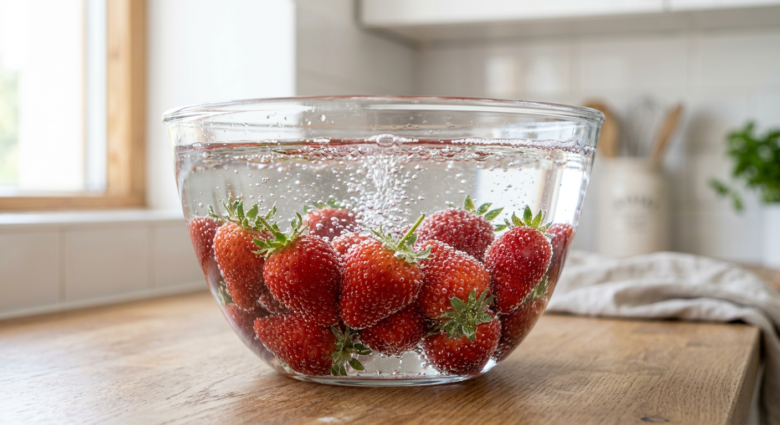
The strawberry cleaning trick is surprisingly simple. All you need is a bowl, cold water, and table salt. The process involves soaking your fresh strawberries in a salt water solution for 5 to 10 minutes before eating them.
When people first tried this hack and shared their results online, the response was nothing short of jaw-dropping. Social media videos showed tiny insects, dirt particles, and debris floating to the surface of the water after just a few minutes of soaking. The comment sections exploded. People were horrified — and fascinated. The videos went viral almost overnight, with millions of viewers vowing to never eat an unwashed strawberry again.
But here’s the real question: Why does this happen, and is it actually something to worry about?
Check Out Our Guide on Youtube
Why Strawberries Need More Than a Quick Rinse
Strawberries Grow Close to the Ground
Unlike many other fruits, strawberries grow very close to the soil surface. This means they are constantly exposed to:
- Dirt and soil particles that cling to the surface and nestle deep into the seeds
- Pesticide residue from farming and crop treatment
- Tiny insects such as fruit flies, aphids, thrips, and mites that live in and around the fruit
- Bacteria from soil and environmental exposure
- Bird droppings and other environmental contaminants
Because of their textured surface — those tiny seed-filled crevices — strawberries are particularly good at trapping unwanted materials. Running them under a tap for a few seconds simply doesn’t cut it. Water alone doesn’t have the drawing power needed to pull out what’s hiding in the nooks and crannies of the fruit.
The Pesticide Problem
According to the Environmental Working Group (EWG), strawberries have consistently ranked at or near the top of their “Dirty Dozen” list — a yearly report highlighting produce with the highest pesticide residues. In some studies, more than 90% of conventionally grown strawberries tested positive for pesticide residues.
This doesn’t mean strawberries are dangerous to eat, but it does highlight the importance of washing them thoroughly before consumption. Even organic strawberries benefit from a proper cleaning process, since they are still exposed to soil, insects, and environmental contaminants.
The Salt Water Strawberry Cleaning Hack: Step-by-Step Guide
Ready to try the trick for yourself? Here’s exactly how to do it correctly:
What You’ll Need
- 1 large bowl
- Cold water (enough to fully submerge the strawberries)
- 1 teaspoon of table salt per cup of water
- A colander or strainer
- Paper towels or a clean cloth
Step-by-Step Instructions
1: Prepare Your Salt Water Solution
Fill a large bowl with cold water. Add approximately 1 teaspoon of table salt for every cup of water used. Stir gently until the salt dissolves completely.
2: Add the Strawberries
Place your unwashed strawberries directly into the salt water solution. Do not remove the stems or leaves at this stage. The stem and leaves help protect the interior of the strawberry during soaking and prevent waterlogging.
3: Soak for 5 to 10 Minutes
Allow the strawberries to soak for at least 5 minutes and up to 10 minutes. Avoid soaking for longer than this, as the berries can begin to absorb excess salt and become waterlogged, affecting their flavor and texture.
4: Observe the Results
After a few minutes, look closely at the water. You may notice tiny floating particles, insects, or debris rising to the surface. This is completely normal — and exactly what you want to happen.
5: Rinse Thoroughly with Clean Water
This step is absolutely critical. After soaking, transfer the strawberries to a colander and rinse them thoroughly under cold running water for at least 30 seconds. This removes any remaining salt residue, loosened dirt, and anything else the soak drew out.
6: Dry and Enjoy
Pat the strawberries dry with a paper towel or clean cloth. Now they’re ready to eat, slice, or use in your favorite recipes.
What Comes Out of Strawberries After Soaking?
This is the part that genuinely surprises most people. So what exactly are those things floating in your soaking water?
Tiny Insects
The most talked-about discovery is the presence of small insects in the water after soaking. The most common culprit is the Spotted Wing Drosophila — a fruit fly species that lays its eggs inside soft, ripe fruits. Other insects commonly found include:
- Thrips — tiny, slender insects that feed on plant tissue
- Aphids — small sap-sucking insects
- Soil mites — microscopic creatures that live in the soil
- Fungus gnats — small flies attracted to moist organic material
While the idea of eating insects might sound alarming, food safety experts note that trace amounts of insect material are actually permitted in commercially sold produce under FDA guidelines. The insects themselves are generally harmless to human health. However, most people understandably prefer to remove them before eating.
Dirt and Soil Particles
Dark sediment settling at the bottom of the bowl after soaking is soil and fine dirt particles that were lodged in the surface of the fruit. No matter how clean the strawberries looked before soaking, you’ll often find a visible layer of sediment after the process.
Pesticide Residue
Studies suggest that salt water soaking can help reduce pesticide surface residue on fruit. While it won’t eliminate all traces of systemic pesticides that have been absorbed into the plant, it does help with surface-level chemical residue reduction.
Does the Salt Water Trick Actually Work? What the Science Says
The short answer is yes, with some nuance. Here’s what research and food safety science tell us:
- Salt water is an effective natural cleaning agent. The osmotic properties of salt water create an environment that is inhospitable to many small insects and microorganisms, encouraging them to leave the fruit.
- It’s more effective than plain water alone. Studies on produce washing have shown that salt solutions help dislodge more contaminants than plain water.
- It won’t eliminate all bacteria or pesticides. For maximum food safety, some experts recommend using a produce wash or a diluted white vinegar solution as an alternative or complement to salt water soaking.
Alternative Cleaning Methods Worth Trying
While the salt water method is the most popular, here are a few other effective strawberry cleaning techniques:
- Vinegar and water soak: Mix 1 part white vinegar with 3 parts water and soak for 5 minutes. Research suggests this can help reduce bacteria and mold spores, extending shelf life.
- Baking soda wash: A solution of 1 teaspoon of baking soda per 2 cups of water can help remove pesticide residue more effectively than water alone.
- Commercial produce wash: Specially formulated produce cleaning sprays are available at most grocery stores.
Tips for Storing Strawberries After Washing
One important thing to note: don’t wash strawberries until you’re ready to eat them. Moisture accelerates mold growth, so washing in advance can significantly shorten the shelf life of your berries.
If you’ve already washed a batch and want to store them, follow these tips:
- Dry them completely before refrigerating
- Store in a single layer on paper towels inside a container
- Keep them loosely covered to allow airflow
- Consume within 1 to 2 days of washing
Who Should Be Most Careful About Washing Strawberries?
While everyone benefits from properly washing their produce, certain groups should be especially diligent:
- Young children and infants — their immune systems are still developing
- Pregnant women — food safety is particularly important during pregnancy
- Elderly individuals — more vulnerable to foodborne illness
- People with compromised immune systems — including those undergoing chemotherapy or living with autoimmune conditions
A Small Step That Makes a Big Difference
The strawberry salt water cleaning trick is one of those rare food hacks that is both incredibly simple and genuinely useful. It takes less than 15 minutes, costs virtually nothing, and could make a real difference in the cleanliness and safety of the fruit you and your family are eating.
Strawberries are one of the world’s most beloved fruits — sweet, nutritious, and bursting with antioxidants. They deserve to be eaten the right way. With this easy cleaning method, you can enjoy every bite with complete confidence, knowing you’ve done your part to remove dirt, insects, pesticide residue, and hidden contaminants.
So the next time you bring home a punnet of fresh strawberries, resist the urge to rinse and eat. Take five to ten minutes, make that salt water solution, and see for yourself what comes out. You might be surprised — and you’ll definitely be glad you did.
Try the Strawberry Cleaning Trick Today!
We’d love to hear from you! Have you tried the salt water strawberry soaking hack? What did you find in the water? Drop a comment below and share your experience. If this article opened your eyes to smarter produce cleaning, share it with a friend or family member who loves strawberries as much as you do. Because everyone deserves to eat clean, fresh, and safe fruit — starting with the very next berry they pop into their mouth.