There’s something magical about watching birds flutter into your yard, perch gracefully, and enjoy a meal. But what if the feeder that draws them in could also serve as a stunning piece of outdoor art? That’s where decorative bird feeders come in — blending function with beauty to transform your garden, patio, or backyard into an enchanting haven for both you and your feathered visitors.
Whether you’re a seasoned birder or simply looking to elevate your outdoor décor, this comprehensive guide covers everything you need to know about choosing, placing, and maintaining decorative bird feeders that look gorgeous and keep birds coming back season after season.
Why Choose Decorative Bird Feeders?
Standard bird feeders get the job done, but they often lack visual appeal. A plain plastic tube feeder hanging from a tree branch doesn’t exactly scream “garden elegance.” Decorative bird feeders, on the other hand, serve a dual purpose:
- They attract a wide variety of bird species with functional feeding stations.
- They enhance your outdoor aesthetics with unique designs, colors, and materials.
- They become conversation starters when guests visit your home.
- They reflect your personal style, whether that’s rustic farmhouse, whimsical cottage, or sleek modern.
In a world where outdoor living spaces are more valued than ever, a beautifully designed bird feeder can be the finishing touch that ties your garden together.
Popular Styles of Decorative Bird Feeders
Not all decorative bird feeders are created equal. The market offers an impressive range of styles to match virtually any landscape design or personal preference. Here’s a closer look at the most popular options:
1. Victorian and Vintage-Inspired Feeders
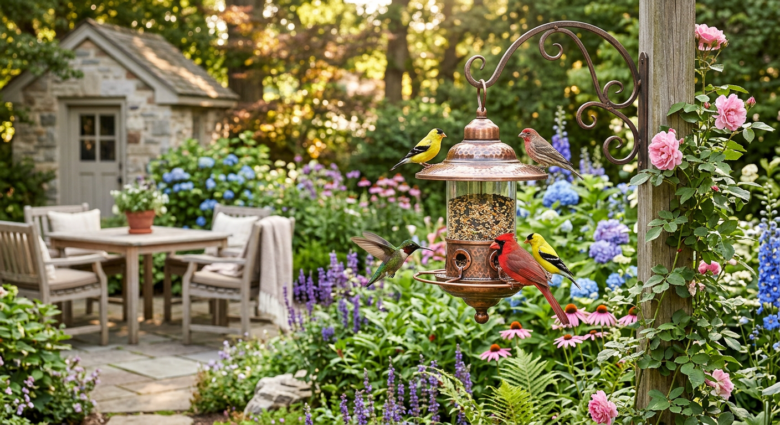
These feeders often feature intricate scrollwork, antique finishes, and ornate detailing reminiscent of classic garden architecture. Made from materials like cast iron, copper, or weathered wood, Victorian-style decorative bird feeders bring old-world charm to any setting.
2. Rustic and Farmhouse Feeders
Crafted from reclaimed barn wood, galvanized metal, or natural bark, rustic bird feeders fit seamlessly into country-style landscapes. They exude warmth and simplicity, making them perfect for cottage gardens, rural properties, or anyone who loves that cozy, handmade aesthetic.
3. Whimsical and Novelty Feeders
From feeders shaped like tiny cottages and teapots to ones designed to look like vintage trucks or lighthouses, whimsical bird feeders inject fun and personality into your yard. They’re especially popular among families with children, as they spark curiosity and make birdwatching even more enjoyable.
4. Modern and Minimalist Feeders
Sleek lines, geometric shapes, and materials like brushed steel or frosted glass define modern decorative bird feeders. If your outdoor space follows a contemporary design philosophy, these feeders complement it without looking out of place.
5. Handcrafted and Artisan Feeders
For those who value one-of-a-kind pieces, artisan bird feeders crafted by local woodworkers, potters, or metalworkers offer unmatched uniqueness. These often feature hand-painted details, custom shapes, and materials sourced with care.
How to Choose the Right Decorative Bird Feeder
With so many options available, selecting the perfect decorative bird feeder can feel overwhelming. Keep these key factors in mind to make the best choice:
Consider the Birds You Want to Attract
Different bird species prefer different feeder types and food:
- Cardinals and jays favor platform or hopper feeders with sunflower seeds.
- Finches love tube feeders filled with nyjer (thistle) seed.
- Hummingbirds require nectar feeders with bright, flower-like designs.
- Woodpeckers prefer suet feeders attached to tree trunks.
Choose a decorative bird feeder that accommodates the species native to your region for the best results.
Match Your Outdoor Décor
Your bird feeder should complement — not clash with — your existing landscape design. Consider the colors, materials, and overall theme of your outdoor space. A copper-finished feeder might look stunning against a backdrop of green foliage, while a painted ceramic feeder could brighten up a minimalist patio.
Prioritize Durability
Decorative doesn’t have to mean fragile. Look for feeders made from weather-resistant materials like powder-coated metal, cedar wood, recycled poly-lumber, or UV-resistant plastics. Your feeder will be exposed to rain, wind, sun, and snow — it needs to hold up through every season.
Ease of Cleaning and Refilling
A gorgeous bird feeder that’s impossible to clean will quickly become a health hazard for birds. Opt for designs that allow easy disassembly, have wide openings for refilling, and feature removable trays for cleaning out old seed and debris.
Size and Capacity
Think about how frequently you want to refill the feeder. Larger capacity feeders require less maintenance but may be bulkier. Smaller feeders are more delicate and visually subtle but need more frequent attention.
Best Placement Tips for Decorative Bird Feeders
Where you hang or mount your decorative bird feeder matters just as much as which one you buy. Proper placement ensures bird safety, maximizes visibility, and protects the feeder from damage.
- Place feeders near natural cover. Birds feel safer when trees or shrubs are within 10–15 feet, giving them a quick escape route from predators.
- Keep feeders away from windows — or use window-mounted feeders with decals to prevent bird strikes. Collisions with glass are a leading cause of bird mortality.
- Elevate feeders at least 5 feet off the ground to deter cats, squirrels, and other ground-level predators.
- Position feeders where you can see them. After all, half the joy of a decorative bird feeder is watching the activity from your kitchen window, porch, or favorite reading chair.
- Avoid placing feeders in direct, unshaded sunlight for extended periods, especially nectar feeders, as heat causes food to spoil faster.
Maintaining Your Decorative Bird Feeders
Even the most beautiful bird feeder will lose its charm — and become harmful to birds — without regular maintenance. Follow these essential care tips:
Clean Regularly
Wash your feeder every one to two weeks with a solution of one part white vinegar to four parts water (or a diluted bleach solution). Rinse thoroughly and let it dry completely before refilling. This prevents mold, bacteria, and disease transmission among birds.
Inspect for Damage
Check for cracks, rust, loose parts, or peeling paint periodically. Damaged feeders can injure birds or allow moisture inside, spoiling the seed.
Rotate Seed Stock
Don’t let old seed sit in the feeder for too long. Stale or wet seed can develop mold and mycotoxins that are dangerous to birds. Remove uneaten food, clean the feeder, and refill with fresh seed regularly.
Seasonal Adjustments
In winter, consider adding a weather guard or dome to keep snow and ice off the feeding area. In summer, move feeders to shaded spots to keep food fresh longer. Some decorative bird feeders come with interchangeable accessories for seasonal customization.
The Unexpected Benefits of Decorative Bird Feeders
Beyond their visual appeal, decorative bird feeders offer surprising benefits that many homeowners don’t initially consider:
- Stress relief and mental health. Numerous studies, including research published by the University of Exeter, have shown that watching birds reduces anxiety, stress, and depression. A beautifully designed feeder placed within view encourages this therapeutic habit.
- Natural pest control. Many backyard birds feed on insects, including mosquitoes, aphids, and beetles. By attracting birds, you’re recruiting a natural pest management team.
- Pollination support. Hummingbird feeders attract pollinators that help your garden flowers and vegetables thrive.
- Educational opportunities. For families, decorative bird feeders create hands-on learning experiences about wildlife, ecology, and responsibility.
- Increased property appeal. A well-designed garden with artful touches like decorative feeders can boost curb appeal and even property value.
Where to Buy Decorative Bird Feeders
You can find stunning decorative bird feeders at a variety of retailers:
- Garden centers and nurseries often carry curated selections of high-quality feeders.
- Online marketplaces like Amazon, Etsy, and Wayfair offer vast collections ranging from budget-friendly to luxury artisan pieces.
- Specialty bird stores such as Wild Birds Unlimited provide expert guidance alongside their product offerings.
- Local craft fairs and artisan markets are excellent sources for handmade, one-of-a-kind feeders.
When shopping online, always read customer reviews, check return policies, and verify that the feeder is designed for outdoor durability — not just indoor display.
Elevate Your Garden with Decorative Bird Feeders
Decorative bird feeders are more than just accessories — they’re invitations. They invite beauty, life, and nature into your everyday world. They invite you to slow down, watch, and reconnect with the natural rhythms happening just outside your door. And they invite birds to make your space their space, creating a living, breathing ecosystem right in your backyard.
Whether you choose an elegant copper feeder, a charming hand-painted cottage design, or a sleek modern silhouette, the right decorative bird feeder will bring you joy for years to come.